
- Home
- Lawrence Block
Enough Rope Page 52
Enough Rope Read online
Page 52
“I didn’t think you knew her that well,” I said.
“I did and I didn’t. There are things I do not understand, Tim; people to whom I’ve barely spoken, yet whom I seem to know intimately. Knowledge has so many levels.”
“You never really stopped writing about Beveridge.” This was his fictional name for the town. “You just stopped putting it on paper.”
He looked up, surprised, considering the thought with his head cocked like a wren’s. “That’s far more true than you could possibly know,” he said.
He ate a good dinner and seemed to enjoy it. Over coffee I started aimless conversations but he let them die out. Then I said, “Mr. Bane, why can’t it be an accident? The radio fell into the tub and shocked her and she drowned.”
I thought at first he hadn’t heard, or was pretending as much; this last is a special privilege of the old and the ill. Then he said, “Of course, you have to have facts. What should my intuition mean to you? And it would mean less, I suppose, if I assured you that Rachel Avery could not possibly be the type to play the radio while bathing?”
My face must have showed how much I thought of that. “Very well,” he said. “We shall have facts. The water in the tub was running when the body was found. It was running, then, both before and after the radio fell into the tub, which means that Rachel Avery had the radio turned on while the tub was running, which is plainly senseless. She wouldn’t be able to hear it well, would she? Also, she was adjusting the dial and knocked it into the tub with her.
“She would not have played the radio at all during her bath—this I simply know. She would not have attempted to turn on the radio until her bath was drawn, because no one would. And she would not have tried tuning the set while the water was running because that is sheerly pointless. Now doesn’t that begin to make a slight bit of sense to you, Tim?”
They put her into the ground on a cold gray afternoon. I was part of a large crowd at the funeral parlor and a smaller one at the cemetery. There was a minister instead of a priest, and the service was not the one with which I was familiar, yet after a moment all of it ceased to be foreign to me. And then I knew. It was Emily Talstead’s funeral from Cabot’s House, except that Emily’s death had justice to it, and even a measure of mercy, and this gray afternoon held neither.
In that funeral parlor I was the deputy of Joseph Cameron Bane. I viewed Rachel’s small body and thought that all caskets should be closed, no matter how precise the mortician’s art. We should not force ourselves to look upon our dead. I gave small words of comfort to Dean Avery and avoided his eyes while I did so. I sat in a wooden chair while the minister spoke of horrible tragedy and the unknowable wisdom of the Lord, and I was filled with a sense of loss that was complete in itself.
I shared someone’s car to the cemetery. At graveside, with a wind blowing that chilled the edge of thought, I let the gloom slip free as a body into an envelope of earth, and I did what I’d come to do; I looked into the face of Dean Avery.
He was a tall man, thick in the shoulders, broad in the forehead, his hair swept straight back without a part, forming upon his head like a crown. I watched his eyes when he did not know that anyone watched him, and I watched the curl of his lip and the way he placed his feet and what he did with his hands. Before long I knew he mourned her not at all, and soon after that I knew the old man was right. He had killed her as sure as the wind blew.
They would have given me a ride back to his house, but I slipped away when the service ended, and spent time walking around, back and forth. By the time I was back at her grave, it had already been filled in. I wondered at the men who do such work, if they feel a thing at all. I turned from her grave and walked back through the town to Bane’s house.
I found him in the kitchen with coffee and toast. I sat with him and told him about it, quickly, and he made me go back over all of it in detail so that he could feel he had been there himself. We sat in silence awhile, and then went to the living room. I built up the fire and we sat before it.
“You know now,” he said. I nodded, for I did; I’d seen for myself, and knew it and felt it. “Knowing is most of it,” he said. “Computers can never replace us, you know. They need facts, information. What’s the term? Data. They need data. But sometimes men can make connections across gaps, without data. You see?”
“Yes.”
“So we know.” He drank, put down his glass. “But now we have to have our data. First the conclusion, and then backward to the proof.”
My eyes asked the question.
“Because it all must round itself out,” he said, answering the question without my giving voice to it. “This man killed and seems to have gotten away with it. This cannot be.”
“Should we call the police?”
“Of course not. There’s nothing to say to them, and no reason they should listen.” He closed his eyes briefly, opened them. “We know what he did. We ought to know how, and why. Tell me the men at the funeral, Tim, as many as you remember.”
“I don’t remember much before the cemetery. I paid them little attention.”
“At the cemetery, then. That’s the important question, anyway.”
I pictured it again in my mind and named the ones I knew. He listened very carefully. “Now there are others who might have been there,” he said, “some of whom you may not know, and some you may not remember. Think, now, and tell me if any of these were there.”
He named names, five of them, and it was my turn to listen. Two were strangers to me and I could not say if I’d seen them. One I remembered had been there, two others had not.
“Get a pencil and paper,” he told me. “Write these names down. Robert Hardesty, Hal Kasper, Roy Teale, Thurman Goodin. Those will do for now.”
The first two had been at the funeral, and at the cemetery. The other two
had not.
“I don’t understand,” I said.
“She had a lover, of course. That was why he killed her. Robert Hardesty and Hal Kasper should not have been at the funeral, or at least not at the cemetery. I don’t believe they’re close to her family or his. Thurman Goodin and Roy Teale should have been at the funeral, at the least, and probably should have been at the cemetery. Now a dead woman’s secret love may do what you would not expect him to do. He may stay away from a funeral he would otherwise be expected to attend, for fear of giving himself away, or he might attend a funeral where his presence would not otherwise be required, out of love or respect or no more than morbid yearning. We have four men, two who should have been present and were not, and two who should not have been present but were. No certainty, and nothing you might call data, but I’ve a feeling one of those four was Rachel Avery’s lover.”
“And?”
“Find out which one,” he said.
“Why would we want to know that?”
“One must know a great many unimportant things in order to know those few things which are important.” He poured himself more bourbon and drank some of it off. “Do you read detective stories? They always work with bits and pieces, like a jigsaw puzzle, find out trivia until it all fits together.”
“And what might this fit into?”
“A shape. How, why, when.”
I wanted to ask more, but he said he was tired and wanted to lie down. He must have been exhausted. He had me help him upstairs, change clothes, and into bed.
I knew Hal Kasper enough to speak to, so it was his shop I started in that night. He had a cigar store near the railroad terminal and sold magazines, paperbound books, candies, and stationery. You could place a bet on a horse there, I’d heard. He was thin, with prominent features—large hollow eyes, a long, slim nose, a large mouth with big gray-white teeth in it. Thirty-five or forty, with a childless wife whom I’d never met, I thought him an odd choice for a lover, but I knew enough to realize that women did not follow logic’s rules when they committed adultery.
He had been at the funeral. Joseph Cameron Bane had found this a l
ittle remarkable. He had no family ties on either side with Rachel or Dean Avery. He was below them socially, and not connected through his business. Nor was he an automatic funeral-goer. There were such in the town, I’d been told, as there are in every town; they go to funerals as they turn on a television set or eavesdrop on a conversation, for entertainment and for lack of better to do. But he was not that sort.
“Hi, Irish,” he said. “How’s the old man?”
I thumbed a magazine. “Asleep,” I said.
“Hitting the sauce pretty good lately?”
“I wouldn’t say so, no.”
“Well, he’s got a right.” He came out from behind the counter, walked over to me. “Saw you this afternoon. I didn’t know you knew her. Or just getting material for that book of yours?”
Everyone assumed I was going to write a novel set in the town, and that this was what had led me to live with Mr. Bane. This would have made as much sense as visiting Denmark in order to rewrite Hamlet. I’d stopped denying it. It seemed useless.
“You knew her?” I asked.
“Oh, sure. You know me, Irish. I know everybody. King Farouk, Princess Grace—” He laughed shortly. “Sure, I knew her, a lot better than you’d guess.”
I thought I’d learn something, but as I watched his face I saw his large mouth quiver with the beginnings of a leer, and then watched the light die in his eyes and the smile fade from his lips as he remembered that she was dead, cold and in the ground, and not fit to leer over or lust after. He looked ever so slightly ashamed of himself.
“A long time ago,” he said, his voice pitched lower now. “Oh, a couple of years. Before she got married, well, she was a pretty wild kid in those days. Not wild like you might think; I mean, she was free, you understand?” He groped with his hands, long-fingered, lean. “She did what she wanted to do. I happened to be there. I was a guy she wanted to be with. Not for too long, but it was honey-sweet while it lasted. This is one fine way to be talking, isn’t it? They say she went quick, though; didn’t feel anything, but what a stupid way, what a crazy stupid way.”
So it was not Hal Kasper who had loved her; not recently, at least. When I told all this to Joseph Cameron Bane he nodded several times and thought for some moments before he spoke.
“Ever widening circles, Tim,” he said. “Throw a stone into a still pool and watch the circles spread. Now don’t you see her more clearly? You wouldn’t call Kasper a sentimental man, or a particularly sensitive man. He’s neither of those things. Yet he felt that sense of loss, and that need to pay his last respects. There’s purpose in funerals, you know, purpose and value. I used to think they were barbaric. I know better now. He had to talk about her, and had also to be embarrassed by what he’d said. Interesting.”
“Why do we have to know all this?”
“Beginning to bother you, Tim?”
“Some.”
“ ‘Because I am involved with mankind,’ “ he quoted.
“You’ll learn more tomorrow, I think. Get the chessboard.”
I did learn more the next day. I learned first to forget about Roy Teale. I had not recognized his name, but when I found him I saw that he was a man who had been at the funeral, as he might have been expected to be. I also learned, in the barbershop, that he was carrying on a truly passionate love affair, but with his own wife. He sat in a chair and grinned while two of the men ragged him about it.
I left, knowing what I had come to learn; if I’d stayed much longer I’d have had to get another haircut, and I scarcely needed one. I’d taken the car into town that day. It was colder than usual, and the snow was deep. I got into the car and drove to Thurman Goodin’s service station. Mr. Bane usually had me fill the car at the station a few blocks to the north, but I did want to see Goodin. He and Robert Hardesty were the only names left on our list. If neither had been the woman’s lover, then we were back where we’d started.
A high school boy worked afternoons and evenings for Goodin, but the boy had not come yet, and Thurman Goodin came out to the pump himself. While the tank filled he came over to the side of the car and rested against the door. His face needed shaving. He leaned his long hard body against the car door and said it had been a long time since he’d put any gas into the car.
“Mr. Bane doesn’t get out much anymore,” I said, “and I mostly walk except when the weather’s bad.”
“Then I’m glad for the bad weather.” He lit a cigarette, and inhaled deeply. “Anyway, this buggy usually tanks up over to Kelsey’s place. You had better than half a tankful; you could have made it over there without running dry, you know.”
I gave him a blank look, then turned it around by saying, “I’m sorry, I didn’t hear you. I was thinking about that woman who was killed.”
I almost jumped at the sight of his face. A nerve twitched involuntarily, a thing he could not have controlled, but he might have covered up the other telltale signs. His eyes gave him away, and his hands, and the movements of his mouth.
“You mean Mrs. Avery,” he said.
His wife was her cousin, Mr. Bane had told me. So he should have been at her funeral, and now should have been calling her Rachel or Rachel Avery. I wanted to get away from him!
“I was at the funeral,” I said.
“Funerals,” he said. “I got a business to run. Listen, I’ll tell you something. Everybody dies. Fast or slow, old or young, it don’t make a bit of difference. That’s two twenty-seven for the gas.”
He took three dollars and went into the station. He came back with the change and I took it from him. My hand shook slightly. I dropped a dime.
“Everybody gets it sooner or later,” he said. “Why knock yourself out about it?”
When I told all this to Joseph Cameron Bane he leaned back in his chair with a sparkle in his eyes and the ghost of a smile on his pale lips. “So it’s Thurman Goodin,” he said. “I knew his father rather well. But I knew everybody’s father, Tim, so that’s not too important, is it? Tell me what you know.”
“Sir?”
“Project, extend, extrapolate. What do you know about Goodin? What did he tell you? Put more pieces into the puzzle, Tim.”
I said, “Well, he was her lover, of course. Not for very long, but for some space of time. It was nothing of long standing, and yet some of the glow had worn off.”
“Go on, Tim.”
“I’d say he made overtures for form’s sake and was surprised when she responded. He was excited at the beginning, and then he began to be frightened of it all. Oh, this is silly, I’m making it all up—”
“You’re doing fine, boy.”
“He seemed glad she was dead. No, I’m putting it badly. He seemed relieved, and guilty about feeling relieved. Now he’s safe. She died accidentally, and no one will ever find him out, and he can savor his memories without shivering in the night.”
“Yes.” He poured bourbon into his glass, emptying the bottle. Soon he would ask me to bring him another. “I agree,” he said, and sipped at his whiskey almost daintily.
“Now what do we do?”
“What do you think we do, Tim?”
I thought about this. I said we might check with persons in Harmony Falls and trace Dean Avery’s movements there. Or, knowing her lover’s name, knowing so much that no one else knew, we might go to the police. We had no evidence, but the police could turn up evidence better than we, and do more with it once they had it.
He looked into the fire. When he did speak, I thought at first that he was talking entirely to himself and not to me at all. “And splash her name all over the earth,” he said, “and raise up obscene court trials and filth in the newspapers, and pit lawyers against one another, and either hang him or jail him or free him. Ruin Thurman Goodin’s marriage, and ruin Rachel Avery’s memory.”
“I don’t think I understand.”
He spun quickly around. His eyes glittered. “Don’t you? Tim, Timothy, don’t you truthfully understand?” He hesitated, groped for a phrase, then
stopped and looked pointedly at his empty glass. I found a fresh bottle in the cupboard, opened it, handed it to him. He poured a drink but did not drink it.
He said, “My books always sold well, you know. But I had bad press. The small town papers were always kind, but the real critics . . . I was always being charged with sentimentality. They used words like cloying and sugary and unrealistic.” I started to say something but he silenced me with an upraised palm. “Please, don’t leap to my defense. I’m making a point now, not lamenting a misspent literary youth. Do you know why I stopped writing? I don’t think I’ve ever told anyone. There’s never been a reason to tell. I stopped, oh, not because critics were unkind, not because sales were disappointing. I stopped because I discovered that the critics, bless them, were quite right.”
“That’s not true!”
“But it is, Tim. I never wrote what you could honestly call sentimental slop, but everything always came out right, every book always had a happy ending. I simply wanted it to happen that way, I wanted things to work out as they ought to work out. Do you see? Oh, I let my people stay in character, that was easy enough. I was a good plot man and could bring that off well enough, weaving intricate webs that led inexorably to the silver lining in every last one of the blacker clouds. The people stayed true but the books became untrue, do you see? Always the happy ending, always the death of truth.”
“In Cabot’s House you had an unhappy ending.”
“Not so. In Cabot’s House I had death for an ending, but a death is not always an occasion for sorrow. Perhaps you’re too young to know that, or to feel it within. You’ll learn it soon enough. But to return to the point, I saw that my books were false. Good pictures of this town, of some people who lived either in it or in my mind or in both, but false portraits of life. I wrote a book, then, or tried to; an honest one, with loose threads at the end and—what was that precious line of Salinger’s? Yes. With a touch of squalor, with love and squalor. I couldn’t finish it. I hated it.”
 Tanner on Ice
 Hit Me
 Hit and Run
 Hope to Die
 Two For Tanner
 Tanners Virgin
 Dead Girl Blues
 One Night Stands and Lost Weekends
 A Drop of the Hard Stuff
 The Canceled Czech
 Even the Wicked
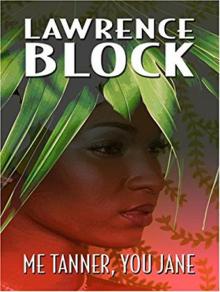 Me Tanner, You Jane
 Quotidian Keller
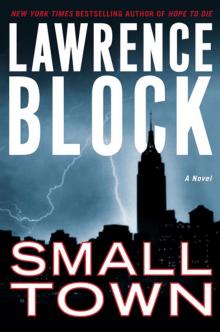 Small Town
 Tanners Tiger
 A Walk Among the Tombstones
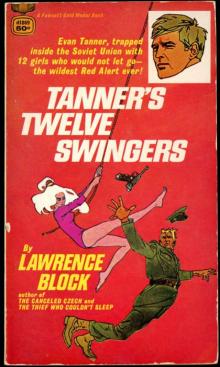 Tanners Twelve Swingers
 Gym Rat & the Murder Club
 Everybody Dies
 The Thief Who Couldnt Sleep
 Hit Parade
 The Devil Knows Youre Dead
 The Burglar in Short Order
 A Long Line of Dead Men
 Keller's Homecoming
 Resume Speed
 Keller's Adjustment
 Eight Million Ways to Die
 Time to Murder and Create
 Out on the Cutting Edge
 A Dance at the Slaughter House
 In the Midst of Death
 When the Sacred Ginmill Closes
 You Could Call It Murder
 Keller on the Spot
 A Ticket to the Boneyard
 A Time to Scatter Stones
 Keller's Designated Hitter
 A Stab in the Dark
 Sins of the Fathers
 The Burglar in the Closet
 Burglar Who Dropped In On Elvis
 The Burglar Who Painted Like Mondrian
 The Girl With the Long Green Heart
 The Burglar Who Counted the Spoons (Bernie Rhodenbarr)
 Burglar Who Smelled Smoke
 Rude Awakening (Kit Tolliver #2) (The Kit Tolliver Stories)
 Don't Get in the Car (Kit Tolliver #9) (The Kit Tolliver Stories)
 CH04 - The Topless Tulip Caper
 You Can Call Me Lucky (Kit Tolliver #3) (The Kit Tolliver Stories)
 CH02 - Chip Harrison Scores Again
 Strangers on a Handball Court
 Cleveland in My Dreams
 Clean Slate (Kit Tolliver #4) (The Kit Tolliver Stories)
 The Burglar Who Traded Ted Williams
 Burglar on the Prowl
 In For a Penny (A Story From the Dark Side)
 Catch and Release Paperback
 Ride A White Horse
 No Score
 Looking for David (A Matthew Scudder Story Book 7)
 Jilling (Kit Tolliver #6) (The Kit Tolliver Stories)
 Ariel
Ariel Enough Rope
 Grifter's Game
 Canceled Czech
 Unfinished Business (Kit Tolliver #12) (The Kit Tolliver Stories)
 Thirty
 The Burglar Who Thought He Was Bogart
 Make Out with Murder
 One Last Night at Grogan's (A Matthew Scudder Story Book 11)
 The Burglar on the Prowl
 Welcome to the Real World (A Story From the Dark Side)
 Keller 05 - Hit Me
 Walk Among the Tombstones: A Matthew Scudder Crime Novel
 Ronald Rabbit Is a Dirty Old Man
 The Burglar Who Studied Spinoza
 The Burglar Who Liked to Quote Kipling
 Keller in Des Moines
 Hit List
 The Dettweiler Solution
 HCC 115 - Borderline
 A Drop of the Hard Stuff: A Matthew Scudder Novel
 Step by Step
 The Girl With the Deep Blue Eyes
 If You Can't Stand the Heat (Kit Tolliver #1) (The Kit Tolliver Stories)
 The Topless Tulip Caper
 Dolly's Trash & Treasures (A Story From the Dark Side)
 The Triumph of Evil
 Fun with Brady and Angelica (Kit Tolliver #10 (The Kit Tolliver Stories)
 Burglars Can't Be Choosers
 Who Knows Where It Goes (A Story From the Dark Side)
 Deadly Honeymoon
 Like a Bone in the Throat (A Story From the Dark Side)
 A Chance to Get Even (A Story From the Dark Side)
 The Boy Who Disappeared Clouds
 Collecting Ackermans
 Waitress Wanted (Kit Tolliver #5) (The Kit Tolliver Stories)
 One Thousand Dollars a Word
 Even the Wicked: A Matthew Scudder Novel (Matthew Scudder Mysteries)
 Hit Man
 The Night and The Music
 Ehrengraf for the Defense
 The Merciful Angel of Death (A Matthew Scudder Story Book 5)
 The Burglar in the Rye
 I Know How to Pick 'Em
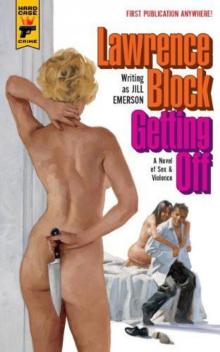 Getting Off hcc-69
 Three in the Side Pocket (A Story From the Dark Side)
 Let's Get Lost (A Matthew Scudder Story Book 8)
 Strange Are the Ways of Love
 MOSTLY MURDER: Till Death: a mystery anthology
 Masters of Noir: Volume Four
 A Week as Andrea Benstock
 Scenarios (A Stoiry From the Dark Side)
 The Sex Therapists: What They Can Do and How They Do It (John Warren Wells on Sexual Behavior Book 15)
 Like a Thief in the Night: a Bernie Rhodenbarr story
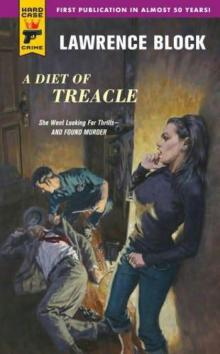 A Diet of Treacle
 Community of Women
 Different Strokes: How I (Gulp!) Wrote, Directed, and Starred in an X-rated Movie (John Warren Wells on Sexual Behavior)
 You Don't Even Feel It (A Story From the Dark Side)
 Zeroing In (Kit Tolliver #11) (The Kit Tolliver Stories)
 The Wife-Swap Report (John Warren Wells on Sexual Behavior)
 Keller's Fedora (Kindle Single)
 Speaking of Lust
 Everybody Dies (Matthew Scudder)
 Defender of the Innocent: The Casebook of Martin Ehrengraf
 After the First Death
 Writing the Novel
 How Far - a one-act stage play
 Chip Harrison Scores Again
 The Topless Tulip Caper ch-4
 The Crime of Our Lives
 Killing Castro
 The Trouble with Eden
 Nothing Short of Highway Robbery
 Sin Hellcat
 Getting Off: A Novel of Sex & Violence (Hard Case Crime)
 Coward's Kiss
 Alive in Shape and Color
 Blow for Freedom
 The New Sexual Underground: Crossing the Last Boundaries (John Warren Wells on Sexual Behavior Book 10)
 April North
 Lucky at Cards
 One Night Stands; Lost weekends
 Sweet Little Hands (A Story From the Dark Side)
 Blood on Their Hands
 A Dance at the Slaughterhouse
 Headaches and Bad Dreams (A Story From the Dark Side)
 Keller's Therapy
 The Specialists
 Hit and Run jk-4
 Threesome
 Love at a Tender Age (John Warren Wells on Sexual Behavior)
 The Devil Knows You're Dead: A MATTHEW SCUDDER CRIME NOVEL
 Funny You Should Ask
 CH01 - No Score
 Sex and the Stewardess (John Warren Wells on Sexual Behavior)
 A Madwoman's Diary
 When This Man Dies
 Sinner Man
 Such Men Are Dangerous
 A Strange Kind of Love
 Enough of Sorrow
 69 Barrow Street
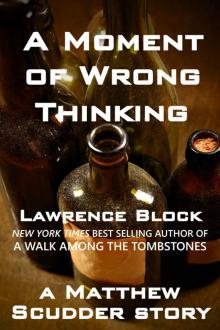 A Moment of Wrong Thinking (Matthew Scudder Mysteries Series Book 9)
 Eight Million Ways to Die ms-5
 Warm and Willing
 Mona
Mona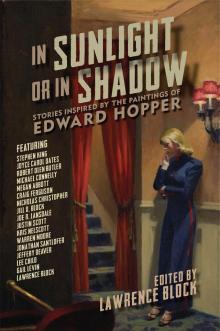 In Sunlight or In Shadow
 A Candle for the Bag Lady (Matthew Scudder Book 2)
 Conjugal Rites (Kit Tolliver #7) (The Kit Tolliver Stories)
 Speaking of Lust - the novella
 Gigolo Johnny Wells
 Dark City Lights
 Versatile Ladies: the bisexual option (John Warren Wells on Sexual Behavior)
 Passport to Peril
 The Taboo Breakers: Shock Troops of the Sexual Revolution (John Warren Wells on Sexual Behavior)
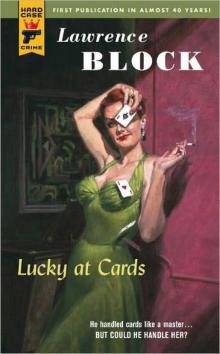 Lucky at Cards hcc-28
 Campus Tramp
 3 is Not a Crowd (John Warren Wells on Sexual Behavior)
 Manhattan Noir
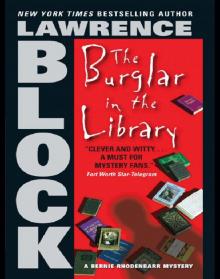 The Burglar in the Library
 Doing It! - Going Beyond the Sexual Revolution (John Warren Wells on Sexual Behavior Book 13)
 So Willing
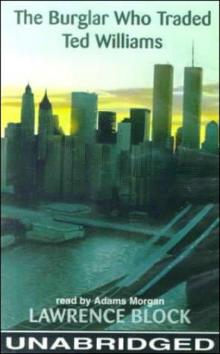 The Burglar Who Traded Ted Williams br-6
 Candy
Candy Sex Without Strings: A Handbook for Consenting Adults (John Warren Wells on Sexual Behavior)
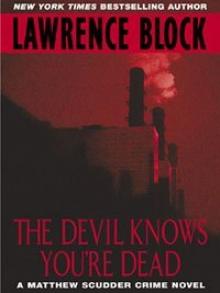 The Devil Knows You're Dead: A MATTHEW SCUDDER CRIME NOVEL (Matthew Scudder Mysteries)
 Manhattan Noir 2
 The Scoreless Thai (aka Two For Tanner)