
- Home
- Lawrence Block
Enough Rope Page 51
Enough Rope Read online
Page 51
Well, he would have a relapse, Kraft thought. He was doomed—the letter writer had ordained his death. He felt momentarily sorry for Claude Pierce, and then he turned his attention to the entries at Saratoga. There was a horse named Orange Pips which Kraft had been watching for some time. The horse had a good post now, and if he was ever going to win, this was the time.
Kraft went to the track. Orange Pips ran out of the money. In the morning Kraft failed to find Pierce’s obituary. When he called the hospital, the nurse told him that Pierce was recovering very nicely.
Impossible, Kraft thought.
For three weeks Claude Pierce lay in his hospital bed, and for three weeks Edgar Kraft followed his condition with more interest than Pierce’s doctor could have displayed. Once Pierce took a turn for the worse and slipped into a coma. The nurse’s voice was grave over the phone, and Kraft bowed his head, resigned to the inevitable. A day later Pierce had rallied remarkably. The nurse sounded positively cheerful, and Kraft fought off a sudden wave of rage that threatened to overwhelm him.
From that point on, Pierce improved steadily. He was released, finally, a whole man again, and Kraft could not understand quite what had happened. Something had gone wrong. When Pierce died, he was to receive a thousand dollars. Pierce had been sick, Pierce had been close to death, and then, inexplicably, Pierce had been snatched from the very jaws of death, with a thousand dollars simultaneously snatched from Edgar Kraft.
He waited for another letter. No letter came.
With the rent two weeks overdue, with a payment on the car past due, with the man from Superior Finance calling him far too often, Kraft’s mind began to work against him. When this man dies, the letter had said. There had been no strings attached, no time limit on Pierce’s death. After all, Pierce could not live forever. No one did. And whenever Pierce did happen to draw his last breath, he would get that thousand dollars.
Suppose something happened to Pierce—
He thought it over against his own will. It would not be hard, he kept telling himself. No one knew that he had any interest whatsoever in Claude Pierce. If he picked his time well, if he did the dirty business and got it done with and hurried off into the night, no one would know. The police would never think of him in the same breath with Claude Pierce, if police were in the habit of thinking in breaths. He did not know Pierce, he had no obvious motive for killing Pierce, and—
He couldn’t do it, he told himself. He simply could not do it. He was no killer. And something as senseless as this, something so thoroughly absurd, was unthinkable.
He would manage without the thousand dollars. Somehow, he would live without the money. True, he had already spent it a dozen times over in his mind. True, he had been counting and recounting it when Pierce lay in a coma. But he would get along without it. What else could he do?
The next morning headlines shrieked Pierce’s name at Edgar Kraft. The previous night someone had broken into the Pierce home on Honeydale Drive and had knifed Claude Pierce in his bed. The murderer had escaped unseen. No possible motive for the slaying of Pierce could be established. The police were baffled.
Kraft got slightly sick to his stomach as he read the story. His first reaction was a pure and simple onrush of unbearable guilt, as though he had been the man with the knife, as though he himself had broken in during the night to stab silently and flee promptly, mission accomplished. He could not shake this guilt away. He knew well enough that he had done nothing, that he had killed no one. But he had conceived of the act, he had willed that it be done, and he could not escape the feeling that he was a murderer, at heart if not in fact.
His blood money came on schedule. One thousand dollars, ten fresh hundreds this time. And the message. Thank you.
Don’t thank me, he thought, holding the bills in his hand, holding them tenderly. Don’t thank me!
Mr. Leon Dennison
When This Man Dies
You Will Receive
Fifteen Hundred Dollars.
Kraft did not keep the letter. He was breathing heavily when he read it, his heart pounding. He read it twice through, and then he took it and the envelope it had come in, and all the other letters and envelopes that he had so carefully saved, and he tore them all into little bits and flushed them down the toilet.
He had a headache. He took aspirin; but it did not help his headache at all. He sat at his desk and did no work until lunchtime. He went to the luncheonette around the corner and ate lunch without tasting his food. During the afternoon he found that, for the first time, he could not make heads or tails out of the list of entries at Saratoga. He couldn’t concentrate on a thing, and he left the office early and took a long walk.
Mr. Leon Dennison.
Dennison lived in an apartment on Cadbury Avenue. No one answered his phone. Dennison was an attorney, and he had an office listing. When Kraft called it a secretary answered and told him that Mr. Dennison was in conference. Would he care to leave his name?
When this man dies.
But Dennison would not die, he thought. Not in a hospital bed, at any rate. Dennison was perfectly all right, he was at work and the person who had written all those letters knew very well that Dennison was all right, that he was not sick.
Fifteen hundred dollars.
But how, he wondered. He did not own a gun and had not the slightest idea how to get one. A knife? Someone had used a knife on Claude Pierce, he remembered. And a knife would probably not be hard to get his hands on. But a knife seemed somehow unnatural to him.
How, then? By automobile? He could do it that way, he could lie in wait for Dennison and run him down in his car. It would not be difficult, and it would probably be certain enough. Still, the police were supposed to be able to find hit-and-run drivers fairly easily. There was something about paint scrapings, or blood on your own bumper or something. He didn’t know the details, but they always did seem to catch hit-and-run drivers.
Forget it, he told himself. You are not a killer.
He didn’t forget it. For two days he tried to think of other things and failed miserably. He thought about Dennison, and he thought about fifteen hundred dollars and he thought about murder.
When this man dies—
One time he got up early in the morning and drove to Cadbury Avenue. He watched Leon Dennison’s apartment, and he saw Dennison emerge, and when Dennison crossed the street toward his parked car Kraft settled his own foot on the accelerator and ached to put the pedal on the floor and send the car hurtling toward Leon Dennison. But he didn’t do it. He waited.
So clever. Suppose he were caught in the act? Nothing linked him with the person who wrote him the letters. He hadn’t even kept the letters, but even if he had, they were untraceable.
Fifteen hundred dollars—
On a Thursday afternoon he called his wife and told her he was going directly to Saratoga. She complained mechanically before bowing to the inevitable. He drove to Cadbury Avenue and parked his car. When the doorman slipped down to the corner for a cup of coffee, Kraft ducked into the building and found Leon Dennison’s apartment. The door was locked, but he managed to spring the lock with the blade of a penknife. He was sweating freely as he worked on the lock, expecting every moment someone to come up behind him and lay a hand on his shoulder. The lock gave, and he went inside and closed it after him.
But something happened the moment he entered the apartment. All the fear, all the anxiety, all of this suddenly left Edgar Kraft. He was mysteriously calm now. Everything was prearranged, he told himself. Joseph H. Neimann had been doomed, and Raymond Andersen had been doomed, and Claude Pierce had been doomed, and each of them had died. Now Leon Dennison was similarly doomed, and he too would die.
It seemed very simple. And Edgar Kraft himself was nothing but a part of this grand design, nothing but a cog in a gigantic machine. He would do his part without worrying about it. Everything could only go according to plan.
Everything did. He waited three hours for Leon Dennison
to come home, waited in calm silence. When a key turned in the lock, he stepped swiftly and noiselessly to the side of the door, a fireplace andiron held high overhead. The door opened and Leon Dennison entered, quite alone.
The andiron descended.
Leon Dennison fell without a murmur. He collapsed, lay still. The andiron rose and fell twice more, just for insurance, and Leon Dennison never moved and never uttered a sound. Kraft had only to wipe off the andiron and a few other surfaces to eliminate any fingerprints he might have left behind. He left the building by the service entrance. No one saw him.
He waited all that night for the rush of guilt. He was surprised when it failed to come. But he had already been a murderer—by wishing for Andersen’s death, by planning Pierce’s murder. The simple translation of his impulses from thought to deed was no impetus for further guilt.
There was no letter the next day. The following morning the usual envelope was waiting for him. It was quite bulky; it was filled with fifteen hundred-dollar bills.
The note was different. It said Thank You, of course. But beneath that there was another line:
How Do You Like Your New Job?
With a Smile for the Ending
I had one degree from Trinity, and one was enough, and I’d had enough of Dublin, too. It is a fine city, a perfect city, but there are only certain persons that can live there. An artist will love the town, a priest will bless it, and a clerk will live in it as well as elsewhere. But I had too little of faith and of talent and too much of a hunger for the world to be priest or artist or pen warden. I might have become a drunkard, for Dublin’s a right city for a drinking man, but I’ve no more talent for drinking than for deception—yet another lesson I learned at Trinity, and equally a bargain. (Tell your story, Joseph Cameron Bane would say. Clear your throat and get on with it.)
I had family in Boston. They welcomed me cautiously and pointed me toward New York. A small but pretentious publishing house hired me; they leaned toward foreign editors and needed someone to balance off their flock of Englishmen. Four months was enough, of the job and of the city. A good place for a young man on the way up, but no town at all for a pilgrim.
He advertised for a companion. I answered his ad and half a dozen others, and when he replied I saw his name and took the job at once. I had lived with his books for years: The Wind at Morning, Cabot’s House, Ruthpen Hallburton, Lips That Could Kiss, others, others. I had loved his words when I was a boy in Ennis, knowing no more than to read what reached me, and I loved them still at Trinity where one was supposed to care only for more fashionable authors. He had written a great many books over a great many years, all of them set in the same small American town. Ten years ago he’d stopped writing and never said why. When I read his name at the bottom of the letter I realized, though it had never occurred to me before, that I had somehow assumed him dead for some years.
We traded letters. I went to his home for an interview, rode the train there and watched the scenery change until I was in the country he had written about. I walked from the railway station carrying both suitcases, having gambled he’d want me to stay. His housekeeper met me at the door. I stepped inside, feeling as though I’d dreamed the room, the house. The woman took me to him, and I saw that he was older than I’d supposed him, and next saw that he was not. He appeared older because he was dying. “You’re Riordan,” he said. “How’d you come up? Train?”
“Yes, sir.”
“Pete run you up?” I looked blank, I’m sure. He said that Pete was the town’s cabdriver, and I explained that I’d walked.
“Oh? Could have taken a taxi.”
“I like to walk.”
“Mmmmm,” he said. He offered me a drink. I refused, but he had one. “Why do you want to waste time watching a man die?” he demanded. “Not morbid curiosity, I’m sure. Want me to teach you how to be a writer?”
“No, sir.”
“Want to do my biography? I’m dull and out of fashion, but some fool might want to read about me.”
“No, I’m not a writer.”
“Then why are you here, boy?”
He asked this reasonably, and I thought about the question before I answered it. “I like your books,” I said finally.
“You think they’re good? Worthwhile? Literature?”
“I just like them.”
“What’s your favorite?”
“I’ve never kept score,” I answered.
He laughed, happy with the answer, and I was hired.
There was very little to do that could be called work. Now and then there would be a task too heavy for Mrs. Dettweiler, and I’d do that for her. There were occasional errands to run, letters to answer. When the weather turned colder he’d have me make up the fire for him in the living room. When he had a place to go, I’d drive him; this happened less often as time passed, as the disease grew in him.
And so, in terms of the time allotted to various tasks, my job was much as its title implied. I was his companion. I listened when he spoke, talked when he wanted conversation, and was silent when silence was indicated. There would be a time, his doctor told me, when I would have more to do, unless Mr. Bane would permit a nurse. I knew he would not, any more than he’d allow himself to die anywhere but in his home. There would be morphine shots for me to give him, because sooner or later the oral drug would become ineffective. In time he would be confined, first to his home and then to his room and at last to his bed, all a gradual preparation for the ultimate confinement.
“And maybe you ought to watch his drinking,” the doctor told me. “He’s been hitting it pretty heavy.”
This last I tried once and no more. I said something foolish, that he’d had enough, that he ought to take it with a little water; I don’t remember the words, only the stupidity of them, viewed in retrospect.
“I did not hire a damned warden,” he said. “You wouldn’t have thought of this yourself, Tim. Was this Harold Keeton’s idea?”
“Well, yes.”
“Harold Keeton is an excellent doctor,” he said. “But only a doctor, and not a minister. He knows that doctors are supposed to tell their patients to cut down on smoking and drinking, and he plays his part. There is no reason for me to limit my drinking, Tim. There is nothing wrong with my liver or with my kidneys. The only thing wrong with me, Tim, is that I have cancer.
“I have cancer, and I’m dying of it. I intend to die as well as I possibly can. I intend to think and feel and act as I please, and go out with a smile for the ending. I intend, among other things, to drink what I want when I want it. I do not intend to get drunk, nor do I intend to be entirely sober if I can avoid it. Do you understand?”
“Yes, Mr. Bane.”
“Good. Get the chessboard.”
For a change, I won a game.
The morning after Rachel Avery was found dead in her bathtub I came downstairs to find him at the breakfast table. He had not slept well, and this showed in his eyes and at the corners of his mouth.
“We’ll go into town today,” he said.
“It snowed during the night, and you’re tired. If you catch cold, and you probably will, you’ll be stuck in bed for weeks.” This sort of argument he would accept. “Why do you want to go to town, sir?”
“To hear what people say.”
“Oh? What do you mean?”
“Because Rachel’s husband killed her, Tim. Rachel should never have married Dean Avery. He’s a man with the soul of an adding machine, but Rachel was poetry and music. He put her in his house and wanted to own her, but it was never in her to be true, to him or to another. She flew freely and sang magnificently, and he killed her.
“I want to learn just how he did it, and decide what to do about it. Perhaps you’ll go to town without me. You notice things well enough. You sense more than I’d guessed you might, as though you know the people.”
“You wrote them well.”
This amused him. “Never mind,” he said. “Make a nuisance of yourself i
f you have to, but see what you can learn. I have to find out how to manage all of this properly. I know a great deal, but not quite enough.”
Before I left I asked him how he could be so sure. He said, “I know the town and the people. I knew Rachel Avery and Dean Avery. I knew her mother very well, and I knew his parents. I knew they should not have married, and that things would go wrong for them, and I am entirely certain that she was killed and that he killed her. Can you understand that?”
“I don’t think so,” I replied. But I took the car into town, bought a few paperbound books at the drugstore, had an unnecessary haircut at the barber’s, went from here to there and back again, and then drove home to tell him what I had learned.
“There was a coroner’s inquest this morning,” I said. “Death by drowning induced as a result of electrical shock, accidental in origin. The funeral is tomorrow.”
“Go on, Tim.”
“Dean Avery was in Harmony Falls yesterday when they finally reached him and told him what had happened. He was completely torn up, they said. He drove to Harmony Falls the day before yesterday and stayed overnight.”
“And he was with people all the while?”
“No one said.”
“They wouldn’t have checked,” he said. “No need, not when it’s so obviously an accident. You’ll go to the funeral tomorrow.”
“Why?”
“Because I can’t go myself.”
“And I’m to study him and study everyone else? Should I take notes?”
He laughed, then chopped off the laughter sharply. “I don’t think you’d have to. I didn’t mean that you would go in my place solely to observe, Tim, though that’s part of it. But I would want to be there because I feel I ought to be there, so you’ll be my deputy.”
I had no answer to this. He asked me to build up the fire, and I did. I heard the newspaper boy and went for the paper. The town having no newspaper of its own, the paper he took was from the nearest city, and of course there was nothing in it on Rachel Avery. Usually he read it carefully. Now he skimmed it as if hunting something, then set it aside.
 Tanner on Ice
 Hit Me
 Hit and Run
 Hope to Die
 Two For Tanner
 Tanners Virgin
 Dead Girl Blues
 One Night Stands and Lost Weekends
 A Drop of the Hard Stuff
 The Canceled Czech
 Even the Wicked
 Me Tanner, You Jane
 Quotidian Keller
 Small Town
 Tanners Tiger
 A Walk Among the Tombstones
 Tanners Twelve Swingers
 Gym Rat & the Murder Club
 Everybody Dies
 The Thief Who Couldnt Sleep
 Hit Parade
 The Devil Knows Youre Dead
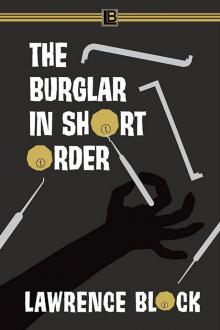 The Burglar in Short Order
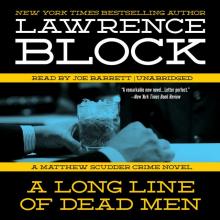 A Long Line of Dead Men
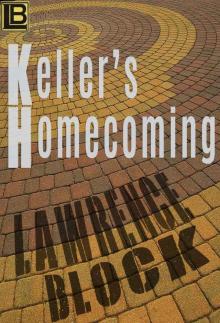 Keller's Homecoming
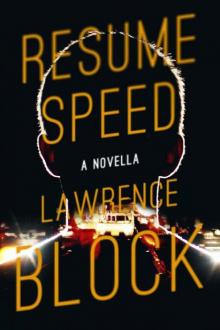 Resume Speed
 Keller's Adjustment
 Eight Million Ways to Die
 Time to Murder and Create
 Out on the Cutting Edge
 A Dance at the Slaughter House
 In the Midst of Death
 When the Sacred Ginmill Closes
 You Could Call It Murder
 Keller on the Spot
 A Ticket to the Boneyard
 A Time to Scatter Stones
 Keller's Designated Hitter
 A Stab in the Dark
 Sins of the Fathers
 The Burglar in the Closet
 Burglar Who Dropped In On Elvis
 The Burglar Who Painted Like Mondrian
 The Girl With the Long Green Heart
 The Burglar Who Counted the Spoons (Bernie Rhodenbarr)
 Burglar Who Smelled Smoke
 Rude Awakening (Kit Tolliver #2) (The Kit Tolliver Stories)
 Don't Get in the Car (Kit Tolliver #9) (The Kit Tolliver Stories)
 CH04 - The Topless Tulip Caper
 You Can Call Me Lucky (Kit Tolliver #3) (The Kit Tolliver Stories)
 CH02 - Chip Harrison Scores Again
 Strangers on a Handball Court
 Cleveland in My Dreams
 Clean Slate (Kit Tolliver #4) (The Kit Tolliver Stories)
 The Burglar Who Traded Ted Williams
 Burglar on the Prowl
 In For a Penny (A Story From the Dark Side)
 Catch and Release Paperback
 Ride A White Horse
 No Score
 Looking for David (A Matthew Scudder Story Book 7)
 Jilling (Kit Tolliver #6) (The Kit Tolliver Stories)
 Ariel
Ariel Enough Rope
 Grifter's Game
 Canceled Czech
 Unfinished Business (Kit Tolliver #12) (The Kit Tolliver Stories)
 Thirty
 The Burglar Who Thought He Was Bogart
 Make Out with Murder
 One Last Night at Grogan's (A Matthew Scudder Story Book 11)
 The Burglar on the Prowl
 Welcome to the Real World (A Story From the Dark Side)
 Keller 05 - Hit Me
 Walk Among the Tombstones: A Matthew Scudder Crime Novel
 Ronald Rabbit Is a Dirty Old Man
 The Burglar Who Studied Spinoza
 The Burglar Who Liked to Quote Kipling
 Keller in Des Moines
 Hit List
 The Dettweiler Solution
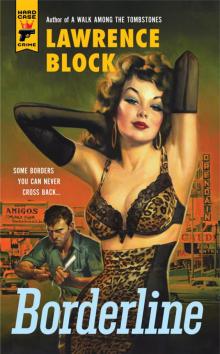 HCC 115 - Borderline
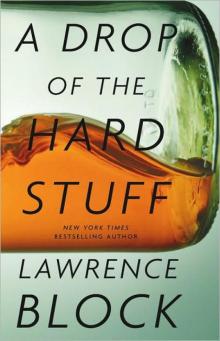 A Drop of the Hard Stuff: A Matthew Scudder Novel
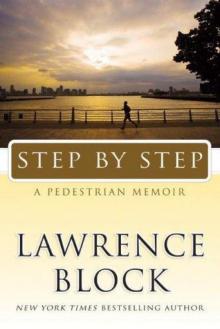 Step by Step
 The Girl With the Deep Blue Eyes
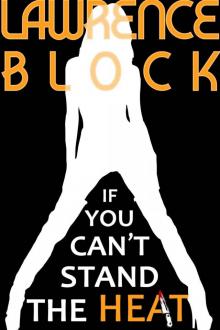 If You Can't Stand the Heat (Kit Tolliver #1) (The Kit Tolliver Stories)
 The Topless Tulip Caper
 Dolly's Trash & Treasures (A Story From the Dark Side)
 The Triumph of Evil
 Fun with Brady and Angelica (Kit Tolliver #10 (The Kit Tolliver Stories)
 Burglars Can't Be Choosers
 Who Knows Where It Goes (A Story From the Dark Side)
 Deadly Honeymoon
 Like a Bone in the Throat (A Story From the Dark Side)
 A Chance to Get Even (A Story From the Dark Side)
 The Boy Who Disappeared Clouds
 Collecting Ackermans
 Waitress Wanted (Kit Tolliver #5) (The Kit Tolliver Stories)
 One Thousand Dollars a Word
 Even the Wicked: A Matthew Scudder Novel (Matthew Scudder Mysteries)
 Hit Man
 The Night and The Music
 Ehrengraf for the Defense
 The Merciful Angel of Death (A Matthew Scudder Story Book 5)
 The Burglar in the Rye
 I Know How to Pick 'Em
 Getting Off hcc-69
 Three in the Side Pocket (A Story From the Dark Side)
 Let's Get Lost (A Matthew Scudder Story Book 8)
 Strange Are the Ways of Love
 MOSTLY MURDER: Till Death: a mystery anthology
 Masters of Noir: Volume Four
 A Week as Andrea Benstock
 Scenarios (A Stoiry From the Dark Side)
 The Sex Therapists: What They Can Do and How They Do It (John Warren Wells on Sexual Behavior Book 15)
 Like a Thief in the Night: a Bernie Rhodenbarr story
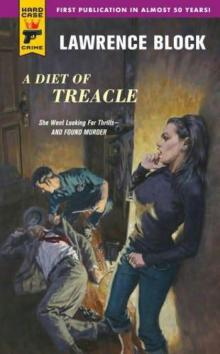 A Diet of Treacle
 Community of Women
 Different Strokes: How I (Gulp!) Wrote, Directed, and Starred in an X-rated Movie (John Warren Wells on Sexual Behavior)
 You Don't Even Feel It (A Story From the Dark Side)
 Zeroing In (Kit Tolliver #11) (The Kit Tolliver Stories)
 The Wife-Swap Report (John Warren Wells on Sexual Behavior)
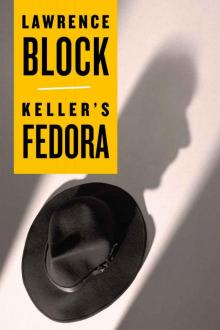 Keller's Fedora (Kindle Single)
 Speaking of Lust
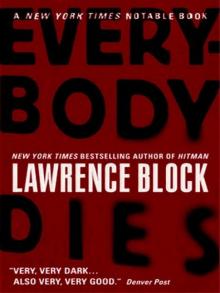 Everybody Dies (Matthew Scudder)
 Defender of the Innocent: The Casebook of Martin Ehrengraf
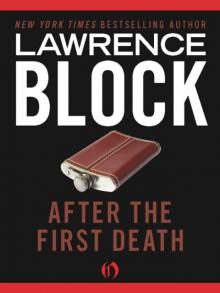 After the First Death
 Writing the Novel
 How Far - a one-act stage play
 Chip Harrison Scores Again
 The Topless Tulip Caper ch-4
 The Crime of Our Lives
 Killing Castro
 The Trouble with Eden
 Nothing Short of Highway Robbery
 Sin Hellcat
 Getting Off: A Novel of Sex & Violence (Hard Case Crime)
 Coward's Kiss
 Alive in Shape and Color
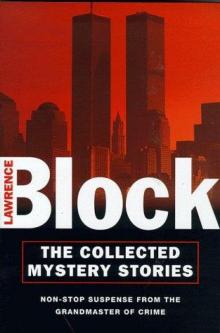 Blow for Freedom
 The New Sexual Underground: Crossing the Last Boundaries (John Warren Wells on Sexual Behavior Book 10)
 April North
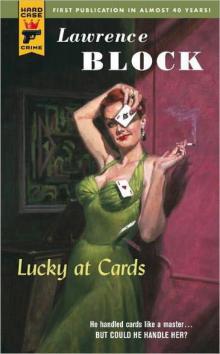 Lucky at Cards
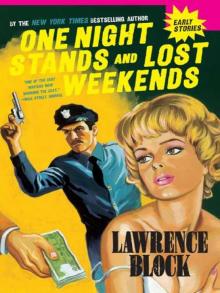 One Night Stands; Lost weekends
 Sweet Little Hands (A Story From the Dark Side)
 Blood on Their Hands
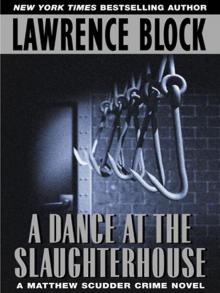 A Dance at the Slaughterhouse
 Headaches and Bad Dreams (A Story From the Dark Side)
 Keller's Therapy
 The Specialists
 Hit and Run jk-4
 Threesome
 Love at a Tender Age (John Warren Wells on Sexual Behavior)
 The Devil Knows You're Dead: A MATTHEW SCUDDER CRIME NOVEL
 Funny You Should Ask
 CH01 - No Score
 Sex and the Stewardess (John Warren Wells on Sexual Behavior)
 A Madwoman's Diary
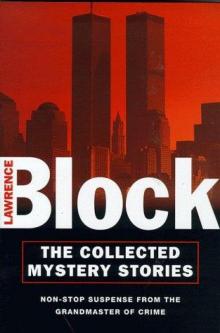 When This Man Dies
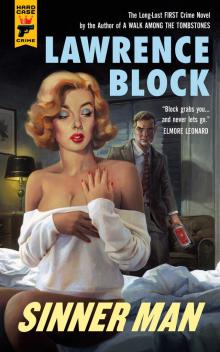 Sinner Man
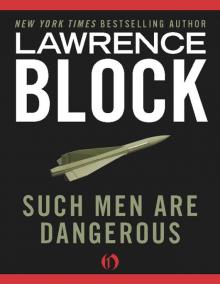 Such Men Are Dangerous
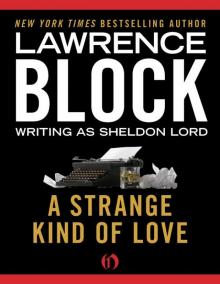 A Strange Kind of Love
 Enough of Sorrow
 69 Barrow Street
 A Moment of Wrong Thinking (Matthew Scudder Mysteries Series Book 9)
 Eight Million Ways to Die ms-5
 Warm and Willing
 Mona
Mona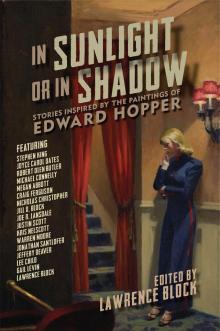 In Sunlight or In Shadow
 A Candle for the Bag Lady (Matthew Scudder Book 2)
 Conjugal Rites (Kit Tolliver #7) (The Kit Tolliver Stories)
 Speaking of Lust - the novella
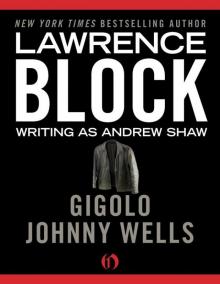 Gigolo Johnny Wells
 Dark City Lights
 Versatile Ladies: the bisexual option (John Warren Wells on Sexual Behavior)
 Passport to Peril
 The Taboo Breakers: Shock Troops of the Sexual Revolution (John Warren Wells on Sexual Behavior)
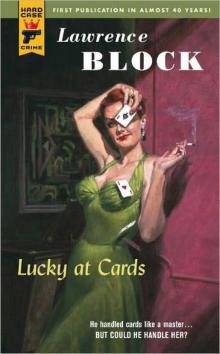 Lucky at Cards hcc-28
 Campus Tramp
 3 is Not a Crowd (John Warren Wells on Sexual Behavior)
 Manhattan Noir
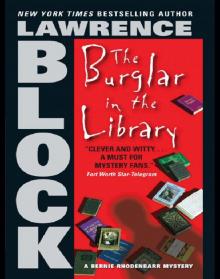 The Burglar in the Library
 Doing It! - Going Beyond the Sexual Revolution (John Warren Wells on Sexual Behavior Book 13)
 So Willing
 The Burglar Who Traded Ted Williams br-6
 Candy
Candy Sex Without Strings: A Handbook for Consenting Adults (John Warren Wells on Sexual Behavior)
 The Devil Knows You're Dead: A MATTHEW SCUDDER CRIME NOVEL (Matthew Scudder Mysteries)
 Manhattan Noir 2
 The Scoreless Thai (aka Two For Tanner)