
- Home
- Lawrence Block
Step by Step Page 31
Step by Step Read online
Page 31
One lap an hour, Beth and I told each other. All either of us had to do was manage a single 3.16-mile lap every hour, and we’d break seventy-five miles and sail past our previous record marks. The trick, then, was to stay on the course. The trick was to keep moving.
I got a good start, not too fast and not too slow. I suppose there must have been something that hurt early on, because there always is, but I can’t remember anything specific. I kept walking, and drank plenty of water—Wakefield was humid, as it always seems to be, whether it’s hot or cold, fair or raining. The course was reassuringly familiar, and I didn’t even mind the short patch of downhill cross-country that came right after the start of each lap. Each time I hit it I was three miles and change farther from the beginning and closer to my goals.
THE FIRST FIVE laps took four hours.
That struck me as a reasonable pace, one I ought to be able to sustain almost indefinitely. If I were to keep it up for the duration of the race, I’d finish with thirty laps, and break ninety miles—but I knew that wasn’t on the table. A slower pace and more frequent breaks were inevitable as the day wore on.
But if I held my pace for the first half of the race, if I managed five more laps in each of the next four-hour segments, I’d have just over forty-seven miles in the bank with twelve hours to go. I could average twenty-minute miles for the rest of the race, a stroller’s pace, and it would work out to the one-lap-per-mile formula Beth and I had discussed. Fifteen laps in the first half of the race, twelve in the second, added up to what? Twenty-seven laps for 85.4 miles.
Was that really possible? I didn’t see how it could be, especially the way I’d been forced to skimp on training. It was, in any case, mathematically possible. Whether or not I could make the numbers come out right was something I’d get to find out.
Meanwhile, the night wore on. A salty film coated my skin as Wakefield’s humidity took its toll, and I was grabbing two cups of water at each station, one to drink and one to pour over my head. I’d had five laps at eleven o’clock, and four hours later it was three in the morning and I was up to ten laps. I’d passed the marathon mark and rolled up fifty kilometers, and I still had a full sixteen hours to go.
And the bottoms of my feet were starting to feel warm.
IF I HAD gone straight to our room when I first noticed the tell-tale warmth, if I’d responded immediately by taping the soles of my feet—well, maybe it would have saved the day and maybe not, and I’ll never know. Because I stayed on the course, and when there was no getting around the fact that I’d worked up blisters on both feet, I kept on walking, perhaps hoping I could crush the damn things into submission. That more walking would somehow toughen my feet, that the liquid in the blisters would be magically reabsorbed, even as the blisters themselves morphed into calluses.
Fat chance.
I guess it must have been shortly before dawn when I returned to my room and took off my shoes and socks. Lynne was sleeping. I opened the blisters, expressed the fluid, ducked under the shower to rinse off the caked sweat, then bandaged my feet the best I could.
I put on clean socks and fresh shoes, and went out and pushed myself through a couple more laps, each slower and more painful than the one before. If I’d been able to continue the pace I’d maintained so easily for the first eight hours, I’d have finished my fifteenth lap around seven in the morning. It was in fact just 9:03 a.m. when I completed that fifteenth lap, for a total of 47.4 miles. The sky was overcast, and a light rain was falling. And I was finished.
I WENT TO THE room and fell on the bed. Maybe an hour or so with my eyes closed would refresh me, maybe my feet would be better if I stayed off them for that long.
I slept for a couple of hours, and when I woke up it was raining hard. My feet had somehow failed to experience anything in the way of miraculous healing, and the drizzle had become a downpour that washed away any thoughts I might have had about getting back out there.
It must have been around two in the afternoon when I went downstairs to see how everybody was doing. The rain had abated, and I may have thought I could fit in a few more laps, but I ruled that out before I was fifty yards from the hotel entrance. My feet were in no condition for any serious walking.
I did walk through the parking lot, though, and got to the scorer’s tent just as they were dismantling it. I’d realized that the deluge had been an electrical storm, but hadn’t known that the race organizers had become concerned enough about lightning strikes to cut the race short and clear the course somewhere around noon. (The last runner to finish a lap did so at two minutes after one.)
Nobody clocked a hundred miles, though the winner came close, hitting 97.96 miles in seventeen and a half hours. Beth and Andy both had to stop after twenty laps; each had been on pace to clear 80 miles, and had to settle for 63.2. All of this must have been quite dramatic, but it was all over before I knew the first thing about it, and virtually everyone had gone home. One of the remaining handful of volunteers presented me with a full carton of PowerBar gel packs, seventy-two of the things. I stowed it in the trunk and went back upstairs.
THOUGH THE MOOD was less triumphant than I’d envisioned it, we enjoyed our dinner with Micah and Rachel, and in the morning we drove back to the city, telling each other how fortunate I’d been. Suppose I’d pushed on, fighting my way past the pain of the blisters, somehow forcing myself to go on, only to leave the course anyway because they’d closed it. Wouldn’t that have been infuriating?
Or say I hadn’t been troubled by blisters to begin with. By noon I’d have been somewhere around the twenty laps Beth and Andy logged. Upward of sixty miles down with seven hours to go—sheesh, I’d have had a fit if anybody tried to pull the pavement out from under me. I’d have felt like killing someone.
The weather had presentenced the event to an inglorious end, and in my own case two wrongs had somehow made a right; my insufficient preparation got me off the course early, sparing me both a soaking and the frustration of a forced withdrawal.
So why didn’t I feel lucky?
27
I DISMISSED ANY THOUGHTS I MIGHT HAVE ENTERTAINED about the twenty-four-hour race in North Carolina. And I didn’t even look to see what short local races might be on offer at New York Road Runners. There were just two races on my personal calendar for the remainder of 2007—the Labor Day marathon in Albuquerque, for which I’d already enrolled, and the Ultracentric in Texas.
The Ultracentric consists of a variety of races, all on the same weekend and over the same course. There are races lasting six, twelve, twenty-four, and forty-eight hours, along with a half-marathon. At one point back in June, carried away by Andy Cable’s example in the six-day event, I’d actually considered trying the forty-eight-hour Ultracentric, but if Wakefield accomplished nothing else, at least it relieved me of that particular insanity.
I gave my blisters time to heal, and then I began getting out and walking along the Hudson again, tentatively at first. I found the Ultracentric website and signed up for the walking division of the twenty-four-hour race. What I kept neglecting to do, though, was book my flight to Albuquerque, and the day came when I realized I didn’t want to go. It would be a fine opportunity to add New Mexico to my marathon list, and a chance to see my niece Jennifer, and meet for the first time her husband and their twin daughters.
But I didn’t want to get on a plane, and I didn’t want to walk a marathon for which I was imperfectly trained, and the fact that I’d paid an entry fee didn’t seem sufficient reason to force myself to go.
Some other time, I thought. And by the last days of August I got serious about training for Texas.
I WALKED FIFTY miles the last week of August. I know this because I entered each day’s walk in my calendar. Six miles Sunday, four Monday, a long walk of sixteen on Tuesday, four on Wednesday, twelve Thursday, and four miles each on Friday and Saturday. (The distances were estimates, as I made life simpler by counting the time I spent and figuring I averaged fifteen-minute miles.)
Most people who write about walking or running or just about any athletic discipline will stress the importance of keeping a training log. Logs range from a simple notation of time or distance—or, more often, time and distance—to elaborate journal entries in which one records the time of day, the weather, the route taken, and, I suppose, the flora and fauna observed on the trail. All of this data will presumably be of benefit later on to the person jotting it down, not to mention the role it might someday play in the lives of generations yet unborn.
Well, maybe, but I’m inclined to put it right up there with counting your steps. Why on earth would I want to know at some future date that it was threatening to rain at the beginning of a particular walk, but that the sun broke through the cloud cover three miles into my walk, and that I was averaging 14:21 minutes per mile when I spotted the ruby-throated hummingbird?
Nevertheless, I find it useful to keep track of my training, albeit in a minimalist fashion, with nothing noted beyond the time spent walking. If I’m preparing for a race, I may want to increase my mileage a certain amount each week, and then taper off in the weeks immediately preceding the event. A log makes it easy to keep track.
But it has another effect that I’ve noticed, and that’s that I find myself going an extra mile just so that I’ll have one more mile to record in my log. Now nobody else is ever going to see that log, nor will I myself ever look at it again—except now, of course, when I find myself referring to it in order to write about it.
Some years back I knew a fellow who was a man of many parts—a book editor, a ski instructor, and I forget what else. He mentioned that he was in the process of becoming a certified appraiser, something that had nothing much to do with any other aspect of his life as far as I could tell. “I asked a friend if he thought it made any sense for me,” he said, “and he told me I really ought to go ahead with it. It wouldn’t take too much effort on my part, he pointed out, and it might be interesting in and of itself, and there was one other reason to do it. ‘Pat,’ he said, ‘it’s the kind of idiosyncratic accomplishment that’ll really dress up an obituary.’”
During my training for the Ultracentric, I didn’t give much consideration to the look of my training log—or my obituary, as far as that goes. I rang up fifty miles that first week, and decided I could safely increase my total by 10 percent a week. I’d establish a pattern of alternate long and short days, and I’d keep the short days at an hour for the time being, while I gradually extended my long days. Accordingly I walked fifty-six miles the second week, then sixty-two, seventy, and seventy-eight—which took me to the end of September. Tuesdays were my longest days, and by the end of the month I’d upped my Tuesday walk from four to seven hours. One of those Tuesdays it rained, and I did my five hours on a treadmill. I had no problem with it, or with the seven hours I put in the last Tuesday of the month.
Twenty-eight miles. “I’ve done the Moron’s Marathon,” I told Lynne, after having spent those seven hours at the river’s edge, the first four doing repeated circuits of just two piers, the next three striding down to the foot of Manhattan and around the other side, then coming back again.
And I felt fine. My feet were holding up nicely, their bottoms toughening as planned. I’d be tired at the end of a seven-hour walk, but not completely exhausted; my legs would be sore, but not agonizingly so. I was right on schedule, and all I had to do was keep going.
Eighty-four miles the first week of October, with my Tuesday walk extending to seven and a half hours. That was thirty miles, I thought at the time, and all I had to do was throw in an extra fifteen minutes and I’d have completed a fifty-kilometer training walk.
Maybe next week, I told myself.
But the following week the rest of my life got in the way a little, with a Tuesday lunch date forcing me to readjust my schedule. Consequently the long walk for the week came on Wednesday, and only ran to six and a half hours. Still, that was a marathon, or close to it. And, when the week was over, I’d put in twenty-three hours for a total of ninety-two miles.
Ninety-two miles, and I still had five weeks before the Ultracentric. I could start tapering off now, doing a little less walking each week, and not really training at all the week before the race. And then, when I got to Texas, I ought to be fine.
Eighty miles seemed well within reach. Of course something could always go wrong out on the course, whether it was the kind of rain we’d had at Houston, the murderous heat of Wakefield 2006, or another race-ending electrical storm. Or something could go wrong with me: the kind of foot pain that had cropped up at Huntington Beach and returned with a vengeance in New Orleans, or the back spasms that had pulled me up short twenty hours into the race in Minnesota.
I was fitting in the occasional session at the gym, trying to build core strength as a preventive for back problems. And I didn’t think my toes would bother me this time around, because I’d done some extensive experimental surgery—-not on my feet, God forbid, but on my shoes. I’d cut the fronts out of a pair of old New Balance shoes—I’d got the idea from Andy Cable, who’d turned up so attired at Wakefield, the fore portion of each shoe so neatly excised I thought for a moment they’d come that way from the manufacturer. I did all my training in those shoes, or in another similarly mutilated pair, and as a result my toes were never sore. So that was one problem area I could probably forget about, but that didn’t mean something else wouldn’t flare up.
The hell with it. There was no point in trying to foresee the unforeseeable. If something unavoidable went wrong, so be it—there would be other races. Until then I could relax, knowing I was doing everything I could by way of preparation. I’d be in great shape for the Ultracentric.
All I had to do was continue my training.
THAT WAS ALL I had to do, and I didn’t have to do it for that long, either. Just four weeks, really, because I’d be well advised to take the last week off altogether. And the fourth week wouldn’t amount to much more than stretching my legs, going out for an hour or so every other day.
Three weeks of real training, with the mileage dropping as I went along. I’d done ninety-two miles, so I could drop down to seventy the following week, say, and then to sixty, and finally to fifty. No speed work, no pushing, nothing but nice easy walking.
The first week, the seventy-mile week, I wound up taking three days off, and when the week was done I’d been out there eight hours, for thirty-two miles.
The second week was five hours. Twenty miles, not the sixty I’d scheduled for myself.
I went out for an hour the first day of the third week. And that was it.
HOW DID THIS HAPPEN?
I can’t make sense of it. It’s not as though I made a conscious decision to sabotage myself and cut my training short. Early on, whenever I found myself skipping a day, I’d tell myself I’d make it up the next day. Before long, however, I didn’t even bother having the intention. My training had ground to a halt, and I dealt with it by not dealing with it. As far as I can recall, I didn’t even think about it very much. The calendar I used to log my training miles was on a hook in the bathroom, and I saw it every time I shaved or brushed my teeth, but it wasn’t that hard to avoid looking at it.
And, come November, I could turn the page.
The last week of October I’d planned to walk fifty miles, but managed all of four. I’d written a film with Wong Kar-Wai, the brilliant Hong Kong–based director, and while My Blueberry Nights had already opened the Cannes Film Festival, I had to furnish some additional voice-overs prior to its U.S. release. My work had to be completed before the Writers Guild strike commenced on the first of November. Still, that left me plenty of time for an hour or two a day at the river’s edge, and that sort of walking is good preparation for writing, giving the mind a chance to wander constructively. One day I sauntered down to the Weinstein Company offices in Tribeca, then walked back after my meeting. I suppose it was around a mile and a half each way, so I covered three miles that day, but I wasn’t r
acewalking and it didn’t amount to anything to mark on my calendar.
I spent the first week of November at my daughter Jill’s house on Fire Island, using the place as my own private writer’s colony. I’d stopped working on the book right before the part about the walk across Spain, and that’s what I wrote on Fire Island. I put in long hours, tapping away pretty much from dawn to dusk, but I could have managed a long walk every day, and couldn’t have asked for a nicer venue for it. I’d done a long training walk there a month earlier, in the course of a weekend visit, and it was even nicer now, with even fewer people around. I brought my walking gear along, unpacked it on arrival, and packed it up again, unused, for the trip home.
Well, nothing you do in the last two weeks helps anyway, I reminded myself. It was too late for training to do me any good, and there was always the chance it could hurt me.
It’s true, certainly, that heavy mileage right before a race is counterproductive, and that one is best advised to err on the side of caution. Still, it might have been a good idea for me to get out there for an hour a day during those last two weeks, given that I’d done so little in the three weeks that preceded them. Just getting out there and walking might keep my feet from going soft. They’d been soft at Wakefield, that’s why they’d blistered, and by putting in so little time in the month before the Ultracentric, I was courting the very same thing again.
I thought of this. But I didn’t act on it.
HAVING STOPPED TRAINING prematurely, I was able to devote myself wholeheartedly to another phase of prerace preparation.
Carbo loading.
There’s no real point in wolfing down carbohydrates before a race, not if you’re a slow runner, certainly not if you’re walking fifteen-minute miles. Still, most walkers and runners fit in a plate of pasta the night before racing, not because it’s likely to improve one’s performance but because it’s (a) traditional, (b) harmless, and (c) tasty. But even for those speedy marathoners for whom carbo loading might serve a purpose, it’s something you do for a day or two.
 Tanner on Ice
 Hit Me
 Hit and Run
 Hope to Die
 Two For Tanner
 Tanners Virgin
 Dead Girl Blues
 One Night Stands and Lost Weekends
 A Drop of the Hard Stuff
 The Canceled Czech
 Even the Wicked
 Me Tanner, You Jane
 Quotidian Keller
 Small Town
 Tanners Tiger
 A Walk Among the Tombstones
 Tanners Twelve Swingers
 Gym Rat & the Murder Club
 Everybody Dies
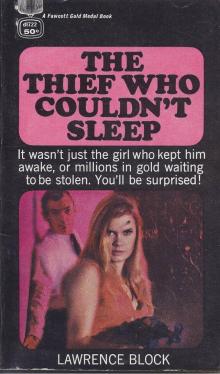 The Thief Who Couldnt Sleep
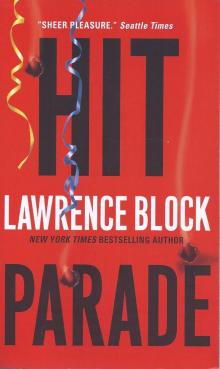 Hit Parade
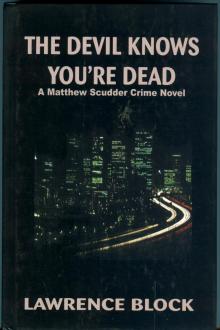 The Devil Knows Youre Dead
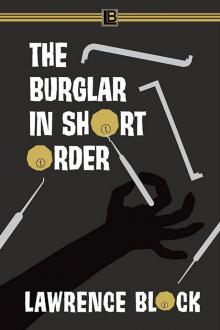 The Burglar in Short Order
 A Long Line of Dead Men
 Keller's Homecoming
 Resume Speed
 Keller's Adjustment
 Eight Million Ways to Die
 Time to Murder and Create
 Out on the Cutting Edge
 A Dance at the Slaughter House
 In the Midst of Death
 When the Sacred Ginmill Closes
 You Could Call It Murder
 Keller on the Spot
 A Ticket to the Boneyard
 A Time to Scatter Stones
 Keller's Designated Hitter
 A Stab in the Dark
 Sins of the Fathers
 The Burglar in the Closet
 Burglar Who Dropped In On Elvis
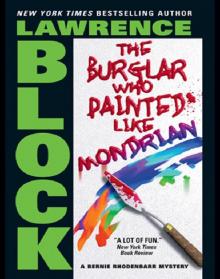 The Burglar Who Painted Like Mondrian
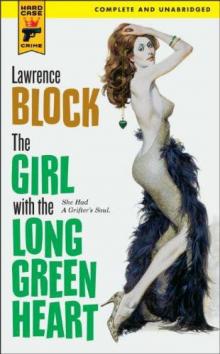 The Girl With the Long Green Heart
 The Burglar Who Counted the Spoons (Bernie Rhodenbarr)
 Burglar Who Smelled Smoke
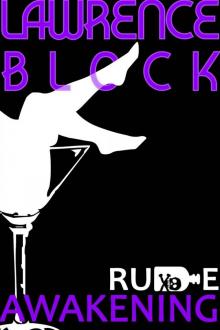 Rude Awakening (Kit Tolliver #2) (The Kit Tolliver Stories)
 Don't Get in the Car (Kit Tolliver #9) (The Kit Tolliver Stories)
 CH04 - The Topless Tulip Caper
 You Can Call Me Lucky (Kit Tolliver #3) (The Kit Tolliver Stories)
 CH02 - Chip Harrison Scores Again
 Strangers on a Handball Court
 Cleveland in My Dreams
 Clean Slate (Kit Tolliver #4) (The Kit Tolliver Stories)
 The Burglar Who Traded Ted Williams
 Burglar on the Prowl
 In For a Penny (A Story From the Dark Side)
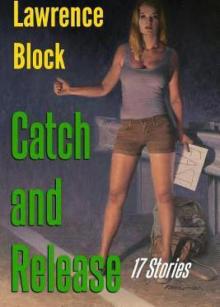 Catch and Release Paperback
 Ride A White Horse
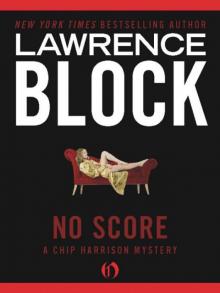 No Score
 Looking for David (A Matthew Scudder Story Book 7)
 Jilling (Kit Tolliver #6) (The Kit Tolliver Stories)
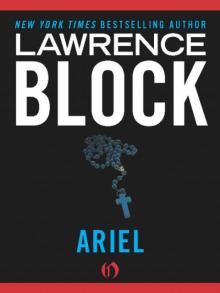 Ariel
Ariel Enough Rope
 Grifter's Game
 Canceled Czech
 Unfinished Business (Kit Tolliver #12) (The Kit Tolliver Stories)
 Thirty
 The Burglar Who Thought He Was Bogart
 Make Out with Murder
 One Last Night at Grogan's (A Matthew Scudder Story Book 11)
 The Burglar on the Prowl
 Welcome to the Real World (A Story From the Dark Side)
 Keller 05 - Hit Me
 Walk Among the Tombstones: A Matthew Scudder Crime Novel
 Ronald Rabbit Is a Dirty Old Man
 The Burglar Who Studied Spinoza
 The Burglar Who Liked to Quote Kipling
 Keller in Des Moines
 Hit List
 The Dettweiler Solution
 HCC 115 - Borderline
 A Drop of the Hard Stuff: A Matthew Scudder Novel
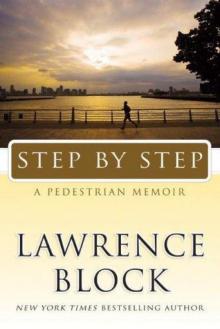 Step by Step
 The Girl With the Deep Blue Eyes
 If You Can't Stand the Heat (Kit Tolliver #1) (The Kit Tolliver Stories)
 The Topless Tulip Caper
 Dolly's Trash & Treasures (A Story From the Dark Side)
 The Triumph of Evil
 Fun with Brady and Angelica (Kit Tolliver #10 (The Kit Tolliver Stories)
 Burglars Can't Be Choosers
 Who Knows Where It Goes (A Story From the Dark Side)
 Deadly Honeymoon
 Like a Bone in the Throat (A Story From the Dark Side)
 A Chance to Get Even (A Story From the Dark Side)
 The Boy Who Disappeared Clouds
 Collecting Ackermans
 Waitress Wanted (Kit Tolliver #5) (The Kit Tolliver Stories)
 One Thousand Dollars a Word
 Even the Wicked: A Matthew Scudder Novel (Matthew Scudder Mysteries)
 Hit Man
 The Night and The Music
 Ehrengraf for the Defense
 The Merciful Angel of Death (A Matthew Scudder Story Book 5)
 The Burglar in the Rye
 I Know How to Pick 'Em
 Getting Off hcc-69
 Three in the Side Pocket (A Story From the Dark Side)
 Let's Get Lost (A Matthew Scudder Story Book 8)
 Strange Are the Ways of Love
 MOSTLY MURDER: Till Death: a mystery anthology
 Masters of Noir: Volume Four
 A Week as Andrea Benstock
 Scenarios (A Stoiry From the Dark Side)
 The Sex Therapists: What They Can Do and How They Do It (John Warren Wells on Sexual Behavior Book 15)
 Like a Thief in the Night: a Bernie Rhodenbarr story
 A Diet of Treacle
 Community of Women
 Different Strokes: How I (Gulp!) Wrote, Directed, and Starred in an X-rated Movie (John Warren Wells on Sexual Behavior)
 You Don't Even Feel It (A Story From the Dark Side)
 Zeroing In (Kit Tolliver #11) (The Kit Tolliver Stories)
 The Wife-Swap Report (John Warren Wells on Sexual Behavior)
 Keller's Fedora (Kindle Single)
 Speaking of Lust
 Everybody Dies (Matthew Scudder)
 Defender of the Innocent: The Casebook of Martin Ehrengraf
 After the First Death
 Writing the Novel
 How Far - a one-act stage play
 Chip Harrison Scores Again
 The Topless Tulip Caper ch-4
 The Crime of Our Lives
 Killing Castro
 The Trouble with Eden
 Nothing Short of Highway Robbery
 Sin Hellcat
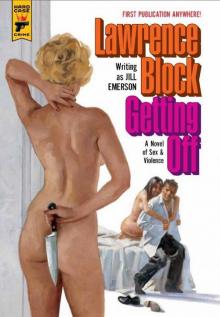 Getting Off: A Novel of Sex & Violence (Hard Case Crime)
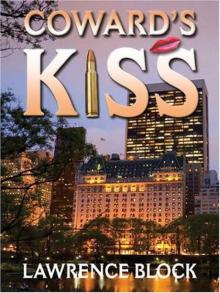 Coward's Kiss
 Alive in Shape and Color
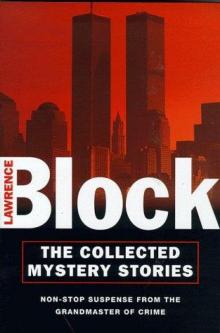 Blow for Freedom
 The New Sexual Underground: Crossing the Last Boundaries (John Warren Wells on Sexual Behavior Book 10)
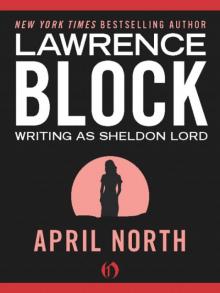 April North
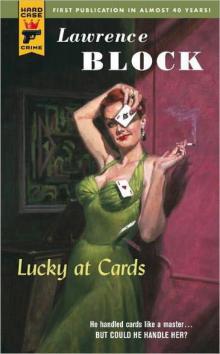 Lucky at Cards
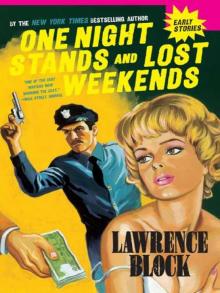 One Night Stands; Lost weekends
 Sweet Little Hands (A Story From the Dark Side)
 Blood on Their Hands
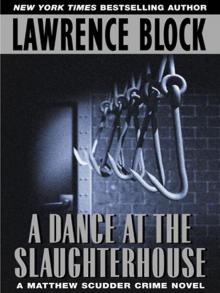 A Dance at the Slaughterhouse
 Headaches and Bad Dreams (A Story From the Dark Side)
 Keller's Therapy
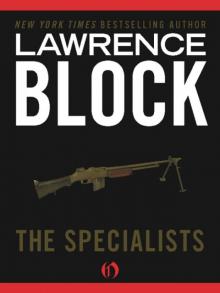 The Specialists
 Hit and Run jk-4
 Threesome
 Love at a Tender Age (John Warren Wells on Sexual Behavior)
 The Devil Knows You're Dead: A MATTHEW SCUDDER CRIME NOVEL
 Funny You Should Ask
 CH01 - No Score
 Sex and the Stewardess (John Warren Wells on Sexual Behavior)
 A Madwoman's Diary
 When This Man Dies
 Sinner Man
 Such Men Are Dangerous
 A Strange Kind of Love
 Enough of Sorrow
 69 Barrow Street
 A Moment of Wrong Thinking (Matthew Scudder Mysteries Series Book 9)
 Eight Million Ways to Die ms-5
 Warm and Willing
 Mona
Mona In Sunlight or In Shadow
 A Candle for the Bag Lady (Matthew Scudder Book 2)
 Conjugal Rites (Kit Tolliver #7) (The Kit Tolliver Stories)
 Speaking of Lust - the novella
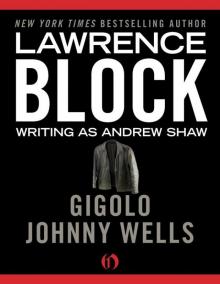 Gigolo Johnny Wells
 Dark City Lights
 Versatile Ladies: the bisexual option (John Warren Wells on Sexual Behavior)
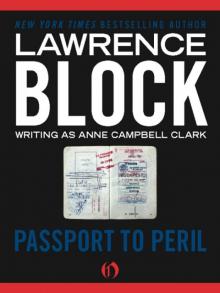 Passport to Peril
 The Taboo Breakers: Shock Troops of the Sexual Revolution (John Warren Wells on Sexual Behavior)
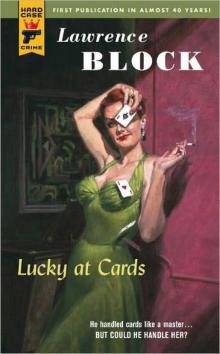 Lucky at Cards hcc-28
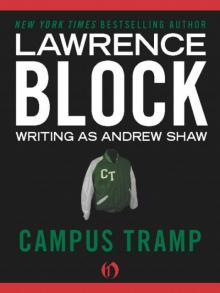 Campus Tramp
 3 is Not a Crowd (John Warren Wells on Sexual Behavior)
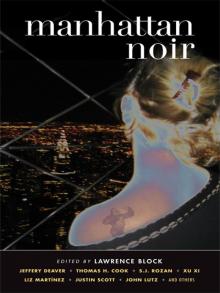 Manhattan Noir
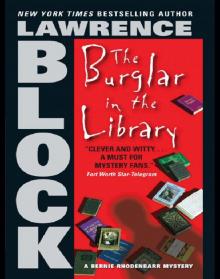 The Burglar in the Library
 Doing It! - Going Beyond the Sexual Revolution (John Warren Wells on Sexual Behavior Book 13)
 So Willing
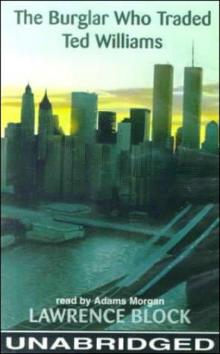 The Burglar Who Traded Ted Williams br-6
 Candy
Candy Sex Without Strings: A Handbook for Consenting Adults (John Warren Wells on Sexual Behavior)
 The Devil Knows You're Dead: A MATTHEW SCUDDER CRIME NOVEL (Matthew Scudder Mysteries)
 Manhattan Noir 2
 The Scoreless Thai (aka Two For Tanner)