
- Home
- Lawrence Block
Step by Step Page 30
Step by Step Read online
Page 30
Recovery, as it turned out, was rapid and easy, and I reached Anchorage in decent shape for a marathon. It was late June, and midnight sun was no exaggeration, but I still thought it was curious that they’d hung that tag on the race. When they call something the Midnight Sun Marathon, you expect to be out there in the middle of the night. Instead we had the typical morning start, and the slowest Purple Person of the bunch was eating postrace pizza a good eight hours before midnight.
The event was well organized. School buses chartered for the occasion picked us all up at our hotels and conveyed us to the start, then scooped us up at the finish and took us home.
I took my time. I didn’t stop to take pictures, but neither did I set out to break any records. I’d had only three weeks since my seventy-mile effort in Minnesota, and I thought of this marathon more as a long recovery walk. I took it at cruising speed, and enjoyed the fresh air and the surroundings. Because I don’t wear my glasses during races or training walks, my appreciation of the scenery was limited. What I saw was not all that sharply focused, but no less enjoyable for it; viewing the passing landscape without my glasses was rather like looking at Monet with them, and what’s so bad about that?
Some runners reported sightings of bears and moose. I did see an eagle, perched on a dead tree and outlined against the sky, but I wouldn’t have noticed the bird if someone else hadn’t given a cry and pointed him out.
My net time was 6:22:06. I’d gone the twenty-six miles and change, and the usual aches and pains came and went during the race, but in the main I held up well enough and finished in decent shape. The horrible toe pain that I’d endured in two successive marathons, Huntington Beach and New Orleans, didn’t show up this time; I’d escaped it in Minnesota as well, and figured a change I’d made in footwear deserved the credit. I’d been more anxious about my lower back, and it never gave me a twinge.
I rode back to my hotel and stood under a hot shower for a while, and a few hours later I walked downtown and ate salmon.
I got up the next morning, booted up my laptop, checked my email, took a deep breath, and started writing.
MORE SPECIFICALLY, I started writing this book.
I’d been thinking off and on about writing some sort of book about my efforts at racewalking. One thing that held me back was the concern that no one but family members and indulgent friends would have much interest in reading it. It seemed to me that I couldn’t assign high priority to such a book, not when I had another book I was contractually committed to write, a book I was already late in delivering. A book I might have been able to deliver on time, if I wasn’t always out there walking day after day…
That book was Hit and Run, and I completed it in the course of my post-marathon stay in New Orleans. Once I’d turned it in, I realized there was something else I had an urge to write, and it was sometime in April that I began working on this book’s opening, actually reworking a message board report I’d posted on the New Orleans race. I got a little work done, but not very much; as my training for FANS picked up, I let the writing go. Now, though, I had a long week all by myself in a city where I didn’t know a soul. And training wouldn’t be a distraction, because my legs needed a rest at this point more than they needed more miles on them.
And my performance at FANS had me feeling genuinely good about myself as a walker, and my leisurely pace in Anchorage hadn’t changed that. So I’d brought my laptop along, and Sunday morning I got to work.
THIS WAS NOT my first venture at memoir. Sometime in the mid-1990’s I’d gone to Ragdale, a writers’ colony north of Chicago in Lake Forest, Illinois, to work on what would eventually take form as a Bernie Rhodenbarr mystery, The Burglar in the Library. I spent a week establishing that I wasn’t ready to write that particular book, then set it aside and wrote some other things—an introduction for the first hardcover edition of The Canceled Czech, and a pair of short stories which became chapters in Hit Man. It was a productive stay, if not what I’d had in mind when I booked the time, but I still had ten days before I was due to pack up and head home, and I got up one morning and started hitting computer keys, and it was the damnedest thing. I couldn’t stop writing.
I’d been toying with the idea of writing a memoir of my beginnings as a writer. I started young, while I was still in college, and spent those early years producing a vast amount of pseudonymous trash, along with my first efforts at crime fiction. I’d written a great deal since about writing, I had a monthly instructional column in Writer’s Digest from 1977 to 1990, and I’d certainly referenced some of my early experiences in that column and the several books for writers that had grown out of it. But I’d never really told my story, had never been inclined to do so, and had in fact made a point of brushing aside interviewers who wanted me to discuss those early days.
In the months before my Ragdale stay, I’d gotten to the point where I felt that recounting my beginnings was something I might want to do someday. But not yet, certainly. Not until I was ready.
Well, it was beginning to look as though I was ready. Because I batted out something like six thousand words the first day. I couldn’t drag myself away from the computer. I barely got to the dinner table on time, and it’s rare indeed for me to miss a meal.
I did the same thing the next day, and the day after that. And in eight days I’d produced something in excess of fifty thousand words.
It was an extraordinary experience. I’d start writing about some incident I hadn’t really thought about in decades, and almost before I’d finished exploring that particular chamber in my memory, another door would spring open, and I’d be remembering something else I’d forgotten entirely.
I’d had words come at this pace before. Some of us are apt to describe a book as having virtually written itself, but that’s not really what happens; if it did, one wouldn’t feel so utterly exhausted at day’s end. But, tiring or not, I’ve had books that were written very rapidly, and I don’t know that they ever suffered for the speed of their composition. Some of the work I’ve liked the best, and that was the most favorably received, had a very short gestation period and an easy birth.
But this was different. I found myself working all day and returning to work after dinner, because I seemed to be incapable of staying away from the computer. One memory would lead to another, and I couldn’t shut the process down.
I wrote a little over fifty thousand words in eight days. (If you’re not accustomed to thinking of length in terms of word count, this book you’re reading is, as I type these very words you’re reading now, just over 100,000 words. My daily stint, for the past four very productive weeks, has ranged between a thousand and twelve hundred words.)
I flew home from Ragdale with what I estimated at somewhere between 40 and 50 percent of the projected volume. That didn’t mean it was anywhere near half done, as what I’d written was in rough form, and would require more work. It was, in fact, less polished than my usual first-draft copy, because I hadn’t taken the time to tweak it as I went along. I’d been too busy writing the damn thing.
But it was readable enough to include in a submission when my agent negotiated a four-volume deal with my publishers. It wasn’t by any means a key component, it was the literary equivalent of a player to be named later, but it was designated in the contract, with a specified portion of the advance earmarked for it.
That made it simpler a few years later, when I had to buy it back.
Because, curiously, I never wrote another word of that book. For the first month or so after I got back to New York I didn’t write a word of anything, or do much of anything else, either. I was exhausted, and shortly after I managed to get up each morning, it was all I could do to stretch out on the living room sofa, where I spent most of my time until it was late enough to go to bed. Lynne would pause now and then on her way by to dust me.
I’d known I was going to need some downtime after the effort I’d put in, but this was a lot more than I’d anticipated. I’d worked intensively in
the past, it was in fact my preferred way of working, and I went to writers’ colonies because they facilitated this kind of total immersion in the work. This was vastly different, and when I thought about it—a few weeks down the line, when I was finally able to think about anything—I realized that the energy debt I’d incurred this time around was not only mental and physical, but emotional as well. You could argue that I’d been through a short course of do-it-yourself psychotherapy, and perhaps I’d turn out to be a better person for it, but in the meantime it was all I could do to chew my food.
When I was ready to get back to writing, I left the memoir alone and went to work on a novel. And for the next several years I didn’t even look at the pages that had poured out of me at Ragdale. My publishers never raised the subject, and why should they? There are books that have bestseller written all over them, and my memoir was not one of them. They’d have been happy to publish it if I ever finished it, but if I didn’t, well, that wasn’t anything likely to impact adversely on their bottom line. Eventually we negotiated another contract, and applied my advance for the memoir to the new agreement, and the memoir no longer served as a source of guilt. It was by no means the only piece of writing I’d started and never finished, and maybe I’d get back to it someday, and maybe I wouldn’t, and who cared?
AND HERE I was in Anchorage, in a writer’s colony of my own making, writing another memoir with no guarantee that I’d ever finish it, or that anyone would want to read it if I did.
So what? I was having a good time.
I got up every morning and worked at a measured pace—cruising speed, we ultrawalkers call it—until it was time for lunch. I walked a mile to the seafood restaurant, where I had salmon once or twice a day. (Now and then I’d make one of the day’s meals halibut, or king crab. But by and large it seemed too great a sacrifice to have anything but salmon.) Then I walked back to the hotel, and did a little more work, and read something, and went out for a salmon dinner, and came home and read until bedtime.
The memoir surprised me. I had never anticipated writing about my childhood and adolescence. My earlier effort had been about as impersonal as a thoroughly self-centered narrative could possibly be; I’d taken as my model Erskine Caldwell’s Call It Experience, in which he announced at the onset his intention to write solely about his life as a writer. His personal life, he announced, was none of anybody’s business. I’d decided that was what I wanted to do, and I sat down and set out to do it—not because I wanted to spare the reader anything extraneous, but because I was temperamentally disinclined toward that sort of revelation. It was not for nothing that I had chosen a career as a novelist. I was perfectly happy to tell you everything you might care to know about figments of my imagination, but if you wanted to know something about me, well, too bad.
I guess I’d changed some in the intervening years. Age, I suspect, had more than a little to do with it. And, too, it seemed to me that age made this memoir more appropriate. The first time around, I’d wondered if it mightn’t be presumptuous, or at least premature, for me to be writing a memoir. (That was before American letters worked its way into the Age of Relentless Reminiscence, wherein graduate students earn MFA degrees by writing down their life stories, some of them even factual.)
Now if anything I was a little long in the tooth to be getting into the memoir game, and I couldn’t afford to wait too much longer. If I was going to do this, I’d best do it while I still had a memory to draw upon. My times, especially in shorter races, were evidence that I was slowing down, at least out on the pavement. If the same was not yet noticeable at the keyboard, well, it was something to which I could look forward, and not with great enthusiasm. So if I intended to share my memories with the world, now was the time.
IT WAS A LESS frenzied business than what I’d experienced at Ragdale. I produced three to four thousand words a day, fueled by fresh air and salmon, and my training was largely limited to the two daily round-trips I made to the restaurant, and a couple of longer walks in the other direction to a supermarket. I did suit up a couple of times for an hour of racewalking at a nearby park, but the rest of my walking was in the interest of getting from one place to another.
While I might not be training all that intensely, the work kept my mind on walking—and the laptop plus the hotel’s wi-fi capability made it easy for me to plan the coming months. I’d already signed up for Wakefield, and now, flushed with success after FANS, I worked out the rest of my schedule for the year.
There were more twenty-four-hour races available in the fall, including one in Wisconsin on a 400-meter track and another around a lake in North Carolina. Then there was the Ultracentric, set this year for Grapevine, Texas. They’d have a walkers’ division with Centurion judging there, that’s where Marshall King had qualified, and I was pretty sure I wanted to go.
I could conceivably fit in Wisconsin or North Carolina before the mid-November Ultracentric—there were even moments when I imagined myself walking all three—but my enthusiasm stopped a few steps short of mania, and I settled on a less ambitious schedule. We’d return from our cruise in mid-July, and I’d do Wakefield the last weekend of the month. That would leave me five weeks before a marathon in Albuquerque. I have a niece in Albuquerque, my late sister Betsy’s daughter, and hadn’t seen her in years. I’d also get a chance to see one of my stepbrothers. And I’d always liked northern New Mexico, and the race description was inviting—a small field, a user-friendly course, plus the opportunity to add another state to my collection.
So I signed up for Albuquerque for Labor Day weekend. Afterward I’d have six or seven weeks before the Ultracentric, where I’d see what I could do. I was hoping for seventy-five miles at Wakefield, and dreaming of eighty; if all went supremely well, I could set a high mark there and improve on it in Texas.
Once again, I was entitled to enter the New York City Marathon. The ten-mile Hot Chocolate race in December had been my tenth NYRRC event of 2006, one more than I needed for guaranteed entry. But I’d already decided to skip it. I’d waited twenty-five years between my first and second efforts, and I could certainly wait a few years before I took a third shot at it.
IT WAS WHILE I was in Anchorage, writing about old walks even as I planned new ones, that I received an email from my cousin Micah Nathan, whose father is my first cousin, David. (That makes Micah my first cousin once removed, or my second cousin, depending on who was holding forth at my grandparents’ dinner table. This topic would surface every couple of years, long before Micah was born, and was discussed each time with intensity and conviction. I’m pretty sure Micah’s my first cousin once removed, and that any progeny he might sire would be my first cousins twice removed; my daughters, on the other hand, are Micah’s second cousins, while my granddaughters…oh, never mind.)
Micah lives in Boston, and works as a personal trainer when he’s not writing novels and screenplays. I’d let him know how I’d done at FANS, and he was writing to congratulate me, and to let me know that what I was doing was at odds with the ordinary course of things. “You’ve done four of these all-day events,” he pointed out, “and each time you’re a little older, and each time you improve on the previous mark. I’m not sure I should tell you this, but that’s not the usual order of things.”
LYNNE FLEW OUT on Sunday, and as soon as she got in I whisked her off for a salmon dinner. The next day we met up with Steve and Nancy Schwerner, our friends and frequent travel companions, and the day after that the Spirit of Oceanus set sail for two weeks in the Aleutians and the Russian Far East. I got a little writing done during the cruise, but no training to speak of. The ship had a small gym, with a couple of treadmills, but a treadmill’s no great pleasure when the ship’s cruising, and when it was docked we were off looking at things.
By the time we got home it was the middle of July, and I had just over two weeks before I’d be making my third attempt at Lake Quannapowitt. I don’t know what training I did in those two weeks—I didn’t make any notations
on my calendar—but I’m sure I didn’t walk too often, or too far.
There’s not much point in training within two weeks of a long race. The conventional wisdom holds that nothing you do that close to the race is going to help you, but it might hurt you. That’s the time when runners and walkers taper off on their training, cutting back on the miles and taking them at an easier pace.
In a sense, I’d been tapering ever since FANS. I hadn’t walked much in the weeks before the Anchorage marathon, and I’d walked very little since. FANS and Wakefield were eight weeks apart, and except for the 26.2 marathon miles, I’d scarcely walked at all.
Well, there was nothing I could do about it now. I’d just show up and do the best I could.
26
THE GOOD NEWS WAS THAT WAKEFIELD wasn’t going to be so brutally hot this year. The bad news was that it was likely to rain.
We drove up on Thursday and had dinner that night with Larry Levy, my boyhood friend and companion at the Boy Scout jamboree. We’d be dining with Micah and Rachel Nathan Saturday, and that way Micah would have the chance to be astonished at my having successfully negotiated my fifth twenty-four-hour race and broken my record yet again.
It was good to be back at the Lord Wakefield, good to see some familiar faces when I picked up my T-shirt and number. Beth was back, and Andy, and a few others with familiar names or faces.
 Tanner on Ice
 Hit Me
 Hit and Run
 Hope to Die
 Two For Tanner
 Tanners Virgin
 Dead Girl Blues
 One Night Stands and Lost Weekends
 A Drop of the Hard Stuff
 The Canceled Czech
 Even the Wicked
 Me Tanner, You Jane
 Quotidian Keller
 Small Town
 Tanners Tiger
 A Walk Among the Tombstones
 Tanners Twelve Swingers
 Gym Rat & the Murder Club
 Everybody Dies
 The Thief Who Couldnt Sleep
 Hit Parade
 The Devil Knows Youre Dead
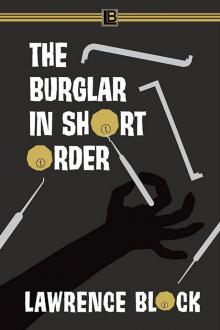 The Burglar in Short Order
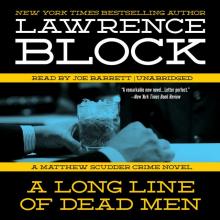 A Long Line of Dead Men
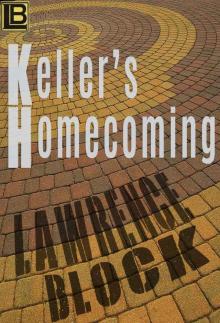 Keller's Homecoming
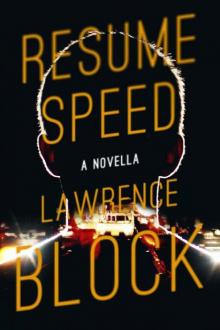 Resume Speed
 Keller's Adjustment
 Eight Million Ways to Die
 Time to Murder and Create
 Out on the Cutting Edge
 A Dance at the Slaughter House
 In the Midst of Death
 When the Sacred Ginmill Closes
 You Could Call It Murder
 Keller on the Spot
 A Ticket to the Boneyard
 A Time to Scatter Stones
 Keller's Designated Hitter
 A Stab in the Dark
 Sins of the Fathers
 The Burglar in the Closet
 Burglar Who Dropped In On Elvis
 The Burglar Who Painted Like Mondrian
 The Girl With the Long Green Heart
 The Burglar Who Counted the Spoons (Bernie Rhodenbarr)
 Burglar Who Smelled Smoke
 Rude Awakening (Kit Tolliver #2) (The Kit Tolliver Stories)
 Don't Get in the Car (Kit Tolliver #9) (The Kit Tolliver Stories)
 CH04 - The Topless Tulip Caper
 You Can Call Me Lucky (Kit Tolliver #3) (The Kit Tolliver Stories)
 CH02 - Chip Harrison Scores Again
 Strangers on a Handball Court
 Cleveland in My Dreams
 Clean Slate (Kit Tolliver #4) (The Kit Tolliver Stories)
 The Burglar Who Traded Ted Williams
 Burglar on the Prowl
 In For a Penny (A Story From the Dark Side)
 Catch and Release Paperback
 Ride A White Horse
 No Score
 Looking for David (A Matthew Scudder Story Book 7)
 Jilling (Kit Tolliver #6) (The Kit Tolliver Stories)
 Ariel
Ariel Enough Rope
 Grifter's Game
 Canceled Czech
 Unfinished Business (Kit Tolliver #12) (The Kit Tolliver Stories)
 Thirty
 The Burglar Who Thought He Was Bogart
 Make Out with Murder
 One Last Night at Grogan's (A Matthew Scudder Story Book 11)
 The Burglar on the Prowl
 Welcome to the Real World (A Story From the Dark Side)
 Keller 05 - Hit Me
 Walk Among the Tombstones: A Matthew Scudder Crime Novel
 Ronald Rabbit Is a Dirty Old Man
 The Burglar Who Studied Spinoza
 The Burglar Who Liked to Quote Kipling
 Keller in Des Moines
 Hit List
 The Dettweiler Solution
 HCC 115 - Borderline
 A Drop of the Hard Stuff: A Matthew Scudder Novel
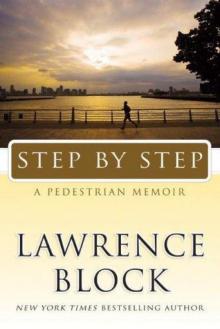 Step by Step
 The Girl With the Deep Blue Eyes
 If You Can't Stand the Heat (Kit Tolliver #1) (The Kit Tolliver Stories)
 The Topless Tulip Caper
 Dolly's Trash & Treasures (A Story From the Dark Side)
 The Triumph of Evil
 Fun with Brady and Angelica (Kit Tolliver #10 (The Kit Tolliver Stories)
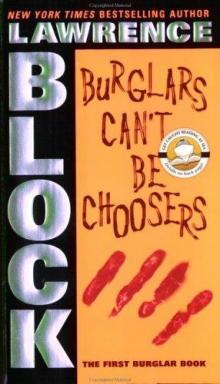 Burglars Can't Be Choosers
 Who Knows Where It Goes (A Story From the Dark Side)
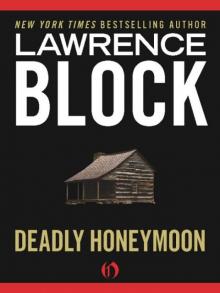 Deadly Honeymoon
 Like a Bone in the Throat (A Story From the Dark Side)
 A Chance to Get Even (A Story From the Dark Side)
 The Boy Who Disappeared Clouds
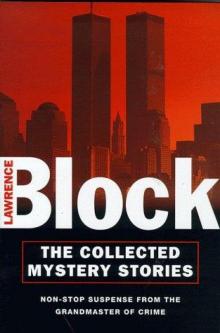 Collecting Ackermans
 Waitress Wanted (Kit Tolliver #5) (The Kit Tolliver Stories)
 One Thousand Dollars a Word
 Even the Wicked: A Matthew Scudder Novel (Matthew Scudder Mysteries)
 Hit Man
 The Night and The Music
 Ehrengraf for the Defense
 The Merciful Angel of Death (A Matthew Scudder Story Book 5)
 The Burglar in the Rye
 I Know How to Pick 'Em
 Getting Off hcc-69
 Three in the Side Pocket (A Story From the Dark Side)
 Let's Get Lost (A Matthew Scudder Story Book 8)
 Strange Are the Ways of Love
 MOSTLY MURDER: Till Death: a mystery anthology
 Masters of Noir: Volume Four
 A Week as Andrea Benstock
 Scenarios (A Stoiry From the Dark Side)
 The Sex Therapists: What They Can Do and How They Do It (John Warren Wells on Sexual Behavior Book 15)
 Like a Thief in the Night: a Bernie Rhodenbarr story
 A Diet of Treacle
 Community of Women
 Different Strokes: How I (Gulp!) Wrote, Directed, and Starred in an X-rated Movie (John Warren Wells on Sexual Behavior)
 You Don't Even Feel It (A Story From the Dark Side)
 Zeroing In (Kit Tolliver #11) (The Kit Tolliver Stories)
 The Wife-Swap Report (John Warren Wells on Sexual Behavior)
 Keller's Fedora (Kindle Single)
 Speaking of Lust
 Everybody Dies (Matthew Scudder)
 Defender of the Innocent: The Casebook of Martin Ehrengraf
 After the First Death
 Writing the Novel
 How Far - a one-act stage play
 Chip Harrison Scores Again
 The Topless Tulip Caper ch-4
 The Crime of Our Lives
 Killing Castro
 The Trouble with Eden
 Nothing Short of Highway Robbery
 Sin Hellcat
 Getting Off: A Novel of Sex & Violence (Hard Case Crime)
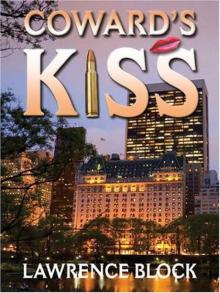 Coward's Kiss
 Alive in Shape and Color
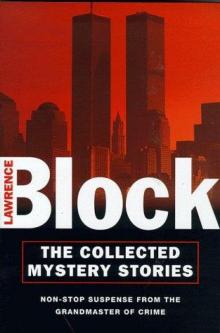 Blow for Freedom
 The New Sexual Underground: Crossing the Last Boundaries (John Warren Wells on Sexual Behavior Book 10)
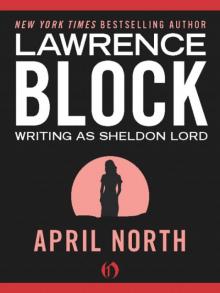 April North
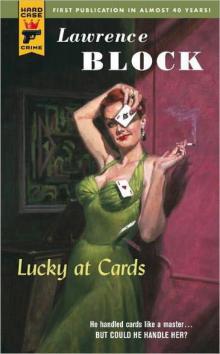 Lucky at Cards
 One Night Stands; Lost weekends
 Sweet Little Hands (A Story From the Dark Side)
 Blood on Their Hands
 A Dance at the Slaughterhouse
 Headaches and Bad Dreams (A Story From the Dark Side)
 Keller's Therapy
 The Specialists
 Hit and Run jk-4
 Threesome
 Love at a Tender Age (John Warren Wells on Sexual Behavior)
 The Devil Knows You're Dead: A MATTHEW SCUDDER CRIME NOVEL
 Funny You Should Ask
 CH01 - No Score
 Sex and the Stewardess (John Warren Wells on Sexual Behavior)
 A Madwoman's Diary
 When This Man Dies
 Sinner Man
 Such Men Are Dangerous
 A Strange Kind of Love
 Enough of Sorrow
 69 Barrow Street
 A Moment of Wrong Thinking (Matthew Scudder Mysteries Series Book 9)
 Eight Million Ways to Die ms-5
 Warm and Willing
 Mona
Mona In Sunlight or In Shadow
 A Candle for the Bag Lady (Matthew Scudder Book 2)
 Conjugal Rites (Kit Tolliver #7) (The Kit Tolliver Stories)
 Speaking of Lust - the novella
 Gigolo Johnny Wells
 Dark City Lights
 Versatile Ladies: the bisexual option (John Warren Wells on Sexual Behavior)
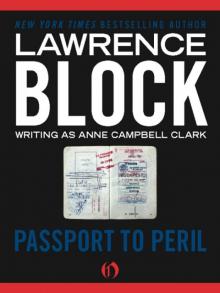 Passport to Peril
 The Taboo Breakers: Shock Troops of the Sexual Revolution (John Warren Wells on Sexual Behavior)
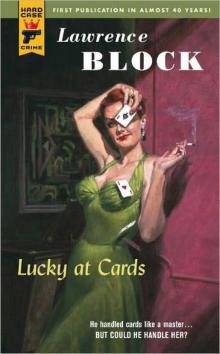 Lucky at Cards hcc-28
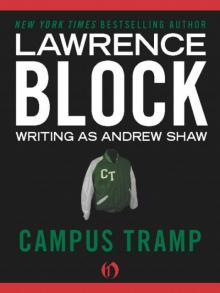 Campus Tramp
 3 is Not a Crowd (John Warren Wells on Sexual Behavior)
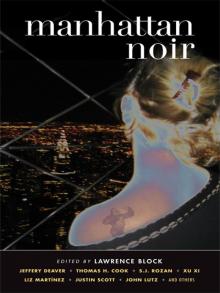 Manhattan Noir
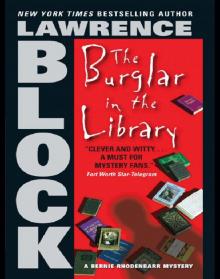 The Burglar in the Library
 Doing It! - Going Beyond the Sexual Revolution (John Warren Wells on Sexual Behavior Book 13)
 So Willing
 The Burglar Who Traded Ted Williams br-6
 Candy
Candy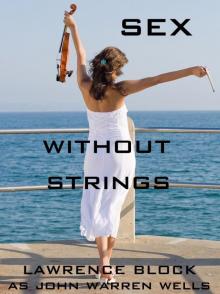 Sex Without Strings: A Handbook for Consenting Adults (John Warren Wells on Sexual Behavior)
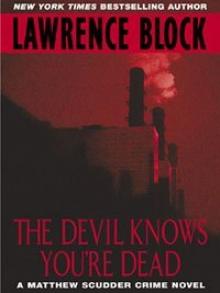 The Devil Knows You're Dead: A MATTHEW SCUDDER CRIME NOVEL (Matthew Scudder Mysteries)
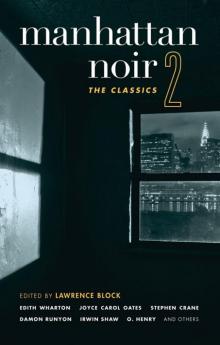 Manhattan Noir 2
 The Scoreless Thai (aka Two For Tanner)