
- Home
- Lawrence Block
Alive in Shape and Color Page 7
Alive in Shape and Color Read online
Page 7
Now Dixon tapped heavily on a specific point on the print. Both Zelinsky and Henry leaned down over the table to see the tiny detail. Depicted in the lower left quadrant of the panel was a man being pressed against what looked like the slab of a tomb by a demon animal with a round blue shield on its back. A knife piercing a severed hand was stabbed into the shield. The fingers of the hand were configured like those of the hand attached to the wall inside the cookhouse behind them.
“So what are we talking about?” Zelinsky asked. “Religious zealots, end-of-the-world nutjobs, what? Who exactly are we looking for?”
“We don’t know,” Dixon said after a pause. “This is our third scene like this in fifteen months. The commonality is the targets are purveyors of human misery.”
He gestured toward the house.
“They make meth here,” he said. “This starts the trail to addiction and human misery. In March we found a similar scene in a warehouse in Orange County used by human traffickers. Three dead there. Graphite arrows. Purveyors of human misery.”
“Sending a message,” Zelinsky said.
Dixon nodded.
“Four months before Orange County we were in San Bernadino, where four members of a Chinese triad were slaughtered in the kitchen of a noodle restaurant. They were involved in extortion and smuggling in workers from mainland China to work in kitchens as slave labor while the triad held family members hostage back home. Three scenes, eleven dead, all of it tied together by this painting and this panel specifically. A piece of it re-created at all three scenes.”
“By who?” Zelinsky asked. “You have any suspects?”
“No identified suspects,” Dixon said. “But it’s a group that calls itself T3P. Short for The Third Panel. Within a day, maybe two, they will reach out to you in some way to take responsibility for this and to vow to continue the work they believe law enforcement is failing to do.”
“Jesus Christ,” Henry said.
“We believe they are an offshoot of something that started in Europe two years ago. It was the five hundredth anniversary of Bosch’s death and his work was displayed in a Holland exhibition that drew tens of thousands and probably sparked the uprising. Since then, there have been similar multi-death attacks in France, Belgium, and the UK—all of them targeting the purveyors of human misery.”
“It’s sort of like they’re terrorists against the bad guys,” Henry said.
Dixon nodded.
“An international meeting with Interpol and Scotland Yard is scheduled for early next month,” Dixon said. “I’ll make sure you get the details.”
“What I don’t understand is why you haven’t gone public with this,” Henry said. “There’s gotta be people out there who have to know who these people are.”
“We most likely will after the international meeting,” Dixon said. “We’ll be forced to. But up until now we hoped the two cases were it and we’d have the chance to quietly identify and move in on them.”
“Well, this one is going to go public,” Henry vowed. “We are not going to wait around for fucking Interpol.”
“That’s a decision above my pay grade,” Dixon said. “Right now I just came out to confirm the connection and I need to get the helicopter back. The special agent in charge of the Los Angeles Field Office will be reaching out to the sheriff’s department to discuss task force operations locally.”
Dixon turned toward the helicopter. The reflection off the cockpit windows made it impossible to see the pilot. Dixon raised his arm and twirled a finger in the air. Almost immediately the turbine engine turned over and the rotor blade began to slowly turn. Dixon started peeling off the protection suit.
“Do you want to keep the print?” he asked. “We have others.”
“I would, yes,” Zelinsky said. “I want to study the fucking thing.”
“Then it’s yours,” Dixon said. “I just need the tube—my last one.”
The helicopter blade started kicking dust up again. Zelinsky reached up and grabbed one of the canopy’s cross struts when the tent threatened to go airborne. Dixon put his suit jacket back on but kept the mask on to guard against breathing the dust. He picked up the empty tube and re-capped it, then tucked it under his arm.
“If you need anything else you know where to reach me,” he said. “We’ll talk soon, gentlemen.”
Dixon shook their hands, then trotted back toward the helicopter as the turbine began to obliterate all other sound. Soon he was inside the cockpit and the chopper lifted off. As it rose Zelinsky saw that the F in the FBI decal was starting to peel off in the down draft from the rotor.
The craft banked left and headed south, back toward LA.
Zelinsky and Henry watched it go, keeping a steady altitude of no more that two hundred feet above the hardscape. As it headed toward the horizon the sheriff’s men then noticed the kick up of dust from an approaching vehicle. It had lights in its grill that were flashing and it was moving fast.
“Now who the hell is this?” Henry asked.
“They’re in a hurry, that’s for sure,” Zelinsky added.
The vehicle took another minute to get to them and when it arrived it was clear it was a government vehicle. It pulled to a halt behind the other vehicles scattered on the road in front of the cookhouse. Two men in suits and sunglasses got out and made their way to the canopy tent.
They pulled badges as they approached, and Zelinsky recognized the FBI insignia.
“Captain Henry?” one of them said. “Special Agent Ross Dixon with the bureau. I believe we spoke earlier? This is my partner, Agent Cosgrove.”
“You’re Dixon?” Henry said.
“That’s right,” Dixon said.
“Then who the hell was that?” Henry said.
He pointed toward the horizon where the black helicopter was now about the size of a fly and still getting smaller.
“What are you talking about, Captain Henry?” Cosgrove asked.
Henry kept his arm up and pointing at the horizon as he began to explain about the helicopter and the man who had gotten off it.
Zelinsky turned to the equipment table and looked at the print of the third panel. He realized that the only thing the man from the helicopter had touched before gloving up was the cardboard tube, and he had taken it with him. He moved the boxes that weighted the print and flipped it over. On the back there was a printed message.
T3P
WE SHALL NOT STOP
PURVEYORS OF MISERY
BE WARNED
T3P
Zelinsky stepped out from the cover of the canopy and looked off toward the horizon. He scanned and then sighted the black helicopter. It was flying too low to be picked up on FAA radar. It was no more than a distant black dot against the gray desert sky.
In another moment it was gone.
A former journalist, folksinger, and attorney, JEFFERY DEAVER is an international number one bestselling author. His novels have appeared on bestseller lists around the world; they’re sold in 150 countries and translated into twenty-five languages.
The author of thirty-seven novels, three collections of short stories, and a nonfiction law book, and a lyricist of a country-western album, he’s received or been shortlisted for dozens of awards. His The Bodies Left Behind was named Novel of the Year by the International Thriller Writers association, and his Lincoln Rhyme thriller The Broken Window and a stand-alone, Edge, were also nominated for that prize. He’s a seven-time Edgar nominee.
Deaver has been honored with the Lifetime Achievement Award by the Bouchercon World Mystery Convention and the Raymond Chandler Lifetime Achievement Award in Italy.
His book A Maiden’s Grave was made into an HBO movie starring James Garner and Marlee Matlin, and his novel The Bone Collector was a feature release from Universal Pictures, starring Denzel Washington and Angelina Jolie. Lifetime aired an adaptation of his book The Devil’s Teardrop.
While his father was an accomplished painter and his sister is a talented artist, Deaver�
��s last foray into art involved fingerpainting; sadly, his opus no longer exists, as his mother insisted that it be scrubbed off his bedroom wall.
The Cave Paintings of Lascaux
A SIGNIFICANT FIND
BY JEFFERY DEAVER
A crisis of conscience. Pure and simple. What are we going to do?” He poured red wine into her glass. Both sipped.
They were sitting in mismatched armchairs, before an ancient fireplace of stacked stone in the deserted lounge. The inn, probably two hundred years old, was clearly not a tourist destination, at least not in this season, a chilly spring.
He tasted the wine again and turned his gaze from the label of the bottle to the woman’s intense blue eyes, which were cast down at the wormwood floor. Her face was as beautiful as when they’d met, though a bit more worn, as ten years had passed, many of which had been spent outside under less-than-kind conditions; hats and SPF 30 could only give you so much protection.
“I’m not sure. I’m really at a loss,” Della Fanning said in answer to her husband’s question. She brushed her dark blond hair from her eyes.
Roger, fifteen years older, was considerably more weathered than she, though, he believed (on a good day), the toll from the out-of-doors gave him character, bestowing a ruggedness on his face. His thick hair, cut short, was largely the brown of his youth, dotted with strands lightened blond by the sun and gray from his age.
He stretched and felt a bone pop. It had been a busy, exhausting day. “There are two sides to it. You know, one says do the right thing. But it’s not as easy as that.”
She offered, “And sometimes you have to choose what looks like the wrong thing, if it’s for the greater good.”
He asked, “Do you think that’s what we should do?”
They were interrupted by the innkeeper, who stuck his head in the door and, smiling, asked in French if they wanted anything else. Roger glanced at the clock. 11:00 P.M.
He and Della were fluent and he answered, no, but thanks. Della added, “Bonne nuit.”
Roger waited until the man was gone and then mused, “Doing the right thing.” He shook his head and sipped more of the mild wine, un vin du Provence.
Yes, this was a complicated dilemma. It had occupied his thoughts, and, he was sure, Della’s as well, for the better part of the past day.
Though the genesis of the conflict was far older: seventeen thousand years, give or take.
Last week the couple had flown to Paris and taken the train to this region of France to attend a conference on the cave paintings of Lascaux.
These were one of the greatest archaeological finds in history: Nine hundred colorful paintings, primarily animals, outlines of hands and symbols, created by tribes during the Upper Paleolithic era—the late Stone Age. The caverns were located near Montignac, in the Dordogne region of southwestern France.
The conference was one of several over the past few years attended by archaeologists like Roger and Della Fanning, as well as anthropologists and environmental scientists and French Interior Ministry officials, who were troubled by the accelerating degradation of the caves, which were presently closed—to all but a few researchers. Humidity, mold, and bacteria were taking their toll, in some cases so severely that the paintings had all but disappeared. This gathering was meant to try to find solutions to the ecological problems plaguing the caves, as well as to offer recent insights from the scholarly analysis of the artwork and to give attendees the chance to present papers on recent developments in the exploration of “decorated caves,” as they were called, in this region and elsewhere.
Yesterday, Sunday, had been the last day of the conference. In the afternoon Della attended one session—recent attempts to attack a new strain of mold threatening portions of the caves—and Roger another, a presentation of a paper on the possible meaning of the abstract symbols on the walls.
During a break Roger found himself sipping coffee beside a man who fit the archaeologist stereotype to a tee (no one Roger had ever known in the field looked and acted like Indiana Jones). The nerdy fellow was skinny, his head covered with a floppy, olive-drab hat. He wore thick glasses and a rumpled tan suit. On his wrist was a battered Timex with a large chipped dial, the sort an archaeologist from the 1930s might sport.
During the break, they introduced themselves.
“Trevor Hall,” he said, shaking hands.
“Roger Fanning.”
Hall lifted an eyebrow at the name, apparently impressed. He explained he’d read the archaeology blog Roger and Della posted, which devoted much space to the plight of the Lascaux caves. Hall complimented them on raising awareness of the problems facing the site and on encouraging donations. Hall was from Seattle. He’d come here to attend the conference and spend some weeks hunting for other, undiscovered decorated caves—a popular pastime of both professional and amateur archaeologists.
His eyes grew wistful. “I thought I had a good lead. But, nope. And I’ve been so excited. I was so excited.”
This happened a lot in the field, like fishermen talking about the one that got away.
Hall continued, “I was hiking in the valley up the road and I met this farm boy who told me he’d overheard somebody talking about a small cavern near Loup that might’ve had some paintings in it.”
Many decorated caves were found this way—by locals hiking or bicycling through the countryside. The Lascaux caves were discovered, in 1940, by four French students and, the story went, a dog named Robot.
“Loup?”
“That’s right. It’s a small town about fifteen miles from here. He didn’t know anything more and couldn’t remember who’d mentioned it. I’ve spent the last week searching every acre around the damn town. Nothing.” He had to leave this afternoon; the hunt was over. “No Carter moments for me,” he said with a sour smile. “Never had one. Maybe I never will. Oh well.”
Referring to Howard Carter, the archaeologist who, in 1922, discovered the tomb of King Tutankhamen in Egypt, perhaps the most famous archaeological find in history.
Roger had never heard that phrase before: “A Carter Moment.” But he and Della certainly knew the concept well—making a discovery that captured the world’s imagination and put you, as an explorer, on the map.
They referred to such a coup in a rather more understated way: making “a significant find.”
The conference resumed and Roger returned to his seat, half-heartedly watching the speakers. He was distracted as one word kept circling through mind: Loup, Loup, Loup.
Della and Roger Fanning had come to the field of archaeology from different routes.
Roger had been involved in archaeology all his life. The son of an academic (Roger Sr. specialized in Middle Eastern studies), the boy would often spend time with his parents when Dad was on digs in Jordan, Yemen, and the Emirates. It was natural that he would follow a similar path, though as he grew up he found he preferred the rather easier lifestyle an archaeologist experiences in Europe to the arduous—and often dangerous—world of the Middle East.
He got a job as a professor at his father’s alma mater, Grosvenor College in central Ohio, and spent three or four months a year in the field, specializing in archaeological sites in France, Germany, and Italy.
It was there that he met Della, ten years ago. The young woman was in a dull marriage and had a dull job in public relations, and she had returned to school to get her MBA. But, on a whim, she’d decided to take Professor Fanning’s Introduction to Anthropology. Della loved the field, changed majors, and went on to get her master’s in the subject.
After graduating, she left her old life behind, divorcing her husband and quitting her office job. She and Roger soon married; their honeymoon was spent in a tent, at a newly discovered prehistoric site near Arles Amphitheater, in France.
Childless—hard with all the travel—they devoted their life to archaeology and caught the attention of the academic community, publishing important papers and making some solid discoveries. They were popular a
t the conferences, being charming and witty . . . and it didn’t hurt that they had nearly model-quality looks.
Still, that significant find continued to elude them.
This was a constant disappointment, a vexing tarnish on their reputation. The failure also hurt their bottom line. Unlike academia in, say, medicine or physics or computer science, archaeology didn’t offer any hope for corporate income from consulting or patents. But if you discovered something big, something that made the press, your university might double your salary—afraid you’d go elsewhere—and your lecture fees would skyrocket. If you could put sentences together—and both Della and Roger were solid writers—you had the chance of publishing a best-selling book (and if you were as good-looking as the Fannings, TV bookings were a possibility).
But as Roger was waiting to meet Della in the small park outside the conference hotel, he kept wondering: Was this their opportunity?
As soon as she joined him he told Della about Trevor Hall.
“Hm,” she said, smiling. “Hidden treasure. He has no idea who told this boy about the cave?”
“No, he would’ve tracked him down if he could. The poor guy’s spent a week slogging through the countryside.”
Roger reached into his backpack, found the guidebook about the region, and flipped to the map. She scooted close. He scanned until he found Loup, a small town in the middle of farmland. “There.”
“That’s not cave geology,” she said, brows furrowed.
“No, it’s not.”
Caves form because of volcanic, seismic, or erosive activity—usually from water. The caves in this region fell invariably into this last category. Certainly a river carving out caves might have dried up eons ago, but the odds were that caverns large enough to support habitation would be closer to a water source, and there were none anywhere near Loup.
Roger began looking farther afield, following the Dordogne River, a long and wide waterway that ran for hundreds of miles, a likely source of other caves, but archaeologists for hundreds of years had scoured the river’s banks. Roger concentrated his search on smaller tributaries, and those near where they were now.
 Tanner on Ice
 Hit Me
 Hit and Run
 Hope to Die
 Two For Tanner
 Tanners Virgin
 Dead Girl Blues
 One Night Stands and Lost Weekends
 A Drop of the Hard Stuff
 The Canceled Czech
 Even the Wicked
 Me Tanner, You Jane
 Quotidian Keller
 Small Town
 Tanners Tiger
 A Walk Among the Tombstones
 Tanners Twelve Swingers
 Gym Rat & the Murder Club
 Everybody Dies
 The Thief Who Couldnt Sleep
 Hit Parade
 The Devil Knows Youre Dead
 The Burglar in Short Order
 A Long Line of Dead Men
 Keller's Homecoming
 Resume Speed
 Keller's Adjustment
 Eight Million Ways to Die
 Time to Murder and Create
 Out on the Cutting Edge
 A Dance at the Slaughter House
 In the Midst of Death
 When the Sacred Ginmill Closes
 You Could Call It Murder
 Keller on the Spot
 A Ticket to the Boneyard
 A Time to Scatter Stones
 Keller's Designated Hitter
 A Stab in the Dark
 Sins of the Fathers
 The Burglar in the Closet
 Burglar Who Dropped In On Elvis
 The Burglar Who Painted Like Mondrian
 The Girl With the Long Green Heart
 The Burglar Who Counted the Spoons (Bernie Rhodenbarr)
 Burglar Who Smelled Smoke
 Rude Awakening (Kit Tolliver #2) (The Kit Tolliver Stories)
 Don't Get in the Car (Kit Tolliver #9) (The Kit Tolliver Stories)
 CH04 - The Topless Tulip Caper
 You Can Call Me Lucky (Kit Tolliver #3) (The Kit Tolliver Stories)
 CH02 - Chip Harrison Scores Again
 Strangers on a Handball Court
 Cleveland in My Dreams
 Clean Slate (Kit Tolliver #4) (The Kit Tolliver Stories)
 The Burglar Who Traded Ted Williams
 Burglar on the Prowl
 In For a Penny (A Story From the Dark Side)
 Catch and Release Paperback
 Ride A White Horse
 No Score
 Looking for David (A Matthew Scudder Story Book 7)
 Jilling (Kit Tolliver #6) (The Kit Tolliver Stories)
 Ariel
Ariel Enough Rope
 Grifter's Game
 Canceled Czech
 Unfinished Business (Kit Tolliver #12) (The Kit Tolliver Stories)
 Thirty
 The Burglar Who Thought He Was Bogart
 Make Out with Murder
 One Last Night at Grogan's (A Matthew Scudder Story Book 11)
 The Burglar on the Prowl
 Welcome to the Real World (A Story From the Dark Side)
 Keller 05 - Hit Me
 Walk Among the Tombstones: A Matthew Scudder Crime Novel
 Ronald Rabbit Is a Dirty Old Man
 The Burglar Who Studied Spinoza
 The Burglar Who Liked to Quote Kipling
 Keller in Des Moines
 Hit List
 The Dettweiler Solution
 HCC 115 - Borderline
 A Drop of the Hard Stuff: A Matthew Scudder Novel
 Step by Step
 The Girl With the Deep Blue Eyes
 If You Can't Stand the Heat (Kit Tolliver #1) (The Kit Tolliver Stories)
 The Topless Tulip Caper
 Dolly's Trash & Treasures (A Story From the Dark Side)
 The Triumph of Evil
 Fun with Brady and Angelica (Kit Tolliver #10 (The Kit Tolliver Stories)
 Burglars Can't Be Choosers
 Who Knows Where It Goes (A Story From the Dark Side)
 Deadly Honeymoon
 Like a Bone in the Throat (A Story From the Dark Side)
 A Chance to Get Even (A Story From the Dark Side)
 The Boy Who Disappeared Clouds
 Collecting Ackermans
 Waitress Wanted (Kit Tolliver #5) (The Kit Tolliver Stories)
 One Thousand Dollars a Word
 Even the Wicked: A Matthew Scudder Novel (Matthew Scudder Mysteries)
 Hit Man
 The Night and The Music
 Ehrengraf for the Defense
 The Merciful Angel of Death (A Matthew Scudder Story Book 5)
 The Burglar in the Rye
 I Know How to Pick 'Em
 Getting Off hcc-69
 Three in the Side Pocket (A Story From the Dark Side)
 Let's Get Lost (A Matthew Scudder Story Book 8)
 Strange Are the Ways of Love
 MOSTLY MURDER: Till Death: a mystery anthology
 Masters of Noir: Volume Four
 A Week as Andrea Benstock
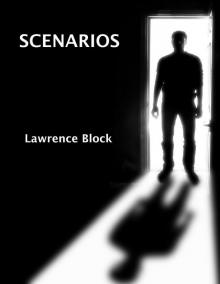 Scenarios (A Stoiry From the Dark Side)
 The Sex Therapists: What They Can Do and How They Do It (John Warren Wells on Sexual Behavior Book 15)
 Like a Thief in the Night: a Bernie Rhodenbarr story
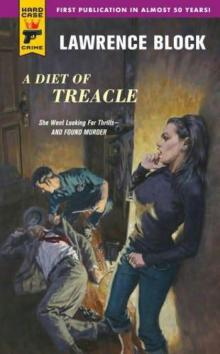 A Diet of Treacle
 Community of Women
 Different Strokes: How I (Gulp!) Wrote, Directed, and Starred in an X-rated Movie (John Warren Wells on Sexual Behavior)
 You Don't Even Feel It (A Story From the Dark Side)
 Zeroing In (Kit Tolliver #11) (The Kit Tolliver Stories)
 The Wife-Swap Report (John Warren Wells on Sexual Behavior)
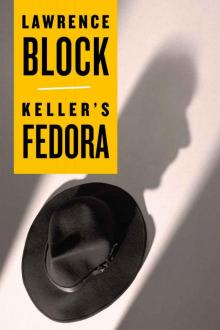 Keller's Fedora (Kindle Single)
 Speaking of Lust
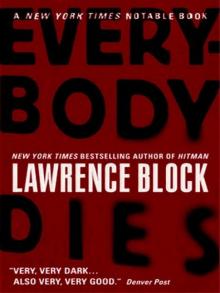 Everybody Dies (Matthew Scudder)
 Defender of the Innocent: The Casebook of Martin Ehrengraf
 After the First Death
 Writing the Novel
 How Far - a one-act stage play
 Chip Harrison Scores Again
 The Topless Tulip Caper ch-4
 The Crime of Our Lives
 Killing Castro
 The Trouble with Eden
 Nothing Short of Highway Robbery
 Sin Hellcat
 Getting Off: A Novel of Sex & Violence (Hard Case Crime)
 Coward's Kiss
 Alive in Shape and Color
 Blow for Freedom
 The New Sexual Underground: Crossing the Last Boundaries (John Warren Wells on Sexual Behavior Book 10)
 April North
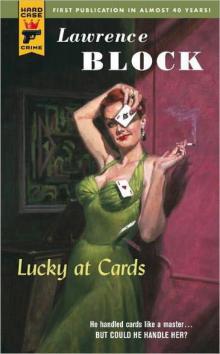 Lucky at Cards
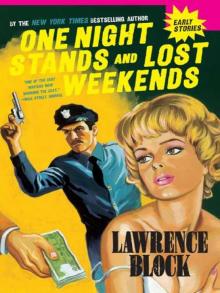 One Night Stands; Lost weekends
 Sweet Little Hands (A Story From the Dark Side)
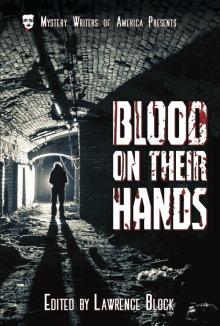 Blood on Their Hands
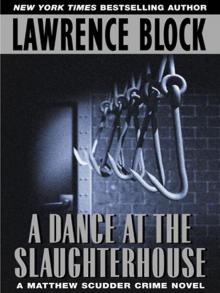 A Dance at the Slaughterhouse
 Headaches and Bad Dreams (A Story From the Dark Side)
 Keller's Therapy
 The Specialists
 Hit and Run jk-4
 Threesome
 Love at a Tender Age (John Warren Wells on Sexual Behavior)
 The Devil Knows You're Dead: A MATTHEW SCUDDER CRIME NOVEL
 Funny You Should Ask
 CH01 - No Score
 Sex and the Stewardess (John Warren Wells on Sexual Behavior)
 A Madwoman's Diary
 When This Man Dies
 Sinner Man
 Such Men Are Dangerous
 A Strange Kind of Love
 Enough of Sorrow
 69 Barrow Street
 A Moment of Wrong Thinking (Matthew Scudder Mysteries Series Book 9)
 Eight Million Ways to Die ms-5
 Warm and Willing
 Mona
Mona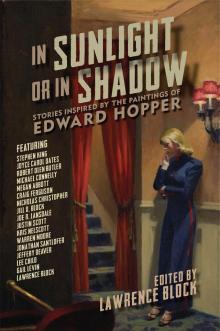 In Sunlight or In Shadow
 A Candle for the Bag Lady (Matthew Scudder Book 2)
 Conjugal Rites (Kit Tolliver #7) (The Kit Tolliver Stories)
 Speaking of Lust - the novella
 Gigolo Johnny Wells
 Dark City Lights
 Versatile Ladies: the bisexual option (John Warren Wells on Sexual Behavior)
 Passport to Peril
 The Taboo Breakers: Shock Troops of the Sexual Revolution (John Warren Wells on Sexual Behavior)
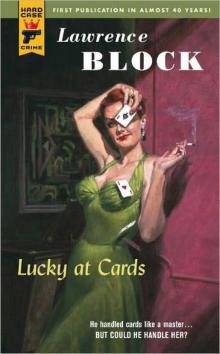 Lucky at Cards hcc-28
 Campus Tramp
 3 is Not a Crowd (John Warren Wells on Sexual Behavior)
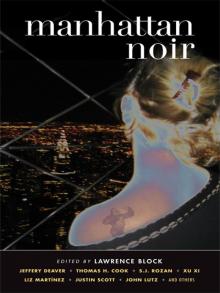 Manhattan Noir
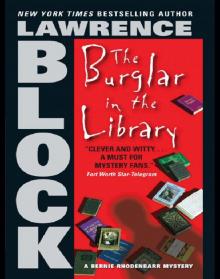 The Burglar in the Library
 Doing It! - Going Beyond the Sexual Revolution (John Warren Wells on Sexual Behavior Book 13)
 So Willing
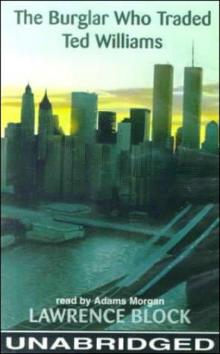 The Burglar Who Traded Ted Williams br-6
 Candy
Candy Sex Without Strings: A Handbook for Consenting Adults (John Warren Wells on Sexual Behavior)
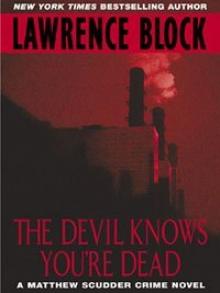 The Devil Knows You're Dead: A MATTHEW SCUDDER CRIME NOVEL (Matthew Scudder Mysteries)
 Manhattan Noir 2
 The Scoreless Thai (aka Two For Tanner)