
- Home
- Lawrence Block
Hit List Page 7
Hit List Read online
Page 7
He’d always been aware of the city’s trees, and never more so than during the months when he’d owned a dog. But a dog owner tends to see a tree as an essentially utilitarian object. Keller, dogless now, was able to see the trees as—what? Art objects, possessed of special properties of form and color and density? Evidence of God’s handiwork on earth? Powerful beings in their own right? Keller wasn’t sure, but he couldn’t take his eyes off them.
At home in his tidy one-bedroom apartment, Keller found himself struck by the emptiness of his walls. He had a pair of Japanese prints in his bedroom, neatly framed in bamboo, the Christmas gift of a girlfriend who’d long since married and moved away. The only artwork in the living room was a poster Keller had bought on his own, after he’d viewed a Hopper retrospective a few years ago at the Whitney.
The poster showed one of the artist’s most recognizable works, solitary diners at a café counter, and its mood was unutterably lonely. Keller found it cheering. Its message for him was that he was not alone in his solitude, that the city (and by extension the world) was full of lonely guys, sitting on stools in some sad café, drinking their cups of coffee and getting through the days and nights.
The Japanese prints were unobjectionable, but he hadn’t paid any attention to them in years. The poster was different, he enjoyed looking at it, but it was just a poster. What it did, really, was refresh his memory of the original oil painting it depicted. If he’d never seen the painting itself, well, he’d probably still respond to the poster, but it wouldn’t have anywhere near the same impact on him.
As far as owning an original Hopper, well, that was out of the question. Keller’s work was profitable, he could afford to live comfortably and still sink a good deal of money into his stamp collection, but he was light-years away from being able to hang Edward Hopper on his wall. The painting shown on his poster—well, it wasn’t for sale, but if it ever did come up at auction it would bring a seven-figure price. Keller figured he might be able to pay seven figures for a piece of art, but only if two of those figures came after the decimal point.
* * *
Keller had lunch at a Vietnamese restaurant on Third Avenue, then stopped at a florist. From there he walked up to Fifty-seventh Street, where he found a building he’d noticed in passing, with one or more art galleries on each of its ten floors. All but a couple were open, and he walked through them in turn, having a look at the works on display. At first he was wary that the gallery attendants would give him a sales pitch, or that he’d feel like an interloper, looking at work he had no intention of buying. But nobody even nodded at him, or gave any sign of caring what he looked at or how long he looked at it, and by the time he’d walked in and out of three galleries he was entirely at ease.
It was like going to a museum, he realized. It was exactly like going to a museum, except for two things. You didn’t have to pay to get in, and there were no groups of restless children, with their teachers desperate to explain things to them.
How were you supposed to know how much the stuff cost? There was a number stuck to the wall beside each painting, but there were no dollar signs, and the numbers ran in sequence, 1-2-3-4-5-6-7, and couldn’t possibly have anything to do with the price. Evidently it was considered loutish to post the price publicly, but didn’t they want sales? What were you supposed to do, ask the price of anything that caught your eye?
Then at one gallery he noticed another patron carrying a plastic-laminated sheet of paper, referring to it occasionally, dropping it at the front table on her way out. Keller retrieved it, and damned if it didn’t contain a numbered list of all the works on display, along with the title, the dimensions, the medium (oil, watercolor, acrylic, and gouache, whatever that was), and the year it was completed.
One work had NFS for a price, which he supposed meant Not For Sale. And two had little red dots next to the price, and he remembered that some of the paintings had displayed similar red dots alongside their numbers. Of course—the red dots meant the paintings had been sold! They wouldn’t just wrap one up and send you home with it. The paintings had to hang for the duration of the show, so when you bought something, they tagged it with a red dot and left it right where it was.
He congratulated himself for figuring it all out, then was taken aback by the thought that everyone else no doubt already knew it. In all the galleries in New York, he was probably the only person who’d lacked this particular bit of knowledge. Well, at least he’d been able to work it out on his own. He hadn’t made a fool of himself, asking what the dots were for.
By the time he got home the mail was in. Keller had never cared much about the mail, collecting it and dealing with it as it came, tossing the junk mail and paying the bills. Then he took up stamp collecting, and now every day’s mail held treasures.
Dealers throughout the country, and a few overseas, sent him the stamps he’d ordered from their lists, or won in mail auctions. Others sent him selections on approval, to examine at leisure and keep what pleased him. And there were the monthly stamp magazines, and a weekly stamp newspaper, and no end of auction catalogs and price lists and special offers.
Today, along with the usual lists and catalogs, Keller received his monthly selection from a woman in Maine. “Dear John,” he read. “Here’s a nice lot of German Colonies, plus a few others for your inspection. Enclosed are 26 glassines totaling $194.43. Hope you find some to your liking. Sincerely, Beatrice.”
Keller had been dealing with Beatrice Rundstadt for almost two years now. She enclosed a similar note with each shipment, and he always wrote back along the same lines: “Dear Beatrice, Thanks for a nice selection, much of which has found a home here on First Avenue. I’m enclosing my check for $83.57 and look forward to next month’s assortment. Yours, John.” It had taken well over a year of Dear Mr. Keller and Dear Ms. Rundstadt, but now they were John and Beatrice, which gave the correspondence a nice illusion of intimacy.
Just an illusion, though. He didn’t know if Beatrice Rundstadt was married or single, old or young, tall or short, fat or thin, didn’t know if she collected stamps herself (as many dealers did) or thought collecting stamps was a fool’s errand (as many other dealers did). For her part, all she knew about him was what he collected.
And that was how he hoped it would remain. Oh, he couldn’t avoid the occasional fantasy, in which Bea Rundstadt (or some other lady philatelist) turned out to be a soul mate with the face of an angel and the build of a Barbie doll. Fantasies were harmless, as long as you kept them in their place. His notes remained as steadfastly perfunctory as hers. She sent him stamps, he sent her checks. Why mess with something that worked?
You could generally hold a selection of approvals for up to a month, but Keller rarely kept them around for more than a day or two. This time all he needed was an hour to pick out the stamps he wanted. He could mount them later on; for now he wrote out a check and a three-line note and went downstairs to the mailbox. Then he took a bus to Fourteenth Street and rode the L train under the East River to Bedford Avenue.
Keller knew Manhattan reasonably well, but his mental map of the outer boroughs was like a medieval mariner’s map of the world. There were little floating pockets of known land and vast stretches inscribed “Beyond this point there be monsters.” He had a glancing familiarity with parts of Brooklyn—Cobble Hill, because he’d had a girlfriend there once, and Marine Park, from the time years ago when he’d belonged to a bowling team that competed (if you could call it that) in a league out there. He didn’t really know Williamsburg at all, but recalled that the dominant ethnic groups were Puerto Ricans and Hasidic Jews in the southern portion and Poles and Italians farther north. In recent years, artists seeking low-cost loft space had been moving in. (“There goes the neighborhood” went the cry—in Spanish and Yiddish, Polish and Italian.)
Declan Niswander lived on Berry Street, on Williamsburg’s north side, just a ten-minute walk from the subway stop. Keller found the address, one of a row of modest three-story brick
houses on the east side of the street. There were three bells at the side of the front door, which suggested that there was one apartment to a floor. Whether that was a lot of space or a little depended on how deep the Niswander house was, and you couldn’t tell from the street.
The block, and indeed the whole neighborhood, was in the process of gentrification, but it had a ways to go yet, and hadn’t yet reached the tree-planting stage. Thus Declan Niswander, who painted trees so evocatively as to make a termite change his diet, lived on a block without a single tree. Keller wondered if it bothered him, or if he even noticed. Maybe trees were just something to paint, and Niswander put them out of his mind the minute he packed up his paints and brushes.
Keller walked around, got a sense of the area. A block away he found a little Polish restaurant where he had a bowl of borscht and a big plate of pierogis, drank the large glass of grape Kool-Aid they brought without his asking, and, after a generous tip, still had change left from a ten-dollar bill. Dinner out here was quite a bargain, even when you counted the subway fare.
He was nursing a glass of dark beer in a bar called The Broken Clock when Niswander walked in. He hadn’t been expecting the man, but he wasn’t greatly surprised at the sight of him. The Broken Clock (and why did they call it that? There wasn’t a clock to be seen, broken or not) was the only bar in the vicinity that looked to be a likely watering hole for artists. The others were straightforward working-class saloons, better suited to a painter of houses than one of elms and maples. Niswander might visit them now and then for a shot and a beer, but if he was going to hang out anywhere in the neighborhood it would be at The Broken Clock.
Niswander strode in, accompanied by a woman who was plainly his, and who bore papoose-style a baby that was plainly theirs. He passed out greetings to people left and right. Keller heard someone congratulate him on a review, heard another ask how the opening had gone. They knew Declan Niswander here, and they evidently liked him well enough.
For his part, Niswander looked right at home, but Keller figured he’d look okay in any of the local bars. He had the form and features to fit in anywhere, and, in his red and black plaid shirt and button-fly Levi’s, he looked more likely to chop down a tree than paint its picture. He wasn’t wearing a drop of black today, but then neither were the bar’s other patrons. Black, Keller guessed, was for Lower Manhattan, where regular people dressed like artists. On this side of the river, artists dressed like regular people.
Keller finished his beer and went home.
There were no phone messages when he got home that night, and nobody called the next morning while he was around the corner having breakfast. He looked up a number and picked up the phone.
When she answered he said, “Hi, it’s Keller.”
“There you are.”
“Here I am,” he agreed.
“And no wonder people tend to call you Keller. It’s what you call yourself.”
“It is?”
“ ‘Hi, it’s Keller.’ Your very words. Your roses are beautiful. Completely unexpected and wholly welcome.”
“I was wondering if they got there.”
“What you’re too polite to say is you were wondering if I was ever going to call.”
“Not at all,” he said. “I know you’re busy, and—“
“And maybe the florist lost the card, and I didn’t know who sent them.”
“That occurred to me.”
“I’ll just bet it did. You think I didn’t call? Believe me, I called. Do you happen to know how many Kellers there are in the Manhattan book?”
“There’s something like two columns of them, if I remember correctly.”
“Two columns is right. And there are two John Kellers and two Jonathans, not to mention seven or eight J Kellers. And not one of them is you.”
“No, I’m not in the book.”
“No shit, Sherlock.”
“Oh,” he said. “I guess you didn’t have my number.”
“I guess not, but I do now, Mr. Smarty, because I’ve got Caller ID on this phone, so your secret’s not a secret anymore. I can call you anytime I want to, big boy. What do you think about that?”
“I haven’t thought about it yet,” he said, “so it’s hard to say. But here’s what I was thinking. Suppose I come by for you around seven tonight and we have dinner.”
“Won’t work.”
“Oh.”
“But I’ve got a better idea. Suppose you come over around nine-thirty and we have sex.”
“That would work,” he allowed. “But don’t you want to have dinner?”
“I’m a lousy cook.”
“At a restaurant,” he said. “I meant for us to go out.”
“I have revolting table manners,” she said. “I also have a shrink appointment at five.”
“Aren’t they usually done in an hour?”
“Fifty minutes, generally.”
“We could have dinner after.”
“What I always do,” she said, “is pick up a banana smoothie on the way to the shrink’s, with added wheat germ and protein powder and spirulina, whatever that is, and I sip it while we talk. It’s the perfect time to be nourished, you know? And then I’ll go right home and work, because I’ve got an order I have to get out, and I’ll knock off at nine and bathe and wash my hair and make myself irresistible, and at nine-thirty you’ll show up and we’ll have an inventive and highly satisfying sexual encounter. To which, I might add, I’ll be looking forward all day. Nine-thirty, Keller. See ya.”
Early that afternoon, Keller took a bus across Twenty-third and found his way to the Regis Buell gallery. There were other art galleries on the same block, and he stopped in a couple of them for a brief look. Prices were lower on average than in the Fifty-seventh Street galleries, but not by much. Art could get expensive in a hurry, once you got past museum show posters and mass-produced prints of kabuki dancers.
On opening night the Buell gallery had been jammed with people. Now it was empty, except for Keller and the young woman at the desk, a self-assured blonde who’d recently graduated from a good college and would soon be some commuter’s wife. She gave Keller a low-wattage smile and went back to her book. Keller picked up one of the price lists. They must have had them at the opening, but at the time he hadn’t known to look for one.
He spent two full hours at the gallery, going from canvas to canvas.
Back at his apartment, he gave Dot a call. “I’ve been thinking,” he said.
“You want to bail. Pull the plug. Cut and run. Well, I can’t say I blame you.”
“No.”
“No?”
He shook his head, then remembered he was on the phone. “No,” he said, “that’s not it. I was wondering about the client.”
“What about him?”
“It’s a him?”
“It’s a generic pronoun, Keller. What do you want me to say, ‘them’? ‘It’? ‘I was wondering about the client.’ ‘The client? What about him or her?’ I’m an old-fashioned girl, Keller. I do like my eighth-grade English teacher taught me.”
“As,” he said.
“Huh?”
“You do as your teacher taught you.”
“The suggestion that comes to mind,” she said, “is not one I learned from Mrs. Jepson, and anyway I don’t think it’s physically possible. So never mind. What about the client?”
“Who is he?”
“Or she? No idea.”
“Because I’m having trouble figuring out why anybody would want to kill this guy. Except maybe someone from the logging industry.”
“Huh?”
“He paints pictures of trees, and after you’ve looked at them you wouldn’t want to cut one down.”
“So what is it you’re turning into, Keller? A tree hugger or an art lover?”
“I went out to Williamsburg last night, and—“
“You think that was wise?”
“Well, I might want to close the sale out there. So I had to do a litt
le reconnaissance.”
“I guess.”
“It’s a nice neighborhood, artsy but honest. Place has a good feel to it.”
“And you want to move there.”
“I don’t want to move anywhere, Dot. But do you think you could find out anything about the client? Call the guy who called you, nose around a little?”
“Why?”
“Why?”
“Yeah, why? It’s tricky enough, working in your hometown. Why muck it up more?”
“Well . . .”
“He won’t tell me anything. He’s a pro. And so am I, so I won’t even ask. And you’re a pro yourself, Keller. Need I say more?”
“No, never mind. You know what he gets for a painting?”
“The subject?”
“Ten thousand dollars. That’s on the average. The bigger ones are a little more, the smaller ones are a little less.”
“Like diamonds,” she said, “or, I don’t know. Apartments. What’s it matter what he gets? You don’t want to buy one, do you?”
He didn’t say anything.
“Oh, Lord have mercy,” she said. “That’s brilliant, Keller. You do the guy and you hammer a nail in your wall and hang up one of his paintings. Nothing quite so professional as keeping a little memento of the occasion.”
“Dot . . .”
“If you absolutely have to have a souvenir,” she said, “why don’t you cut off one of his ears? You’ll save yourself ten grand just like that. Anyone asks, you can tell ’em it was Van Gogh’s.”
“There,” Maggie Griscomb said. “Now wasn’t that nice?”
Keller would have said something, but he wasn’t sure he was capable of forming sentences.
“As I worked my way through the Kellers,” she went on, “the Johns and the Jonathans and the mere Js, I wanted to kill the man who invented the Touch-Tone phone. With an old-fashioned rotary dial I never would have bothered in the first place. Because I knew you weren’t going to be in the book. Not the Manhattan book, anyway. I figured you lived in Scarsdale.”
 Tanner on Ice
 Hit Me
 Hit and Run
 Hope to Die
 Two For Tanner
 Tanners Virgin
 Dead Girl Blues
 One Night Stands and Lost Weekends
 A Drop of the Hard Stuff
 The Canceled Czech
 Even the Wicked
 Me Tanner, You Jane
 Quotidian Keller
 Small Town
 Tanners Tiger
 A Walk Among the Tombstones
 Tanners Twelve Swingers
 Gym Rat & the Murder Club
 Everybody Dies
 The Thief Who Couldnt Sleep
 Hit Parade
 The Devil Knows Youre Dead
 The Burglar in Short Order
 A Long Line of Dead Men
 Keller's Homecoming
 Resume Speed
 Keller's Adjustment
 Eight Million Ways to Die
 Time to Murder and Create
 Out on the Cutting Edge
 A Dance at the Slaughter House
 In the Midst of Death
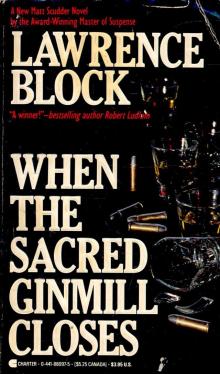 When the Sacred Ginmill Closes
 You Could Call It Murder
 Keller on the Spot
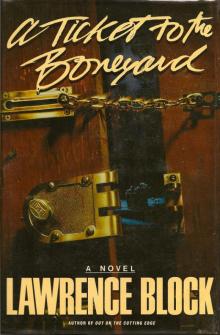 A Ticket to the Boneyard
 A Time to Scatter Stones
 Keller's Designated Hitter
 A Stab in the Dark
 Sins of the Fathers
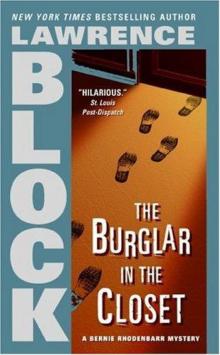 The Burglar in the Closet
 Burglar Who Dropped In On Elvis
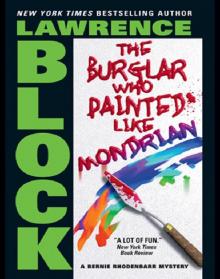 The Burglar Who Painted Like Mondrian
 The Girl With the Long Green Heart
 The Burglar Who Counted the Spoons (Bernie Rhodenbarr)
 Burglar Who Smelled Smoke
 Rude Awakening (Kit Tolliver #2) (The Kit Tolliver Stories)
 Don't Get in the Car (Kit Tolliver #9) (The Kit Tolliver Stories)
 CH04 - The Topless Tulip Caper
 You Can Call Me Lucky (Kit Tolliver #3) (The Kit Tolliver Stories)
 CH02 - Chip Harrison Scores Again
 Strangers on a Handball Court
 Cleveland in My Dreams
 Clean Slate (Kit Tolliver #4) (The Kit Tolliver Stories)
 The Burglar Who Traded Ted Williams
 Burglar on the Prowl
 In For a Penny (A Story From the Dark Side)
 Catch and Release Paperback
 Ride A White Horse
 No Score
 Looking for David (A Matthew Scudder Story Book 7)
 Jilling (Kit Tolliver #6) (The Kit Tolliver Stories)
 Ariel
Ariel Enough Rope
 Grifter's Game
 Canceled Czech
 Unfinished Business (Kit Tolliver #12) (The Kit Tolliver Stories)
 Thirty
 The Burglar Who Thought He Was Bogart
 Make Out with Murder
 One Last Night at Grogan's (A Matthew Scudder Story Book 11)
 The Burglar on the Prowl
 Welcome to the Real World (A Story From the Dark Side)
 Keller 05 - Hit Me
 Walk Among the Tombstones: A Matthew Scudder Crime Novel
 Ronald Rabbit Is a Dirty Old Man
 The Burglar Who Studied Spinoza
 The Burglar Who Liked to Quote Kipling
 Keller in Des Moines
 Hit List
 The Dettweiler Solution
 HCC 115 - Borderline
 A Drop of the Hard Stuff: A Matthew Scudder Novel
 Step by Step
 The Girl With the Deep Blue Eyes
 If You Can't Stand the Heat (Kit Tolliver #1) (The Kit Tolliver Stories)
 The Topless Tulip Caper
 Dolly's Trash & Treasures (A Story From the Dark Side)
 The Triumph of Evil
 Fun with Brady and Angelica (Kit Tolliver #10 (The Kit Tolliver Stories)
 Burglars Can't Be Choosers
 Who Knows Where It Goes (A Story From the Dark Side)
 Deadly Honeymoon
 Like a Bone in the Throat (A Story From the Dark Side)
 A Chance to Get Even (A Story From the Dark Side)
 The Boy Who Disappeared Clouds
 Collecting Ackermans
 Waitress Wanted (Kit Tolliver #5) (The Kit Tolliver Stories)
 One Thousand Dollars a Word
 Even the Wicked: A Matthew Scudder Novel (Matthew Scudder Mysteries)
 Hit Man
 The Night and The Music
 Ehrengraf for the Defense
 The Merciful Angel of Death (A Matthew Scudder Story Book 5)
 The Burglar in the Rye
 I Know How to Pick 'Em
 Getting Off hcc-69
 Three in the Side Pocket (A Story From the Dark Side)
 Let's Get Lost (A Matthew Scudder Story Book 8)
 Strange Are the Ways of Love
 MOSTLY MURDER: Till Death: a mystery anthology
 Masters of Noir: Volume Four
 A Week as Andrea Benstock
 Scenarios (A Stoiry From the Dark Side)
 The Sex Therapists: What They Can Do and How They Do It (John Warren Wells on Sexual Behavior Book 15)
 Like a Thief in the Night: a Bernie Rhodenbarr story
 A Diet of Treacle
 Community of Women
 Different Strokes: How I (Gulp!) Wrote, Directed, and Starred in an X-rated Movie (John Warren Wells on Sexual Behavior)
 You Don't Even Feel It (A Story From the Dark Side)
 Zeroing In (Kit Tolliver #11) (The Kit Tolliver Stories)
 The Wife-Swap Report (John Warren Wells on Sexual Behavior)
 Keller's Fedora (Kindle Single)
 Speaking of Lust
 Everybody Dies (Matthew Scudder)
 Defender of the Innocent: The Casebook of Martin Ehrengraf
 After the First Death
 Writing the Novel
 How Far - a one-act stage play
 Chip Harrison Scores Again
 The Topless Tulip Caper ch-4
 The Crime of Our Lives
 Killing Castro
 The Trouble with Eden
 Nothing Short of Highway Robbery
 Sin Hellcat
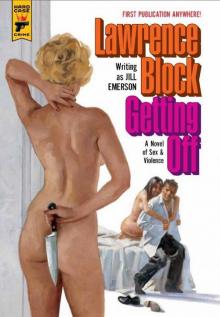 Getting Off: A Novel of Sex & Violence (Hard Case Crime)
 Coward's Kiss
 Alive in Shape and Color
 Blow for Freedom
 The New Sexual Underground: Crossing the Last Boundaries (John Warren Wells on Sexual Behavior Book 10)
 April North
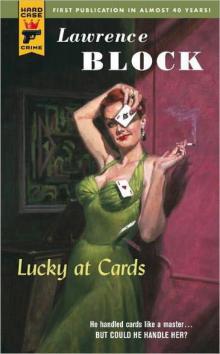 Lucky at Cards
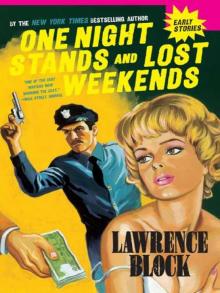 One Night Stands; Lost weekends
 Sweet Little Hands (A Story From the Dark Side)
 Blood on Their Hands
 A Dance at the Slaughterhouse
 Headaches and Bad Dreams (A Story From the Dark Side)
 Keller's Therapy
 The Specialists
 Hit and Run jk-4
 Threesome
 Love at a Tender Age (John Warren Wells on Sexual Behavior)
 The Devil Knows You're Dead: A MATTHEW SCUDDER CRIME NOVEL
 Funny You Should Ask
 CH01 - No Score
 Sex and the Stewardess (John Warren Wells on Sexual Behavior)
 A Madwoman's Diary
 When This Man Dies
 Sinner Man
 Such Men Are Dangerous
 A Strange Kind of Love
 Enough of Sorrow
 69 Barrow Street
 A Moment of Wrong Thinking (Matthew Scudder Mysteries Series Book 9)
 Eight Million Ways to Die ms-5
 Warm and Willing
 Mona
Mona In Sunlight or In Shadow
 A Candle for the Bag Lady (Matthew Scudder Book 2)
 Conjugal Rites (Kit Tolliver #7) (The Kit Tolliver Stories)
 Speaking of Lust - the novella
 Gigolo Johnny Wells
 Dark City Lights
 Versatile Ladies: the bisexual option (John Warren Wells on Sexual Behavior)
 Passport to Peril
 The Taboo Breakers: Shock Troops of the Sexual Revolution (John Warren Wells on Sexual Behavior)
 Lucky at Cards hcc-28
 Campus Tramp
 3 is Not a Crowd (John Warren Wells on Sexual Behavior)
 Manhattan Noir
 The Burglar in the Library
 Doing It! - Going Beyond the Sexual Revolution (John Warren Wells on Sexual Behavior Book 13)
 So Willing
 The Burglar Who Traded Ted Williams br-6
 Candy
Candy Sex Without Strings: A Handbook for Consenting Adults (John Warren Wells on Sexual Behavior)
 The Devil Knows You're Dead: A MATTHEW SCUDDER CRIME NOVEL (Matthew Scudder Mysteries)
 Manhattan Noir 2
 The Scoreless Thai (aka Two For Tanner)