
- Home
- Lawrence Block
Enough Rope Page 63
Enough Rope Read online
Page 63
“When a man engages to save your life, Mr. Beale, do you require that he first outline his plans for you?”
“No, but—”
“Ninety thousand dollars. Payable only if I succeed. Are the terms agreeable?”
“Yes, but—”
“Mr. Beale, when next we meet you will owe me ninety thousand dollars plus whatever emotional gratitude comes naturally to you. Until then, sir, you owe me one dollar.” The thin lips curled in a shadowy smile. “ ‘The cut worm forgives the plow,’ Mr. Beale. William Blake, The Marriage of Heaven and Hell. ‘The cut worm forgives the plow.’ You might think about that, sir, until we meet again.”
The second meeting of Martin Ehrengraf and Grantham Beale took place five weeks and four days later. On this occasion the lawyer wore a navy two-button suit with a subtle vertical stripe. His shoes were highly polished black wing tips, his shirt a pale blue broadcloth with contrasting white collar and cuffs. His necktie bore a half-inch wide stripe of royal blue flanked by two narrower strips, one gold and the other a rather bright green, all on a navy field.
And this time Ehrengraf’s client was also rather nicely turned out, although his tweed jacket and baggy flannels were hardly a match for the lawyer’s suit. But Beale’s dress was a great improvement over the shapeless gray prison garb he had worn previously, just as his office, a room filled with jumbled books and boxes, a desk covered with books and albums and stamps in and out of glassine envelopes, two worn leather chairs, and a matching sagging sofa—just as all of this comfortable disarray was a vast improvement over the spartan prison cell which had been the site of their earlier meeting.
Beale, seated behind his desk, gazed thoughtfully at Ehrengraf, who stood ramrod straight, one hand on the desk top, the other at his side. “Ninety thousand dollars,” Beale said levelly. “You must admit that’s a bit rich, Mr. Ehrengraf.”
“We agreed on the price.”
“No argument. We did agree, and I’m a firm believer in the sanctity of verbal agreements. But it was my understanding that your fee would be payable if my liberty came about as a result of your efforts.”
“You are free today.”
“I am indeed, and I’ll be free tomorrow, but I can’t see how it was any of your doing.”
“Ah,” Ehrengraf said. His face bore an expression of infinite disappointment, a disappointment felt not so much with this particular client as with the entire human race. “You feel I did nothing for you.”
“I wouldn’t say that. Perhaps you were taking steps to file an appeal. Perhaps you engaged detectives or did some detective work of your own. Perhaps in due course you would have found a way to get me out of prison, but in the meantime the unexpected happened and your services turned out to be unnecessary.”
“The unexpected happened?”
“Well, who could have possibly anticipated it?” Beale shook his head in wonder. “Just think of it. Murchison went and got an attack of conscience. The bounder didn’t have enough of a conscience to step forward and admit what he’d done, but he got to wondering what would happen if he died suddenly and I had to go on serving a life sentence for a crime he had committed. He wouldn’t do anything to jeopardize his liberty while he lived but he wanted to be able to make amends if and when he died.”
“Yes.”
“So he prepared a letter,” Beale went on. “Typed out a long letter explaining just why he had wanted his partner dead and how the unregistered gun had actually belonged to Speldron in the first place, and how he’d shot him and wrapped the gun in a towel and planted it in my car. Then he’d made up a story about my having had a fight with Albert Speldron, and of course that got the police looking in my direction, and the next thing I knew I was in jail. I saw the letter Murchison wrote. The police let me look at it. He went into complete detail.”
“Considerate of him.”
“And then he did the usual thing. Gave the letter to a lawyer with instructions that it be kept in his safe and opened only in the event of his death.” Beale found a pair of stamp tongs in the clutter atop his desk, used them to lift a stamp, frowned at it for a moment, then set it down and looked directly at Martin Ehrengraf. “Do you suppose he had a premonition? For God’s sake, Murchison was a young man, his health was good, and why should he anticipate dying? Maybe he did have a premonition.”
“I doubt it.”
“Then it’s certainly a remarkable coincidence. A matter of weeks after turning this letter over to a lawyer, Murchison lost control of his car on a curve. Smashed right through the guard rail, plunged a couple of hundred feet, exploded on impact. I don’t suppose the man knew what had happened to him.”
“I suspect you’re right.”
“He was always a safe driver,” Beale mused. “Perhaps he’d been drinking.”
“Perhaps.”
“And if he hadn’t been decent enough to write that letter, I might be spending the rest of my life behind bars.”
“How fortunate for you things turned out as they did.”
“Exactly,” said Beale. “And so, although I truly appreciate what you’ve done on my behalf, whatever that may be, and although I don’t doubt you could have secured my liberty in due course, although I’m sure I don’t know how you might have managed it, nevertheless as far as your fee is concerned—”
“Mr. Beale.”
“Yes?”
“Do you really believe that a detestable troll like W. G. Murchison would take pains to arrange for your liberty in the event of his death?”
“Well, perhaps I misjudged the man. Perhaps—”
“Murchison hated you, Mr. Beale. If he found he was dying his one source of satisfaction would have been the knowledge that you were in prison for a crime you hadn’t committed. I told you that you were an innocent, Mr. Beale, and a few weeks in prison has not dented or dulled your innocence. You actually think Murchison wrote that note.”
“You mean he didn’t?”
“It was typed upon a machine in his office,” the lawyer said. “His own stationery was used, and the signature at the bottom is one many an expert would swear is Murchison’s own.”
“But he didn’t write it?”
“Of course not.” Martin Ehrengraf’s hands hovered in the air before him. They might have been poised over an invisible typewriter or they might merely be looming as the talons of a bird of prey.
Grantham Beale stared at the little lawyer’s hands in fascination. “You typed that letter,” he said.
Ehrengraf shrugged.
“You—but Murchison left it with a lawyer!”
“The lawyer was not one Murchison had used in the past. Murchison evidently selected a stranger from the Yellow Pages, as far as one can determine, and made contact with him over the telephone, explaining what he wanted the man to do for him. He then mailed the letter along with a postal money order to cover the attorney’s fee and a covering note confirming the telephone conversation. It seems he did not use his own name in his discussions with his lawyer, and he signed an alias to his covering note and to the money order as well. The signature he wrote, though, does seem to be in his own handwriting.”
Ehrengraf paused, and his right hand went to finger the knot of his necktie. This particular tie, rather more colorful than his usual choice, was that of the Caedmon Society of Oxford University, an organization to which Martin Ehrengraf did not belong. The tie was a souvenir of an earlier case and he tended to wear it on particularly happy occasions, moments of personal triumph.
“Murchison left careful instructions,” he went on. “He would call the lawyer every Thursday, merely repeating the alias he had used. If ever a Thursday passed without a call, and if there was no call on Friday either, the lawyer was to open the letter and follow its instructions. For four Thursdays in a row the lawyer received a phone call, presumably from Murchison.”
“Presumably,” Beale said heavily.
“Indeed. On the Tuesday following the fourth Thursday, Murchison’s car
went off a cliff and he was killed instantly. The lawyer read of Walker Murchison’s death but had no idea that was his client’s true identity. Then Thursday came and went without a call, and when there was no telephone call Friday either, why the lawyer opened the letter and went forthwith to the police.” Ehrengraf spread his hands, smiled broadly. “The rest,” he said, “you know as well as I.”
“Great Scott,” Beale said.
“Now if you honestly feel I’ve done nothing to earn my money—”
“I’ll have to liquidate some stock,” Beale said. “It won’t be a problem and there shouldn’t be much time involved. I’ll bring a check to your office in a week. Say ten days at the outside. Unless you’d prefer cash?”
“A check will be fine, Mr. Beale. So long as it’s a good check.” And he smiled his lips to show he was joking.
The smile chilled Beale.
A week later Grantham Beale remembered that smile when he passed a check across Martin Ehrengraf’s heroically disorganized desk. “A good check,” he said. “I’d never give you a bad check, Mr. Ehrengraf. You typed that letter, you made all those phone calls, you forged Murchison’s false name to the money order, and then when the opportunity presented itself you sent his car hurtling off the cliff with him in it.”
“One believes what one wishes,” Ehrengraf said quietly.
“I’ve been thinking about all of this all week long. Murchison framed me for a murder he committed, then paid for the crime himself and liberated me in the process without knowing what he was doing. ‘The cut worm forgives the plow.’ “
“Indeed.”
“Meaning that the end justifies the means.”
“Is that what Blake meant by that line? I’ve long wondered.”
“The end justifies the means. I’m innocent, and now I’m free, and Murchison’s guilty, and now he’s dead, and you’ve got the money, but that’s all right, because I made out fine on those stamps, and of course I don’t have to repay Speldron, poor man, because death did cancel that particular debt, and—”
“Mr. Beale.”
“Yes?”
“I don’t know if I should tell you this, but I fear I must. You are more of an innocent than you realize. You’ve paid me handsomely for my services, as indeed we agreed that you would, and I think perhaps I’ll offer you a lagniappe in the form of some experience to offset your colossal innocence. I’ll begin with some advice. Do not, under any circumstances, resume your affair with Felicia Murchison.”
Beale stared.
“You should have told me that was why you and Murchison didn’t get along,” Ehrengraf said gently. “I had to discover it for myself. No matter. More to the point, one should not share a pillow with a woman who has so little regard for one as to frame one for murder. Mrs. Murchison—”
“Felicia framed me?”
“Of course, Mr. Beale. Mrs. Murchison had nothing against you. It was sufficient that she had nothing for you. She murdered Mr. Speldron, you see, for reasons which need hardly concern us. Then having done so she needed someone to be cast as the murderer.
“Her husband could hardly have told the police about your purported argument with Speldron. He wasn’t around at the time. He didn’t know the two of you had met, and if he went out on a limb and told them, and then you had an alibi for the time in question, why he’d wind up looking silly, wouldn’t he? But Mrs. Murchison knew you’d met with Speldron, and she told her husband the two of you argued, and so he told the police in perfectly good faith what she had told him, and then they went and found the murder gun in your very own Antonelli Scorpion. A stunning automobile, incidentally, and it’s to your credit to own such a vehicle, Mr. Beale.”
“Felicia killed Speldron.”
“Yes.”
“And framed me.”
“Yes.”
“But—why did you frame Murchison?”
“Did you expect me to try to convince the powers that be that she did it? And had pangs of conscience and left a letter with a lawyer? Women don’t leave letters with lawyers, Mr. Beale, any more than they have consciences. One must deal with the materials at hand.”
“But—”
“And the woman is young, with long dark hair, flashing dark eyes, a body like a magazine centerfold, and a face like a Chanel ad. She’s also an excellent typist and most cooperative in any number of ways which we needn’t discuss at the moment. Mr. Beale, would you like me to get you a glass of water?”
“I’m all right.”
“I’m sure you’ll be all right, Mr. Beale. I’m sure you will. Mr. Beale, I’m going to make a suggestion. I think you should seriously consider marrying and settling down. I think you’d be much happier that way. You’re an innocent, Mr. Beale, and you’ve had the Ehrengraf Experience now, and it’s rendered you considerably more experienced than you were, but your innocence is not the sort to be readily vanquished. Give the widow Murchison and all her tribe a wide berth, Mr. Beale. They’re not for you. Find yourself an old-fashioned girl and lead a proper old-fashioned life. Buy and sell stamps. Cultivate a garden. Raise terriers. The West Highland White might be a good breed for you but that’s your decision, certainly. Mr. Beale? Are you sure you won’t have a glass of water?”
“I’m all right.”
“Quite. I’ll leave you with another thought of Blake’s, Mr. Beale. ‘Lilies that fester smell worse than weeds.’ That’s also from The Marriage of Heaven and Hell, another of what he calls Proverbs of Hell, and perhaps someday you’ll be able to interpret it for me. I never quite know for sure what Blake’s getting at, Mr. Beale, but his things do have a nice sound to them, don’t they? Innocence and experience, Mr. Beale. That’s the ticket, isn’t it? Innocence and experience.”
The Ehrengraf Appointment
Martin Ehrengraf was walking jauntily down the courthouse steps when a taller and bulkier man caught up with him. “Glorious day,” the man said. “Simply a glorious day.”
Ehrengraf nodded. It was indeed a glorious day, the sort of autumn afternoon that made men recall football weekends. Ehrengraf had just been thinking that he’d like a piece of hot apple pie with a slab of sharp cheddar on it. He rarely thought about apple pie and almost never wanted cheese on it, but it was that sort of day.
“I’m Cutliffe,” the man said. “Hudson Cutliffe, of Marquardt, Stoner, and Cutliffe.”
“Ehrengraf,” said Ehrengraf.
“Yes, I know. Oh, believe me, I know.” Cutliffe gave what he doubtless considered a hearty chuckle. “Imagine running into Martin Ehrengraf himself, standing in line for an IDC appointment just like everybody else.”
“Every man is entitled to a proper defense,” Ehrengraf said stiffly. “It’s a guaranteed right in a free society.”
“Yes, to be sure, but—”
“Indigent defendants have attorneys appointed by the court. Our system here calls for attorneys to make themselves available at specified intervals for such appointments, rather than entrust such cases to a public defender.”
“I quite understand,” Cutliffe said. “Why, I was just appointed to an IDC case myself, some luckless chap who stole a satchel full of meat from a supermarket. Choice cuts, too—lamb chops, filet mignon. You just about have to steal them these days, don’t you?”
Ehrengraf, a recent convert to vegetarianism, offered a thin-lipped smile and thought about pie and cheese.
“But Martin Ehrengraf himself,” Cutliffe went on. “One no more thinks of you in this context than one imagines a glamorous Hollywood actress going to the bathroom. Martin Ehrengraf, the dapper and debonair lawyer who hardly ever appears in court. The man who only collects a fee if he wins. Is that really true, by the way? You actually take murder cases on a contingency basis?”
“That’s correct.”
“Extraordinary. I don’t see how you can possibly afford to operate that way.”
“It’s quite simple,” Ehrengraf said.
“Oh?”
His smile was fuller than bef
ore. “I always win,” he said. “It’s simplicity itself.”
“And yet you rarely appear in court.”
“Sometimes one can work more effectively behind the scenes.”
“And when your client wins his freedom—”
“I’m paid in full,” Ehrengraf said.
“Your fees are high, I understand.”
“Exceedingly high.”
“And your clients almost always get off.”
“They’re always innocent,” Ehrengraf said. “That does help.”
Hudson Cutliffe laughed richly, as if to suggest that the idea of bringing guilt and innocence into a discussion of legal procedures was amusing. “Well, this will be a switch for you,” he said at length. “You were assigned the Protter case, weren’t you?”
“Mr. Protter is my client, yes.”
“Hardly a typical Ehrengraf case, is it? Man gets drunk, beats his wife to death, passes out, and sleeps it off, then wakes up and sees what he’s done and calls the police. Bit of luck for you, wouldn’t you say?”
“Oh?”
“Won’t take up too much of your time. You’ll plead him guilty to manslaughter, possibly get a reduced sentence on grounds of his previous clean record, and then Protter’ll do a year or two in prison while you go about your business.”
“You think that’s the course I’ll pursue, Mr. Cutliffe?”
“It’s what anyone would do.”
“Almost anyone,” said Ehrengraf.
“And there’s no reason to make work for yourself, is there?” Cutliffe winked. “These IDC cases—I don’t know why they pay us at all, as small as the fees are. A hundred and seventy-five dollars isn’t much of an all-inclusive fee for a legal defense, is it? Wouldn’t you say your average fee runs a bit higher than that?”
“Quite a bit higher.”
“But there are compensations. It’s the same hundred and seventy-five dollars whether you plead your client or stand trial, let alone win. A far cry from your usual system, eh, Ehrengraf? You don’t have to win to get paid.”
“I do,” Ehrengraf said.
“How’s that?”
 Tanner on Ice
 Hit Me
 Hit and Run
 Hope to Die
 Two For Tanner
 Tanners Virgin
 Dead Girl Blues
 One Night Stands and Lost Weekends
 A Drop of the Hard Stuff
 The Canceled Czech
 Even the Wicked
 Me Tanner, You Jane
 Quotidian Keller
 Small Town
 Tanners Tiger
 A Walk Among the Tombstones
 Tanners Twelve Swingers
 Gym Rat & the Murder Club
 Everybody Dies
 The Thief Who Couldnt Sleep
 Hit Parade
 The Devil Knows Youre Dead
 The Burglar in Short Order
 A Long Line of Dead Men
 Keller's Homecoming
 Resume Speed
 Keller's Adjustment
 Eight Million Ways to Die
 Time to Murder and Create
 Out on the Cutting Edge
 A Dance at the Slaughter House
 In the Midst of Death
 When the Sacred Ginmill Closes
 You Could Call It Murder
 Keller on the Spot
 A Ticket to the Boneyard
 A Time to Scatter Stones
 Keller's Designated Hitter
 A Stab in the Dark
 Sins of the Fathers
 The Burglar in the Closet
 Burglar Who Dropped In On Elvis
 The Burglar Who Painted Like Mondrian
 The Girl With the Long Green Heart
 The Burglar Who Counted the Spoons (Bernie Rhodenbarr)
 Burglar Who Smelled Smoke
 Rude Awakening (Kit Tolliver #2) (The Kit Tolliver Stories)
 Don't Get in the Car (Kit Tolliver #9) (The Kit Tolliver Stories)
 CH04 - The Topless Tulip Caper
 You Can Call Me Lucky (Kit Tolliver #3) (The Kit Tolliver Stories)
 CH02 - Chip Harrison Scores Again
 Strangers on a Handball Court
 Cleveland in My Dreams
 Clean Slate (Kit Tolliver #4) (The Kit Tolliver Stories)
 The Burglar Who Traded Ted Williams
 Burglar on the Prowl
 In For a Penny (A Story From the Dark Side)
 Catch and Release Paperback
 Ride A White Horse
 No Score
 Looking for David (A Matthew Scudder Story Book 7)
 Jilling (Kit Tolliver #6) (The Kit Tolliver Stories)
 Ariel
Ariel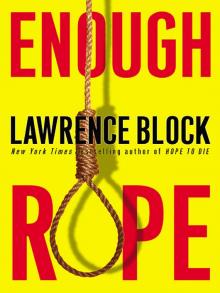 Enough Rope
 Grifter's Game
 Canceled Czech
 Unfinished Business (Kit Tolliver #12) (The Kit Tolliver Stories)
 Thirty
 The Burglar Who Thought He Was Bogart
 Make Out with Murder
 One Last Night at Grogan's (A Matthew Scudder Story Book 11)
 The Burglar on the Prowl
 Welcome to the Real World (A Story From the Dark Side)
 Keller 05 - Hit Me
 Walk Among the Tombstones: A Matthew Scudder Crime Novel
 Ronald Rabbit Is a Dirty Old Man
 The Burglar Who Studied Spinoza
 The Burglar Who Liked to Quote Kipling
 Keller in Des Moines
 Hit List
 The Dettweiler Solution
 HCC 115 - Borderline
 A Drop of the Hard Stuff: A Matthew Scudder Novel
 Step by Step
 The Girl With the Deep Blue Eyes
 If You Can't Stand the Heat (Kit Tolliver #1) (The Kit Tolliver Stories)
 The Topless Tulip Caper
 Dolly's Trash & Treasures (A Story From the Dark Side)
 The Triumph of Evil
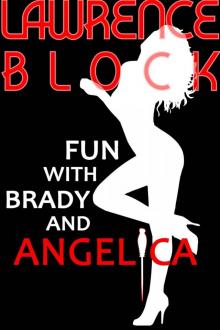 Fun with Brady and Angelica (Kit Tolliver #10 (The Kit Tolliver Stories)
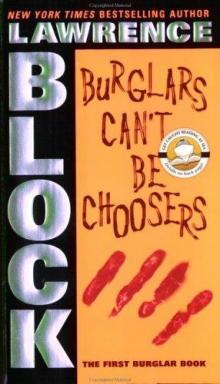 Burglars Can't Be Choosers
 Who Knows Where It Goes (A Story From the Dark Side)
 Deadly Honeymoon
 Like a Bone in the Throat (A Story From the Dark Side)
 A Chance to Get Even (A Story From the Dark Side)
 The Boy Who Disappeared Clouds
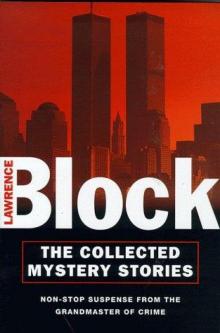 Collecting Ackermans
 Waitress Wanted (Kit Tolliver #5) (The Kit Tolliver Stories)
 One Thousand Dollars a Word
 Even the Wicked: A Matthew Scudder Novel (Matthew Scudder Mysteries)
 Hit Man
 The Night and The Music
 Ehrengraf for the Defense
 The Merciful Angel of Death (A Matthew Scudder Story Book 5)
 The Burglar in the Rye
 I Know How to Pick 'Em
 Getting Off hcc-69
 Three in the Side Pocket (A Story From the Dark Side)
 Let's Get Lost (A Matthew Scudder Story Book 8)
 Strange Are the Ways of Love
 MOSTLY MURDER: Till Death: a mystery anthology
 Masters of Noir: Volume Four
 A Week as Andrea Benstock
 Scenarios (A Stoiry From the Dark Side)
 The Sex Therapists: What They Can Do and How They Do It (John Warren Wells on Sexual Behavior Book 15)
 Like a Thief in the Night: a Bernie Rhodenbarr story
 A Diet of Treacle
 Community of Women
 Different Strokes: How I (Gulp!) Wrote, Directed, and Starred in an X-rated Movie (John Warren Wells on Sexual Behavior)
 You Don't Even Feel It (A Story From the Dark Side)
 Zeroing In (Kit Tolliver #11) (The Kit Tolliver Stories)
 The Wife-Swap Report (John Warren Wells on Sexual Behavior)
 Keller's Fedora (Kindle Single)
 Speaking of Lust
 Everybody Dies (Matthew Scudder)
 Defender of the Innocent: The Casebook of Martin Ehrengraf
 After the First Death
 Writing the Novel
 How Far - a one-act stage play
 Chip Harrison Scores Again
 The Topless Tulip Caper ch-4
 The Crime of Our Lives
 Killing Castro
 The Trouble with Eden
 Nothing Short of Highway Robbery
 Sin Hellcat
 Getting Off: A Novel of Sex & Violence (Hard Case Crime)
 Coward's Kiss
 Alive in Shape and Color
 Blow for Freedom
 The New Sexual Underground: Crossing the Last Boundaries (John Warren Wells on Sexual Behavior Book 10)
 April North
 Lucky at Cards
 One Night Stands; Lost weekends
 Sweet Little Hands (A Story From the Dark Side)
 Blood on Their Hands
 A Dance at the Slaughterhouse
 Headaches and Bad Dreams (A Story From the Dark Side)
 Keller's Therapy
 The Specialists
 Hit and Run jk-4
 Threesome
 Love at a Tender Age (John Warren Wells on Sexual Behavior)
 The Devil Knows You're Dead: A MATTHEW SCUDDER CRIME NOVEL
 Funny You Should Ask
 CH01 - No Score
 Sex and the Stewardess (John Warren Wells on Sexual Behavior)
 A Madwoman's Diary
 When This Man Dies
 Sinner Man
 Such Men Are Dangerous
 A Strange Kind of Love
 Enough of Sorrow
 69 Barrow Street
 A Moment of Wrong Thinking (Matthew Scudder Mysteries Series Book 9)
 Eight Million Ways to Die ms-5
 Warm and Willing
 Mona
Mona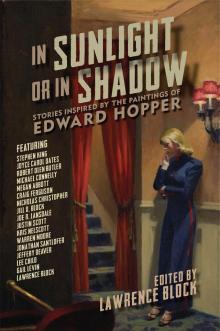 In Sunlight or In Shadow
 A Candle for the Bag Lady (Matthew Scudder Book 2)
 Conjugal Rites (Kit Tolliver #7) (The Kit Tolliver Stories)
 Speaking of Lust - the novella
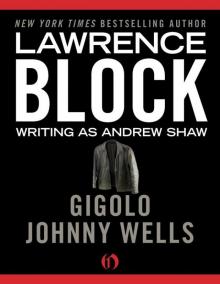 Gigolo Johnny Wells
 Dark City Lights
 Versatile Ladies: the bisexual option (John Warren Wells on Sexual Behavior)
 Passport to Peril
 The Taboo Breakers: Shock Troops of the Sexual Revolution (John Warren Wells on Sexual Behavior)
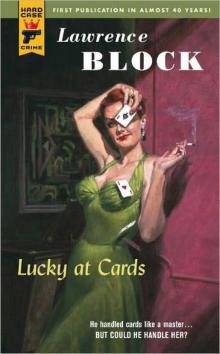 Lucky at Cards hcc-28
 Campus Tramp
 3 is Not a Crowd (John Warren Wells on Sexual Behavior)
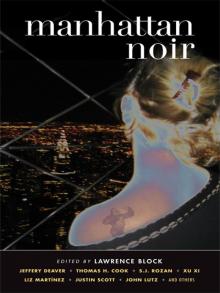 Manhattan Noir
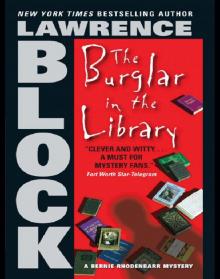 The Burglar in the Library
 Doing It! - Going Beyond the Sexual Revolution (John Warren Wells on Sexual Behavior Book 13)
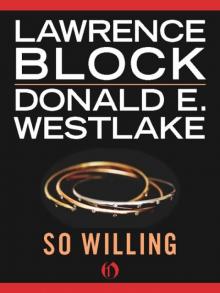 So Willing
 The Burglar Who Traded Ted Williams br-6
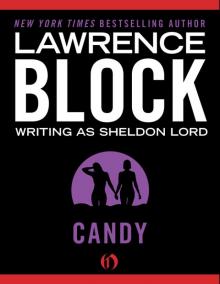 Candy
Candy Sex Without Strings: A Handbook for Consenting Adults (John Warren Wells on Sexual Behavior)
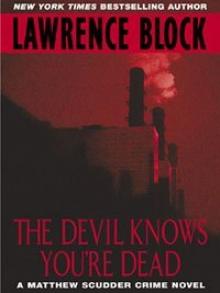 The Devil Knows You're Dead: A MATTHEW SCUDDER CRIME NOVEL (Matthew Scudder Mysteries)
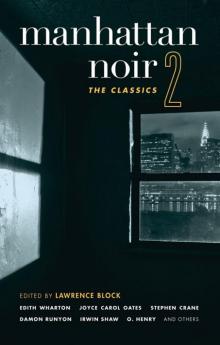 Manhattan Noir 2
 The Scoreless Thai (aka Two For Tanner)