
- Home
- Lawrence Block
The Triumph of Evil Page 3
The Triumph of Evil Read online
Page 3
“Why not?”
“Good.” A huge smile, gold teeth glittering. “We are concerned with a country which after a lengthy period of stability has been moving more and more into a state of revolutionary ferment. For decades almost all political opinion was religiously centrist. Now this is no longer the case. The left and right expand at the expense of the center.
“Leftist activity stems from two principal areas. As is almost invariably the case, the universities play a central role. There is a bookishness about the university radicals, but as their militancy increases this is less and less a factor. Further, there is a larger and larger circle of nonuniversity youth who look to the university radicals for political direction.
“Now. This country is biracial. The white population exists to a certain extent at the expense of the black population. The blacks have begun to depart from centuries of conditioning. They are becoming more vocal. As militancy becomes more and more a habit, the demagogues of the black left become increasingly extreme. Again a part of this process of polarization, if you will.”
“That always happens,” Dorn said. “I assume the black population constitutes a majority.”
“No. Ten or fifteen percent. No more, although of course their birth rate is higher.”
“Of course. Ten or fifteen percent. That surprises me.”
“Higher in certain areas, of course.”
“Yes. That does surprise me. I had been about to name the country and puncture your balloon. Instead it is I who am deflated.”
Heidigger beamed. “No pins in my balloon, please. This is more than good theater, Miles. How easily your name fits into my speech! You’ve chosen well. More than good theater, though. There’s method to it.
“To continue. The rightist reaction of the white lumpenproletariat is easily imagined. Their instinctive response is racist and anti-intellectual. They begin by living in terror of a black take-over. Simultaneously, and in much the same way, they dread the economic effects of a communist or quasi-communist revolution. Their preferred racial status permits them to see themselves as middle-class, and the bourgeoisie is invariably counterrevolutionary. Consider Cuba. The middle-class shopkeepers and professionals did not realize until they had helped the man to power that their own instincts are counterrevolutionary. Here, largely because of the racial situation, the reaction is more immediate. Here the militancy is just now emerging on a broad basis. Before the present, rightist activity was cultist. It was on the fringes. Now the lines are more clearly drawn. An effective demagogue has not yet surfaced on the right, but there are more and more confrontations with the university radicals, more and more groups forming with a broad base. There has been no consolidation of these groups, but that is only a question of time.”
Dorn started to say something, but Heidigger showed his palm. “Another aspect is sectional. The southwestern fourth of the nation is its economic and political center. The rest of the country, the whites in the rest of the country, consider the southwesterners to be almost a separate tribe. A different nation. This is most strongly felt in the northwest, where the black concentration is greatest and where all of the obvious responses are intensified for the white lower class. It is also true throughout the East, and in rather a special way. There are entrenched economic interests in the East that feel almost completely alienated by that core of southwestern money power. These people think of the southwest as Jew-influenced and pandering to the blacks at the expense of the rest of the country.”
“What about the economy, Eric?”
“A long tradition of prosperity. Thirty years of noteworthy growth and stability. But a surprising incidence of poverty nevertheless. Black poverty, of course. White poverty in many areas, but most especially in the depressed northwest.
“Within the past two years, the economy has found its way into a state of chaos. Riotous inflation. Increasing unemployment, particularly black unemployment. Shares dropping off badly on the principal exchanges. This is a highly industrialized country, as you’ve perhaps gathered.”
“Yes. It’s also a Chinese puzzle. I can’t think of what name to put to it.” He touched his chin, the side of his nose. “I scarcely | even read newspapers, you know. I’ve lost all touch with international politics.”
“Then let me tease you some more. Certain things have occurred which would even make the pages of whatever sort of newspaper you have in Willow Falls, South Carolina. Did you ever think you’d come to live in a town with such a name, by the way? Certain events, I say, which if they ring no bell—this is a presentation, Miles, rather than a guessing game, though I can appreciate your temptation to play—certain events that may point up the directions the country is taking, the directions it might be coerced to take in the future.
“Politically, the national establishment is essentially oligarchic. One of these ruling families—their orientation is left-centrist—has produced several charismatic political leaders, each of whom in a particular way managed to appeal to disparate portions of the local population. Two of them have been killed. Among the blacks, there have been considerably more liquidations, especially in the lower levels. But again there have been two very important murders recently, both of them removing dynamic and charismatic leaders who managed to mobilize their followers effectively without approaching the extreme positions of their rivals. You see the pattern, of course.”
“From your words, it’s unmistakable. These are the men who threaten the process of left-right polarization.”
“Exactly so. Is that all? No. One final bit of information. The country has a long heritage of imperialism. It has a few remaining colonies and attempts to maintain a hold over them. This is to prove ultimately impossible, but in the meanwhile the country further depletes itself economically warring against guerrillas far from home.”
“As the French did in Indo-China,” Dorn said. “And learned not to do in Algeria.”
“An excellent parallel. Now this military drain on national resources is universally deplored. The left opposes it as colonialist. The blacks oppose it for a variety of reasons. The right does and does not oppose it—they want it to end, they resent what it costs them, but their attitudes are largely formed in reaction to the attitudes of the left. Anything the left opposes they can scarcely help endorse. The military is like all armies everywhere, they would only give up this war if they could find a better one.
“Now. To come quickly to the point. I could give you more background but it would be purposeless. I want you first of all to put all guesses to the identity of the country from your mind.”
“That’s easily done. I’m at a standstill in that respect.”
“And, taking as accurate my description of the situation, tell me what you think could happen.”
Dorn got up, walked to the window. He looked down at traffic and tried to focus his mind on the country they had been discussing. He had some trouble doing this because he found it slightly less fascinating than the fact that Heidigger was giving him so much background information, was constructing such a theoretical case. He resisted the impulse to take this as ego food. Instead he was realistic enough to know that any employment of his services would be on a fairly low level. He was a tactician and not a strategist. He did not make policy. He was not to be consulted about policy. He was a common pirate, good with a cutlass, useful in tight places. But one did not ask him which ship to board. Why all of this theater? Heidigger was naturally theatrical but usually had a purpose for what he did. Where was the purpose hiding?
Reluctantly he turned from the window, dragging his mind back to the question. “All right,” he said. “The answer I can give, the only answer I can give, is implicit in the question. In your presentation. There are too many things left out. We have not discussed what the Russians will do, what the Americans will do, what the Chinese will do. We have not established in what sphere of influence the country lies. So I must rule out all these areas, and any relevant factor in these areas could completel
y determine where my answer should be. But that doesn’t matter because this is a game or a presentation or whatever you choose to call it.”
“You seem hostile.”
“A little. I feel like a child reciting poems for family friends.”
“I told you there was a method.”
“All right. A scenario, then. The left will increase its provocations. They will be credited with some terrorism. If they do not think to perform it themselves, some equivalent of the Reichstag will go up in flames, with equivalent results. The left will not be able to focus its power. Its support base is far too small, and it will continue to be deprived of effective leadership, presumably through a continuation of the present policy of murder. The left will shrink and fragment itself even as it grows more extreme and militant. Am I reciting competently?”
“Oh, yes. You read with expression and carry yourself well.”
“Thank you.” It was silly, but he felt his hostility ebbing. “An effective demagogue will surface on the right. He will be well-financed—he had better be damn well-financed—by the dissident eastern financial interests, the ones who I gather have money and power but have had neither long enough to feel comfortable j with them.” He stopped for breath, bored with this performance, weary of his role in it. “When he emerges, the rightist fringe will abandon their little groups and quietly merge under his standard. His program will be anti-black and anti-Red and anti-intellectual. He will talk a great deal about the nation’s destiny and rightful place in the world. He will blame the failure to liquidate the guerrillas on treason in high places. He will—the devil with him, I’m not going to write his fucking speeches, Eric.”
“Go on.”
“If it works, he will mobilize the lumpenproletariat—why does no other language have that word? It’s essential. He will draw his strength from this group. His secondary strength will come from that large portion of the populace that is basically apolitical in more normal times. They will see him as a respite from chaos. The southwestern oligarchy will oppose him ineffectively and timidly until they discover they can no longer afford to oppose him. The more hardheaded ones will be killed. The Jews, if they’ve learned anything, which is perhaps doubtful, will come here or go to Israel. Oh.”
“What?”
“Nothing.” He spread his hands. “Shall I go on? He will appeal to the military. They may comprise much of his initial support. The southwestern money interests will think they can control him, just as his original financial supporters will think. If he’s at all good, they will be wrong. He will repress the blacks, he will kill off the university radicals—I don’t have to go on with this. The obvious parallel is Germany. The Weimar Republic. I wasn’t around at the time, but what you’ve drawn is a word-picture of the Weimar Republic. If the man is Hitler, then he can be Hitler.”
Heidigger was nodding encouragement. “Now the country,” he said. “I know you have been feeling like a trained seal, Miles. You’ll soon see why. Have you any ideas about the country?”
Dorn worried his lower lip. “Yes, I do,” he said. “They came to me while I was talking. I think I know the country.”
“Yes?”
“This is annoying. If I’m wrong, I will sound ridiculous. You see, I have not made any attempt to keep up with international politics. I have no idea what it’s like over there politically or economically.”
“I understand.”
“I take it for granted that there are some purposeful inaccuracies in your story. That the blacks and the whites are not necessarily Negroes and Caucasians, for example. And that other elements have been rearranged in similar fashion.”
“Go on. You fascinate me right now, Miles.”
“Do I? The catch is that I am sure I would not care to operate there, and I am fucking certain you wouldn’t. I don’t think you could if you wanted to.”
“Tell me the country. Now it’s you who is being theatrical. Tell me the country.”
Dorn said, “Israel. They’ve got their own country now, so there’s no sound reason why the Jews can’t be fascists just like anyone else. The native Arabs are the blacks in your parable. The neighboring Arabs are the colonial guerrillas. I know nothing of their economy or politics, but the conditions you describe could conceivably exist there. And it explains another thing, damn it.”
“What?”
“Your presentation. There has to be a payoff. All this can’t lead up to some African shithole that I never heard the name of. It has to be outrageous; that’s obviously why we’re going through this intricate dance step. There are more outrageous things than Eric Heidigger engineering a fascist putsch in Israel, but I’d hate to have to list them.”
“It’s not Israel.”
“No?” Dorn was surprised. “You didn’t laugh.”
“I was too staggered by the thought. Your mind does make nice jumps. King of the Jews! What a luscious notion. No, the situation is not right there at all, politically or economically. But it is an amazing thought, and I would not like to bet heavily that the conditions might not be right in five years or ten. Not that they’re likely to invite us to come in.”
“Do I have to guess again?”
“No.” Heidigger bounced to his feet. “No! Enough guessing. I would be distraught if you guessed right. There was some trickery in my little speech. Not what you suspected—the blacks are black and the whites are white. Part of my deception was geographic. I turned the country upside down and backward. That is our objective, is it not? To turn the country upside down and backwards?”
“So the intellectual center—”
“Is not the southwest but the northeast. And the depressed area is not the northwest but the southeast. And the demagogue’s financial backing comes not from the East but from the West.” Heidigger’s eyes flashed. Beads of sweat dotted his head. He was speaking louder and more intensely. “And the two charismatic left-centrists were brothers, and one of them was assassinated by an Arab and the other by a Cuban sympathizer. And the cops put down another of the niggers Wednesday.
“Do you see why I had to go through all that hypothetical drivel? Because otherwise you would have thought of a million reasons why it can’t happen. The shit a man never sees is the shit he’s standing in. That’s why the Jews didn’t get out of Germany. They were too close to it. They were in the middle of it. They were up to their necks in shit before anyone even suggested opening a window.
“But you took the facts and wrote the script, Miles Dorn. You can’t say it can’t be done. You just said how it can be done.” He threw himself down in the chair again. He folded his arms, put his left foot on his right knee. “It can be done,” he said, his voice at whisper level now. “Everything’s right. Everything. It will fall in our laps.”
Dorn was white. He was shivering, and could barely keep his balance. The floor seemed miles away. Miles from Croatia. Vertigo. That was her cat’s name, Vertigo.
“In our laps,” he heard Heidigger saying. His voice seemed far off, faint, filtered. “The United States of America. In our laps.”
THREE
It had been perhaps twenty years since Dorn read Der Fragebogen, but whole passages of it were etched on his mind. The book was an autobiography couched in the form of an acerbically whimsical response to a questionnaire prepared at the war’s close for an Allied denazification program. The author was Ernst Von Salomon, Walther Rathenau’s assassin and a highly placed writer and editor in Goebbels’ propaganda ministry.
Dorn, a Croat, had spent the war years with Ante Pavelic, killing Serbs and Titoist partisans. He had not been subject to any equivalent of denazification. It had simply been necessary for him to leave Yugoslavia. Yet there had been much in Von Salomon’s arrogant apologia that struck chords then that echoed twenty years later.
Now, hunched on an aisle seat of a speeding Greyhound bus, he particularly recalled one passage. Von Salomon, a fascist activist since the twenties, discussed the dismay with which he and several close friends
regarded the Hitler regime during its first years. These were young men, Von Salomon and his friends. Idealists. Patriots. Visionaries. They despised the Austrian corporal and his Brownshirts. How then to explain their subsequent acts?
“Together we swore an oath. There were two things we would not do. We would not commit suicide, and we would not leave the country.”
Dorn had never made the mistake of crediting Der Fragebogen with any particular relationship to truth. One did not, after all, cultivate a reverence for truth in the ministry of propaganda, nor did one learn credulity in Dorn’s life schools. But that three-sentence explanation, awful in its simplicity, had an irresistible ring to it. From a simple negative decision against death and emigration all the rest of it flowed like water.
Dorn could scarcely remember being a young man. He had never been an idealist, a patriot, a visionary. Thoughts of both death and departure were oddly comforting.
But survival was a habit he had acquired, and flight a habit he had given up. He was not given to oaths, but he, like Von Salomon, recognized two things he would not do. He would not commit suicide, and he would not leave the country.
A ten-minute rest stop somewhere in Georgia. Dorn used the lavatory, shut himself in a stall. The toilet bowl was stained, the seat’s plastic cover cracked, the floor filthy. The toilet paper dispenser provided little squares of airmail stationery one at a time. The American bathroom, indeed!
(Before he left Heidigger, during a conversational lapse, Dorn had suddenly said, “But they have no bidets.” And to Heidigger’s blank look he had explained, “The American bathrooms that you praised. They have no bidets. Perhaps that could be embodied in our leader’s program.”
Heidigger had bounced up. “But there is a bidet! In my very bathroom. In this Holiday Inn.” Dorn said he hadn’t noticed it.
“Go in now. See for yourself.”
“I’ll take your word for it.”
“But there is no need to take my word for it. Take ten steps and see for yourself. If you were a young lady, I would invite you to have a complimentary douche, but at least you may see for yourself.”
 Tanner on Ice
 Hit Me
 Hit and Run
 Hope to Die
 Two For Tanner
 Tanners Virgin
 Dead Girl Blues
 One Night Stands and Lost Weekends
 A Drop of the Hard Stuff
 The Canceled Czech
 Even the Wicked
 Me Tanner, You Jane
 Quotidian Keller
 Small Town
 Tanners Tiger
 A Walk Among the Tombstones
 Tanners Twelve Swingers
 Gym Rat & the Murder Club
 Everybody Dies
 The Thief Who Couldnt Sleep
 Hit Parade
 The Devil Knows Youre Dead
 The Burglar in Short Order
 A Long Line of Dead Men
 Keller's Homecoming
 Resume Speed
 Keller's Adjustment
 Eight Million Ways to Die
 Time to Murder and Create
 Out on the Cutting Edge
 A Dance at the Slaughter House
 In the Midst of Death
 When the Sacred Ginmill Closes
 You Could Call It Murder
 Keller on the Spot
 A Ticket to the Boneyard
 A Time to Scatter Stones
 Keller's Designated Hitter
 A Stab in the Dark
 Sins of the Fathers
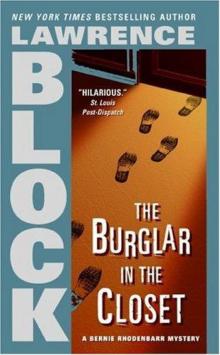 The Burglar in the Closet
 Burglar Who Dropped In On Elvis
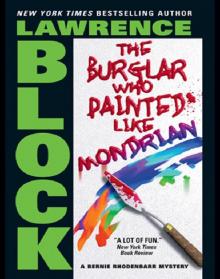 The Burglar Who Painted Like Mondrian
 The Girl With the Long Green Heart
 The Burglar Who Counted the Spoons (Bernie Rhodenbarr)
 Burglar Who Smelled Smoke
 Rude Awakening (Kit Tolliver #2) (The Kit Tolliver Stories)
 Don't Get in the Car (Kit Tolliver #9) (The Kit Tolliver Stories)
 CH04 - The Topless Tulip Caper
 You Can Call Me Lucky (Kit Tolliver #3) (The Kit Tolliver Stories)
 CH02 - Chip Harrison Scores Again
 Strangers on a Handball Court
 Cleveland in My Dreams
 Clean Slate (Kit Tolliver #4) (The Kit Tolliver Stories)
 The Burglar Who Traded Ted Williams
 Burglar on the Prowl
 In For a Penny (A Story From the Dark Side)
 Catch and Release Paperback
 Ride A White Horse
 No Score
 Looking for David (A Matthew Scudder Story Book 7)
 Jilling (Kit Tolliver #6) (The Kit Tolliver Stories)
 Ariel
Ariel Enough Rope
 Grifter's Game
 Canceled Czech
 Unfinished Business (Kit Tolliver #12) (The Kit Tolliver Stories)
 Thirty
 The Burglar Who Thought He Was Bogart
 Make Out with Murder
 One Last Night at Grogan's (A Matthew Scudder Story Book 11)
 The Burglar on the Prowl
 Welcome to the Real World (A Story From the Dark Side)
 Keller 05 - Hit Me
 Walk Among the Tombstones: A Matthew Scudder Crime Novel
 Ronald Rabbit Is a Dirty Old Man
 The Burglar Who Studied Spinoza
 The Burglar Who Liked to Quote Kipling
 Keller in Des Moines
 Hit List
 The Dettweiler Solution
 HCC 115 - Borderline
 A Drop of the Hard Stuff: A Matthew Scudder Novel
 Step by Step
 The Girl With the Deep Blue Eyes
 If You Can't Stand the Heat (Kit Tolliver #1) (The Kit Tolliver Stories)
 The Topless Tulip Caper
 Dolly's Trash & Treasures (A Story From the Dark Side)
 The Triumph of Evil
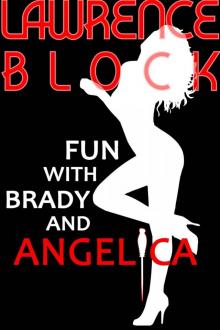 Fun with Brady and Angelica (Kit Tolliver #10 (The Kit Tolliver Stories)
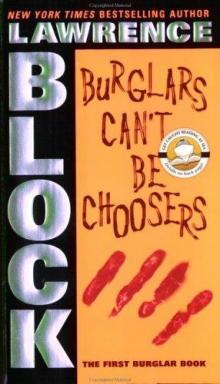 Burglars Can't Be Choosers
 Who Knows Where It Goes (A Story From the Dark Side)
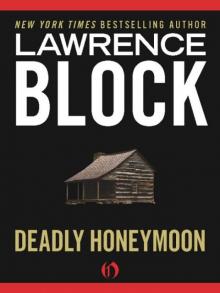 Deadly Honeymoon
 Like a Bone in the Throat (A Story From the Dark Side)
 A Chance to Get Even (A Story From the Dark Side)
 The Boy Who Disappeared Clouds
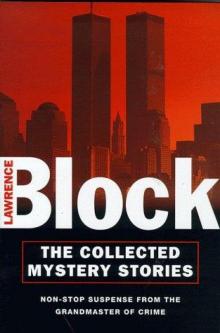 Collecting Ackermans
 Waitress Wanted (Kit Tolliver #5) (The Kit Tolliver Stories)
 One Thousand Dollars a Word
 Even the Wicked: A Matthew Scudder Novel (Matthew Scudder Mysteries)
 Hit Man
 The Night and The Music
 Ehrengraf for the Defense
 The Merciful Angel of Death (A Matthew Scudder Story Book 5)
 The Burglar in the Rye
 I Know How to Pick 'Em
 Getting Off hcc-69
 Three in the Side Pocket (A Story From the Dark Side)
 Let's Get Lost (A Matthew Scudder Story Book 8)
 Strange Are the Ways of Love
 MOSTLY MURDER: Till Death: a mystery anthology
 Masters of Noir: Volume Four
 A Week as Andrea Benstock
 Scenarios (A Stoiry From the Dark Side)
 The Sex Therapists: What They Can Do and How They Do It (John Warren Wells on Sexual Behavior Book 15)
 Like a Thief in the Night: a Bernie Rhodenbarr story
 A Diet of Treacle
 Community of Women
 Different Strokes: How I (Gulp!) Wrote, Directed, and Starred in an X-rated Movie (John Warren Wells on Sexual Behavior)
 You Don't Even Feel It (A Story From the Dark Side)
 Zeroing In (Kit Tolliver #11) (The Kit Tolliver Stories)
 The Wife-Swap Report (John Warren Wells on Sexual Behavior)
 Keller's Fedora (Kindle Single)
 Speaking of Lust
 Everybody Dies (Matthew Scudder)
 Defender of the Innocent: The Casebook of Martin Ehrengraf
 After the First Death
 Writing the Novel
 How Far - a one-act stage play
 Chip Harrison Scores Again
 The Topless Tulip Caper ch-4
 The Crime of Our Lives
 Killing Castro
 The Trouble with Eden
 Nothing Short of Highway Robbery
 Sin Hellcat
 Getting Off: A Novel of Sex & Violence (Hard Case Crime)
 Coward's Kiss
 Alive in Shape and Color
 Blow for Freedom
 The New Sexual Underground: Crossing the Last Boundaries (John Warren Wells on Sexual Behavior Book 10)
 April North
 Lucky at Cards
 One Night Stands; Lost weekends
 Sweet Little Hands (A Story From the Dark Side)
 Blood on Their Hands
 A Dance at the Slaughterhouse
 Headaches and Bad Dreams (A Story From the Dark Side)
 Keller's Therapy
 The Specialists
 Hit and Run jk-4
 Threesome
 Love at a Tender Age (John Warren Wells on Sexual Behavior)
 The Devil Knows You're Dead: A MATTHEW SCUDDER CRIME NOVEL
 Funny You Should Ask
 CH01 - No Score
 Sex and the Stewardess (John Warren Wells on Sexual Behavior)
 A Madwoman's Diary
 When This Man Dies
 Sinner Man
 Such Men Are Dangerous
 A Strange Kind of Love
 Enough of Sorrow
 69 Barrow Street
 A Moment of Wrong Thinking (Matthew Scudder Mysteries Series Book 9)
 Eight Million Ways to Die ms-5
 Warm and Willing
 Mona
Mona In Sunlight or In Shadow
 A Candle for the Bag Lady (Matthew Scudder Book 2)
 Conjugal Rites (Kit Tolliver #7) (The Kit Tolliver Stories)
 Speaking of Lust - the novella
 Gigolo Johnny Wells
 Dark City Lights
 Versatile Ladies: the bisexual option (John Warren Wells on Sexual Behavior)
 Passport to Peril
 The Taboo Breakers: Shock Troops of the Sexual Revolution (John Warren Wells on Sexual Behavior)
 Lucky at Cards hcc-28
 Campus Tramp
 3 is Not a Crowd (John Warren Wells on Sexual Behavior)
 Manhattan Noir
 The Burglar in the Library
 Doing It! - Going Beyond the Sexual Revolution (John Warren Wells on Sexual Behavior Book 13)
 So Willing
 The Burglar Who Traded Ted Williams br-6
 Candy
Candy Sex Without Strings: A Handbook for Consenting Adults (John Warren Wells on Sexual Behavior)
 The Devil Knows You're Dead: A MATTHEW SCUDDER CRIME NOVEL (Matthew Scudder Mysteries)
 Manhattan Noir 2
 The Scoreless Thai (aka Two For Tanner)