
- Home
- Lawrence Block
Ariel Page 3
Ariel Read online
Page 3
TWO
Early on the morning of Caleb’s funeral, Roberta slipped out of the house and went for a walk by herself. She had no conscious destination in mind but wandered around as she had often done on her walks with Caleb, heading up one street and down the next. She was not surprised, though, to find herself at the Battery. Her feet had often led there in the past, and she realized now that she had been on her way to the Battery from the moment she left the house, realized in fact that she was looking for the little old black woman with whom she’d talked of ghosts on the last day of Caleb’s life.
She didn’t find the old woman. There were two men and a woman fishing, a handful of people sitting with newspapers, and one bum stretched full length on a bench, his overcoat serving him as a blanket, his shoes tucked under his head for a pillow. Over to her left, in the shade of an equestrian statue, two young mothers were engaged in conversation. One moved her carriage gently back and forth as she talked. The other had a child in a stroller. Roberta took in the scene at a glance and at once averted her eyes. She was careful not to look in their direction again.
She stayed in the park long enough to smoke a cigarette.
Then with an effort she got to her feet and began walking slowly back to the house.
The funeral service was held that afternoon at the Whittecombe Mortuary, a rambling one-story building of white stucco located on Edgeworth Road a mile north of the city line. The split-level house where the Jardells had lived for over ten years was within walking distance of the funeral parlor. Roberta had attended a number of funerals at Whittecombe’s over the years, and when her mother had died seven years previously Whittecombe’s had been the logical choice. Now, although it was no longer particularly convenient, it was the first place David had thought of.
At the time she had not objected. If there had to be a funeral it hardly mattered to her where it was held. Now, sitting in the first row, with David on her left and Ariel on her right, Roberta regretted the choice. Ever since they’d moved downtown she’d disliked even driving through their old neighborhood, and now, returning to it for this particular occasion, she felt as though Caleb’s death was some bizarre punishment for their having moved in the first place.
Roberta sat stiffly, her spine perpendicular, her hands in her lap. People drifted up to offer words of sympathy. She would look at each person in turn but her eyes refused to focus on the faces in front of her, even as her ears were unable to make sense of the words they took in. So sorry for your troubles crib death is such a mystery even in this day and age have our sympathy want to say how much certainly do hope tragedy good die young such a shame—
Once she turned, thinking she’d spotted the old black woman out of the corner of her eye. But she’d only seen one of Horace Whittecombe’s bloodless little assistants scurrying around.
She managed now and then to nod to the people who offered their sympathy, managed to return a bit of pressure to the hands that pressed her hand. From time to time she would force herself to look beyond the faces to the tiny bronze casket. Miniaturization, she realized, transformed an ordinary casket into something curiously obscene.
At least it was closed. But it had been open earlier and she had looked inside it. Before the others had begun to arrive, when there were just she and David and Ariel, Horace Whittecombe himself had slithered across the room to ask if they would care to view the remains.
What a word—
David had not wanted her to go for that final look. As if it would be too much for her. As if she were not strong enough to bear it.
As if she could bear not to look.
And so they had all viewed the body, all three of them. David had held her and supported her while she stared down at Caleb’s waxen face. She thought of other corpses she had viewed. Her father, who’d died in a car crash when Roberta was not much more than Ariel’s age; the steering wheel had crushed his chest but the accident had left his face unmarked. Her mother, gaunt and ravaged by disease before death took her. David’s father. Aunts, uncles, grandparents. A handful of others.
For all the pride morticians took in their cosmetic skills, she had never seen a corpse that had looked remotely alive. At best the dead looked dead; more often, they looked as though they had never been alive in the first place. They might have been window dummies.
But Caleb looked like a doll, like a child’s doll. A wax head, a little body of stuffed rags swaddled now in a blue blanket.
She had stared dry-eyed at him for as long as she could bear. Then she had turned and ordered the casket closed.
Now she glanced down at her hands. They lay in her lap like pieces of wax fruit on a plate. She could almost see them aging before her eyes, the skin drying and shrinking on the bone, the knuckles swelling with arthritis. Her own mother had first shown her age in her hands, and Roberta took after her mother, looked like her, shared her tastes and inclinations. Her mother’s hands had grown old long before the rest of her. The woman had retained a youthful face long after she’d had an old woman’s hands, and then in a rush the rest of her had caught up with her hands. She’d had lung cancer and it reached metastasis before they found it, and then the decline had been abrupt and dramatic.
Roberta looked at her own hands and thought of her mother and her mother’s death and wanted a cigarette. Her mouth was dry and her hands and feet were chilled and she wanted a cigarette badly, wanted a drink of water, wanted to use the toilet. But nothing was worth the trouble, nothing was all that urgent, and she remained in her seat, staring dully ahead.
So many people offering their sympathy! True, she had lived in Charleston all her life, but she’d been an only child and David had no family here, and most of the friends of her youth had drifted away. While she and David had been socially active earlier in their marriage, they had become less so even while they still lived in the suburbs, and what social life remained had shrunk considerably since the move to the city. They had neither made new friends nor kept the old ones, and yet people kept coming, murmuring unintelligible words, patting her wax-fruit hands.
“Sorry for your trouble, Mrs. Jardell. I’m Curt Rowan, a business friend of your husband’s.”
She nodded, let her hand touch his.
“Mrs. Jardell? I’m Ariel’s teacher, Claire Tashman. I’m so sorry.”
“Roberta, what a terrible thing. I’m so deeply sorry, dear.”
“I’m sorry for your trouble, Mrs. Jardell. I’m Erskine Wold, I’m Ariel’s friend.”
What an odd-looking little boy, she thought, certain she’d never seen him before. Trust Ariel to choose an odd child for a friend. Birds of a feather—
“Oh, Roberta, you poor darling!” An ancient friend of her mother’s, her face as wrinkled as a monkey’s, her name impossible to recall. Roberta had not seen her since her mother’s funeral. An embrace, a powdered cheek to be kissed, and then the woman moved off and a man took her place.
She sensed his presence before she raised her eyes and saw him. She had had fleeting thoughts of him during the past two days but had refused to allow herself to entertain these thoughts.
Now her eyes took him in and she kept a tight hold on herself, not letting herself react visibly to the sight of him. Of course he had come—why shouldn’t he? He’d been her friend for years, hers and David’s, and he lived just a few blocks from Whittecombe’s. It was a fine fall day, cloudless and cool. Perhaps he’d walked over, cutting a dashing figure in his pinstripe navy suit, striding athletically through the quiet suburban streets, his arms swinging at his sides.
Jeff Channing.
Did he know whom they were burying this lovely afternoon? Did he know who it was in the little brassbound casket?
She wanted to tell him. She wanted to tell them all. She wanted to lift the lid of the obscene little coffin and cry out at the top of her lungs, telling Jeff Channing to take a first and last look at his son.
But all she did was nod, and pretend to have heard whatever he might have sai
d, and murmur something unintelligible in evident response. He hesitated only a moment before moving on to express his sympathy to David. He had not moved to take her hand, nor did she offer it.
She looked down at her hand, lying so still in her lap. Soon, she thought. Soon it would begin to show its age.
Ariel wished they would start it already. All of these people were driving her crazy. She didn’t know who most of them were and she didn’t really want to know, but instead of just leaving her alone they had to give their names.
Not the man who’d just passed, though. He hadn’t called her by name nor had he supplied his own, and the funny thing was that she was pretty sure she recognized him. She’d seen him before, though not recently.
Maybe it was just that he had the kind of blank good looks you saw in magazine ads and on television. He could have been the master of ceremonies on the Dating Game. Maybe he was working up a new game show. The Funeral Game—pick the right coffin and win an all-expense paid trip for two to Forest Lawn Cemetery.
At least he hadn’t bugged her. So many of them seemed to feel a need to drop some special message on her. One grayhaired woman with huge nostrils had asked her if she would miss her baby brother. That was about the most disgusting number anyone had done so far, but a lot of people had told her that she would have to be very brave and help her mother, and she felt like asking the next moron who came up with that line just what good her bravery would do Roberta.
Because it was pretty obvious that Roberta didn’t give the northern half of a southbound rat whether she was brave or terrified or anything else. The only thing she could do that would make Roberta feel better would be to change places with Caleb. If it was Ariel in the little brass box instead of poor old Caleb then Roberta would jump up and down and turn handsprings.
Not that she’d fit. She was twelve, just two months short of thirteen, and although she was not particularly tall for her age she was still far too large to squeeze into Caleb’s coffin. She had a sudden mental picture of herself jammed into it, legs doubled up and all scrunched together to fit, and old Roberta jumping maniacally up and down on the lid in an effort to close it.
The image struck her as hysterical and she had to fight the impulse to giggle. That, she knew, would just about tear it. Roberta hated her as it was, hated her for being adopted, hated her for being alive, and hated her for being there, and all it would take was one tiny little giggle and Roberta would just about strangle her. Besides, even if Roberta didn’t notice, even if nobody happened to notice, the last thing she wanted was to sit around breaking herself up at Caleb’s funeral.
What she really wanted to do was cry. But she couldn’t do that either. She had cried all of yesterday and most of the day before, and she would almost certainly do some more crying, probably that night. But she had to be alone to cry. She just wouldn’t cry in front of anybody.
The parade finally ended when a pair of ushers moved in and began steering people toward their seats. The people who worked in funeral parlors, Ariel decided, had to be about the grimmest people in the world. There was old Mr. Whittecombe, who owned the place, and who looked as though he had died years ago and had been very skillfully embalmed; they’d done such a perfect job on him that he could still walk and talk, but if you watched closely and listened carefully it became obvious that he was actually dead. Then there were his two sons, younger versions of their father, and there were three or four other young men who hovered around, and they all wore the same black suits and had the same oily voices and narrow-shouldered bodies and they were all spooky. Which only figured, because you had to be pretty spooky to decide to do things like this for a living.
And you had to be able to glide around like an efficient zombie, which wasn’t likely to be a million laughs. And, speaking of laughs, you could absolutely never laugh. But that probably wasn’t a problem for these men because they didn’t look as though anything had ever struck them as funny.
The minister mounted the steps and took his position at the lectern a few steps to the right of Caleb’s casket. Ariel had met him earlier that day but didn’t remember his name. He wasn’t their minister because they didn’t have one—they didn’t attend church—but David had evidently dredged him up somewhere. Maybe old Whittecombe found you a minister if you weren’t able to come up with one of your own. Maybe it was all part of a package deal.
The minister started talking but she decided not to listen to him. It was easy enough to tune out things you didn’t want to hear. She’d had plenty of practice over the years not listening to Roberta, and had reached a point where she could ignore just about anybody. And it didn’t seem likely that the minister would say anything sensational. What could he talk about, anyway? What a great life Caleb had had and all the good things he’d done in it? She figured he would just come up with the standard crap about how God’s ways are mysterious, and that wasn’t anything she wanted to hear.
She wasn’t sure about God. Some days she believed in Him and other days she didn’t. Today she didn’t, but not because Caleb had died. That could just as easily make her believe there had to be a God, because nothing that rotten could happen just by accident. A little baby goes to sleep at night and doesn’t wake up in the morning—well, that convinced you either that there was a God or that there wasn’t, depending which way your ears were pointed that particular day.
She looked at the minister, a tall man with very prominent eyebrows and dark blond hair that had gone gray at the temples. He had the same kind of unreal good looks as the man who could have been planning to emcee the Funeral Game. Her eyes moved from the minister to the coffin, and then she closed her eyes and tried to think of something else to think about.
She had never been to a funeral before. She’d been about five when her grandmother died and they’d left her at home with a baby sitter. Her regular sitter couldn’t come that day, probably because the funeral took place during school hours, and the sitter who showed up was a plump bubbly woman with a hearty laugh who told great stories and kept her occupied nonstop from her parents’ departure to their return several hours later. The woman had been a far more grandmotherly type than the woman they buried that day, whom Ariel now recalled as having always been ill, lying in bed first in a sick-smelling bedroom and later in an equally unwholesome hospital room.
Though this was her first funeral, Ariel had known what to expect. You saw enough of them on television. But she had not known what the experience would feel like. And she had had no idea that she would have to go stand next to the coffin and look at Caleb lying there.
Not that she had been forced to look. In fact they hadn’t seemed to want her to look, but it didn’t matter what they wanted. If you were supposed to go and look, then that was what she was going to do.
So she had stood there, just able to gaze over the side of the coffin, and it was the strangest feeling. It was like standing at the side of his crib and looking through the bars at him while he slept. Except that he wouldn’t wake up. He wouldn’t coo and make his giggle sounds, and he wouldn’t raise his feet for her to play with them and make him laugh, and he wouldn’t go ga-ga looking at his fish mobile. He wouldn’t do any of those things, not ever again, but here she was looking down at him, and it was, well, weird.
Speaking of weird, she was surprised that Erskine had come. She had only met him when school started and she really didn’t know him at all. They were in two classes together, arithmetic and social studies, and they would nod at each other when they passed in the halls, but that was the extent of it. Nobody else had come from her new school except for her homeroom teacher, Miss Tashman, and no one at all had come from her old school, and that was about what she had expected. She didn’t really have any friends.
Maybe Erskine just happened to be a nut about funerals. It almost figured that he would be. He was certainly creepy enough. He was short, five or six inches shorter than she was, and he was plump. Not plump all over but just in the stomach and chest. His
arms and legs were quite thin, and he had very small hands and feet. His eyes were blue and looked larger than life because he wore glasses like the bottoms of Coke bottles that magnified his eyes so they looked enormous, making Erskine look something like a Martian in the process.
His complexion, she thought, was even paler than her own, so pale it looked unhealthy. And he was almost as well-coordinated as a spastic, unable to walk through the halls without dropping at least half of what he was carrying. Sometimes he bumped into people. Sometimes he caromed off walls. Sometimes he tripped over his own feet. And his voice was high in pitch, and he tried to conceal this by talking down at the very bottom of his throat, which made him sound either like a girl trying to imitate a boy or a sparrow trying to imitate a bullfrog.
Weird.
So maybe he never misses a funeral, she thought. Which would figure. Or maybe he likes me, which would also figure, because I’m almost as unusual looking as he is. Erskine Wold and Ariel Jardell, and how’s that for a corner on the weirdness market, ladies and gentlemen?
Still, it was nice of him to come.
Jeffrey Channing sat alone in the last row, where he paid no more attention than Ariel to the words the minister was saying. The room was little more than half full, and Jeff was the only person seated in any of the last five rows on either side of the center aisle. This physical gap between himself and the others intensified a feeling of detachment that had been strong to begin with.
He was thinking about crib death.
He’d spent most of the morning reading about it, first in the main public library downtown, then at the medical school library at Calhoun and Barre, where articles in pediatric journals referred to it as SIDS, the acronym representing Sudden Infant Death Syndrome. Which, it seemed to him, just accented how little was known about crib death.
Perfectly healthy babies went to sleep and didn’t wake up, and no one seemed to know why. There were theories, he had learned, but they came and went with the seasons. One article he’d read suggested that SIDS might be some form of anaphylactic shock, an extreme allergic reaction of the sort that gave some individuals fatal reactions to a bee sting or a shot of penicillin. Another writer argued that the syndrome was far more common in bottle-fed babies, and reasoned that it was caused by a constitutional inability to digest the larger protein molecules in cow’s milk. Yet another authority explained the phenomenon in terms of the failure of the body’s autoimmune system. Jeff knew that the autoimmune system was a factor in some patients’ rejection of transplanted organs, but that was about all he did know about it, and he couldn’t understand how it might relate to the death of Caleb Oliver Jardell.
 Tanner on Ice
 Hit Me
 Hit and Run
 Hope to Die
 Two For Tanner
 Tanners Virgin
 Dead Girl Blues
 One Night Stands and Lost Weekends
 A Drop of the Hard Stuff
 The Canceled Czech
 Even the Wicked
 Me Tanner, You Jane
 Quotidian Keller
 Small Town
 Tanners Tiger
 A Walk Among the Tombstones
 Tanners Twelve Swingers
 Gym Rat & the Murder Club
 Everybody Dies
 The Thief Who Couldnt Sleep
 Hit Parade
 The Devil Knows Youre Dead
 The Burglar in Short Order
 A Long Line of Dead Men
 Keller's Homecoming
 Resume Speed
 Keller's Adjustment
 Eight Million Ways to Die
 Time to Murder and Create
 Out on the Cutting Edge
 A Dance at the Slaughter House
 In the Midst of Death
 When the Sacred Ginmill Closes
 You Could Call It Murder
 Keller on the Spot
 A Ticket to the Boneyard
 A Time to Scatter Stones
 Keller's Designated Hitter
 A Stab in the Dark
 Sins of the Fathers
 The Burglar in the Closet
 Burglar Who Dropped In On Elvis
 The Burglar Who Painted Like Mondrian
 The Girl With the Long Green Heart
 The Burglar Who Counted the Spoons (Bernie Rhodenbarr)
 Burglar Who Smelled Smoke
 Rude Awakening (Kit Tolliver #2) (The Kit Tolliver Stories)
 Don't Get in the Car (Kit Tolliver #9) (The Kit Tolliver Stories)
 CH04 - The Topless Tulip Caper
 You Can Call Me Lucky (Kit Tolliver #3) (The Kit Tolliver Stories)
 CH02 - Chip Harrison Scores Again
 Strangers on a Handball Court
 Cleveland in My Dreams
 Clean Slate (Kit Tolliver #4) (The Kit Tolliver Stories)
 The Burglar Who Traded Ted Williams
 Burglar on the Prowl
 In For a Penny (A Story From the Dark Side)
 Catch and Release Paperback
 Ride A White Horse
 No Score
 Looking for David (A Matthew Scudder Story Book 7)
 Jilling (Kit Tolliver #6) (The Kit Tolliver Stories)
 Ariel
Ariel Enough Rope
 Grifter's Game
 Canceled Czech
 Unfinished Business (Kit Tolliver #12) (The Kit Tolliver Stories)
 Thirty
 The Burglar Who Thought He Was Bogart
 Make Out with Murder
 One Last Night at Grogan's (A Matthew Scudder Story Book 11)
 The Burglar on the Prowl
 Welcome to the Real World (A Story From the Dark Side)
 Keller 05 - Hit Me
 Walk Among the Tombstones: A Matthew Scudder Crime Novel
 Ronald Rabbit Is a Dirty Old Man
 The Burglar Who Studied Spinoza
 The Burglar Who Liked to Quote Kipling
 Keller in Des Moines
 Hit List
 The Dettweiler Solution
 HCC 115 - Borderline
 A Drop of the Hard Stuff: A Matthew Scudder Novel
 Step by Step
 The Girl With the Deep Blue Eyes
 If You Can't Stand the Heat (Kit Tolliver #1) (The Kit Tolliver Stories)
 The Topless Tulip Caper
 Dolly's Trash & Treasures (A Story From the Dark Side)
 The Triumph of Evil
 Fun with Brady and Angelica (Kit Tolliver #10 (The Kit Tolliver Stories)
 Burglars Can't Be Choosers
 Who Knows Where It Goes (A Story From the Dark Side)
 Deadly Honeymoon
 Like a Bone in the Throat (A Story From the Dark Side)
 A Chance to Get Even (A Story From the Dark Side)
 The Boy Who Disappeared Clouds
 Collecting Ackermans
 Waitress Wanted (Kit Tolliver #5) (The Kit Tolliver Stories)
 One Thousand Dollars a Word
 Even the Wicked: A Matthew Scudder Novel (Matthew Scudder Mysteries)
 Hit Man
 The Night and The Music
 Ehrengraf for the Defense
 The Merciful Angel of Death (A Matthew Scudder Story Book 5)
 The Burglar in the Rye
 I Know How to Pick 'Em
 Getting Off hcc-69
 Three in the Side Pocket (A Story From the Dark Side)
 Let's Get Lost (A Matthew Scudder Story Book 8)
 Strange Are the Ways of Love
 MOSTLY MURDER: Till Death: a mystery anthology
 Masters of Noir: Volume Four
 A Week as Andrea Benstock
 Scenarios (A Stoiry From the Dark Side)
 The Sex Therapists: What They Can Do and How They Do It (John Warren Wells on Sexual Behavior Book 15)
 Like a Thief in the Night: a Bernie Rhodenbarr story
 A Diet of Treacle
 Community of Women
 Different Strokes: How I (Gulp!) Wrote, Directed, and Starred in an X-rated Movie (John Warren Wells on Sexual Behavior)
 You Don't Even Feel It (A Story From the Dark Side)
 Zeroing In (Kit Tolliver #11) (The Kit Tolliver Stories)
 The Wife-Swap Report (John Warren Wells on Sexual Behavior)
 Keller's Fedora (Kindle Single)
 Speaking of Lust
 Everybody Dies (Matthew Scudder)
 Defender of the Innocent: The Casebook of Martin Ehrengraf
 After the First Death
 Writing the Novel
 How Far - a one-act stage play
 Chip Harrison Scores Again
 The Topless Tulip Caper ch-4
 The Crime of Our Lives
 Killing Castro
 The Trouble with Eden
 Nothing Short of Highway Robbery
 Sin Hellcat
 Getting Off: A Novel of Sex & Violence (Hard Case Crime)
 Coward's Kiss
 Alive in Shape and Color
 Blow for Freedom
 The New Sexual Underground: Crossing the Last Boundaries (John Warren Wells on Sexual Behavior Book 10)
 April North
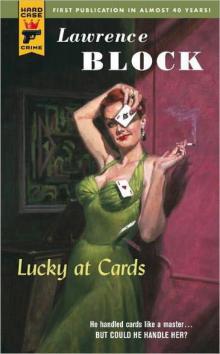 Lucky at Cards
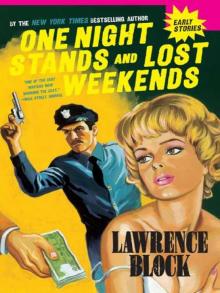 One Night Stands; Lost weekends
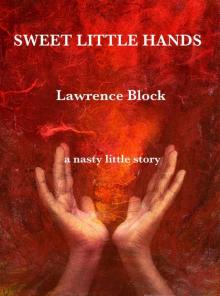 Sweet Little Hands (A Story From the Dark Side)
 Blood on Their Hands
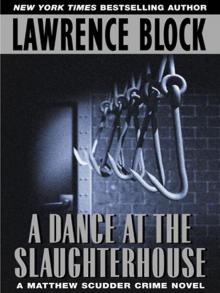 A Dance at the Slaughterhouse
 Headaches and Bad Dreams (A Story From the Dark Side)
 Keller's Therapy
 The Specialists
 Hit and Run jk-4
 Threesome
 Love at a Tender Age (John Warren Wells on Sexual Behavior)
 The Devil Knows You're Dead: A MATTHEW SCUDDER CRIME NOVEL
 Funny You Should Ask
 CH01 - No Score
 Sex and the Stewardess (John Warren Wells on Sexual Behavior)
 A Madwoman's Diary
 When This Man Dies
 Sinner Man
 Such Men Are Dangerous
 A Strange Kind of Love
 Enough of Sorrow
 69 Barrow Street
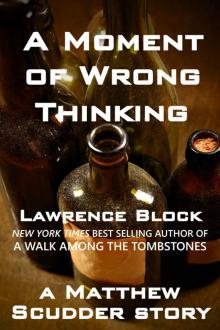 A Moment of Wrong Thinking (Matthew Scudder Mysteries Series Book 9)
 Eight Million Ways to Die ms-5
 Warm and Willing
 Mona
Mona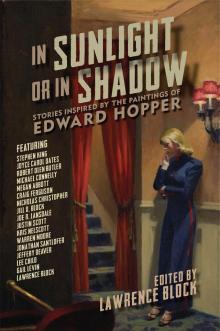 In Sunlight or In Shadow
 A Candle for the Bag Lady (Matthew Scudder Book 2)
 Conjugal Rites (Kit Tolliver #7) (The Kit Tolliver Stories)
 Speaking of Lust - the novella
 Gigolo Johnny Wells
 Dark City Lights
 Versatile Ladies: the bisexual option (John Warren Wells on Sexual Behavior)
 Passport to Peril
 The Taboo Breakers: Shock Troops of the Sexual Revolution (John Warren Wells on Sexual Behavior)
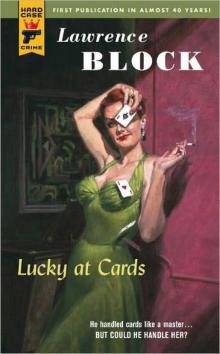 Lucky at Cards hcc-28
 Campus Tramp
 3 is Not a Crowd (John Warren Wells on Sexual Behavior)
 Manhattan Noir
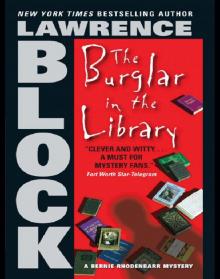 The Burglar in the Library
 Doing It! - Going Beyond the Sexual Revolution (John Warren Wells on Sexual Behavior Book 13)
 So Willing
 The Burglar Who Traded Ted Williams br-6
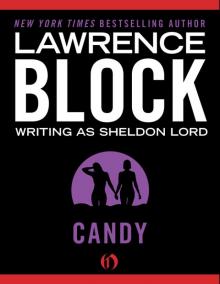 Candy
Candy Sex Without Strings: A Handbook for Consenting Adults (John Warren Wells on Sexual Behavior)
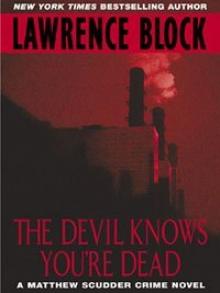 The Devil Knows You're Dead: A MATTHEW SCUDDER CRIME NOVEL (Matthew Scudder Mysteries)
 Manhattan Noir 2
 The Scoreless Thai (aka Two For Tanner)