
- Home
- Lawrence Block
Hit List Page 27
Hit List Read online
Page 27
“This one,” she said, “and the dog walker one with all the earrings. Call me judgmental, but I think we’d be safe classing them both as kooks.”
“Maybe.”
“ ‘Let’s keep this superficial, so don’t send me any more flowers, and we’ll just meet a couple of times a month and go to bed.’ “
“ ‘And by the way, you’ve got a murderer’s thumb.’ “
“Any more superficial, Keller, and she’d have had you stay home altogether and just send her a monthly teaspoon of sperm. I have to say she did you a favor, keeping you at a distance. It might be harder on you otherwise, closing the account.”
“Bait,” he said.
“The word seems to bother you. Call it sushi, if you like that better. It amounts to the same thing.”
“I guess I’ll get used to the idea.”
“Or look at it this way,” she said. “She’s the lemon fate handed you. And what you’re doing, you’re making lemonade.”
Back at his apartment, the first thing Keller did was check his answering machine. He pressed the Play button, and the robotic voice said, “You. Have. No. Messages.”
And what did that mean? That no one had left a message? Or that, while he was on his way home, Dot had called and wiped the machine clean?
The first thing to do, he thought, was change his number, and to something less obvious than four-four-four. Like what? He ran three-number combinations through his head, trying to find one that was clunkier and less memorable than the others. Three-eight-one? Two-nine-four? Any number, he decided, displayed special qualities if you thought about it long enough. And, if he managed to find one that was genuinely unremarkable, one a person just couldn’t hold in his mind, then how would he remember it himself?
Besides, Dot could dig it out by trying numbers at random. How many combinations were there, anyway? He seemed to remember from high school math that there was a formula for this sort of thing, but, like most of high school math, it had long since found its way out of his memory bank.
He sat down at his desk, picked up a pencil and realized you didn’t need a formula. The numbers started at zero-zero-zero and ran to nine-nine-nine. A thousand combinations, that’s how many there were. Ten times ten times ten, that was the formula, if formulas were important to you. It sounded like a lot, a thousand, but when you thought about it you realized it wasn’t so much after all.
Years ago he’d done a job for the old man that involved a briefcase. He hadn’t thought of it in years, but he remembered now that the briefcase had been locked, not with a key but with a three-number code, one of those triple dials where you had to line up the numbers correctly to get the case open. He’d used a pair of pruning shears instead, cutting right through the leather flap, but it struck him now, years and years later, that he could have opened the case without ruining it. It would have taken more time, but it wouldn’t have taken forever.
More like two hours, he realized. Maybe even less than that. If you were systematic about it, you could easily try ten or fifteen combinations a minute. Ten a minute was a hundred minutes, and what did that amount to? An hour and forty minutes?
The pruning shears had taken no time at all. Of course it had taken him a while to find the shears, and before that he’d sawed at the flap ineffectually with a kitchen knife. But that was beside the point. A thousand combinations wouldn’t take long, not with a briefcase lock and not with a telephone answering machine, either. You’d dial the number and let the machine pick up, and then you’d punch in as many of your three-number codes as you could in the thirty seconds or so that the message played. Then you’d call back and do itagain. You might make a lot of calls, but so what? You wouldn’t be leaving any messages. And, even if you did, sooner or later you’d get the right combination. And then you’d have a chance to erase them.
So changing his combination wouldn’t help. And how would Dot feel if she called up and punched in four-four-four and nothing happened? It would be a slap in the face, and not a very effective one, either, because she could run the combinations until she cracked the code.
Of course he could tell her ahead of time. “I realized anybody could do what you did and get my messages,” he could say, “so I changed the number.” She’d say it was a good idea. And, if she asked what the new number was, he’d say something about it being so unmemorable he couldn’t remember it himself. “But I’ve got it written down,” he’d say, and let it go at that.
And, if she wanted to, she’d get the new number. However you looked at it, he couldn’t keep her out of his answering machine. Unless . . .
Well, he could change his phone number. Get a new number, an unlisted one. With seven digits, well, that added up to ten million combinations, and it would take forever and cost a fortune, because you’d get nine million wrong numbers while you were at it.
But if he got a new number, there wouldn’t be any messages to protect. Because no one would be able to call him. Including Dot, who was his most frequent caller in the first place.
Maybe he should just leave everything the way it was. Dot had probably been right to check his machine, just as she’d been right to check out the astrologer. He’d liked Louise, she was a nice woman, but if she was going to turn into Chatty Cathy the minute somebody mentioned a murderer’s thumb, well, that made her a definite loose end.
And Dot had snipped her off.
Imagine that. Dot, coming down on the train, wearing gloves and a little flowered hat. She hadn’t mentioned a hat, and it was hard to picture her in a hat, but it sort of fit. Gloves and a hat, and a poisoned chocolate in her handbag. And tidying up afterward, and going home.
Jesus.
Suppose she hadn’t done it. Suppose she’d told him, and left him with the task of cleaning up the potential mess he’d made. Could he have taken care of Louise?
Probably. You did what you had to do. Once or twice over the years he’d made the mistake of getting to know someone he’d been hired to take out. There was that fellow in Roseburg, Oregon, set up by the government as a quick printer, secure as could be in the Witness Protection Program. Keller had liked the man, and liked the town, too, and thought about settling down there. But in the end you did what you had to do. You steeled yourself and got the job done.
He’d forgotten the guy’s name. Both his names, the original one and the new one the feds gave him. Forgot what he looked like, too. Couldn’t picture him.
Which was fine. The way it ought to be.
He pictured Louise as he remembered her, sitting in her chair, the bowl of chocolates at her side. But the features were already growing less distinct in his mind, the colors fading toward gray.
Good.
Twenty-six
* * *
Keller put his coffee cup down, and within seconds the busboy filled it up again. He’d been wondering just how long he could sit over one cup of coffee, and it was beginning to look as though the answer was forever. Because they never let the cup get empty, and how could they expect you to leave while you still had coffee in front of you?
He let the coffee cool and looked out the window. The coffee shop was at the corner of Crosby and Bleecker, and from where Keller sat he could get a glimpse of the entrance to Maggie’s building. Watching it was a little like watching paint dry. No one ever went in or out of it, and hardly anybody even walked past it, as that block of Crosby Street didn’t get much in the way of pedestrian traffic.
Keller drank a little more coffee, and had his cup filled again, and looked up to see a man emerge from Maggie’s building. He was short and wiry, built like a jockey, and he was wearing a distressed leather jacket and carrying a metal toolbox.
He carried it to the corner and into the coffee shop, and came right over to Keller’s table. “Piece of pie,” he said.
“Most people say ‘piece of cake,’ “ Keller said.
“Huh? Oh, up there? That was a piece of cake, all right, but what I want’s a piece of pie. In fact”—he r
eached for the menu—“what I want’s a meal. What’s good here?”
“I’ve never been here before.”
“Yeah, but you’re here now. What did you have?”
“Coffee.”
“That’s all?” He motioned for the waitress, ordered a cheeseburger with fries, and asked what kind of pie they had. It was a tough choice, but he went with Boston cream.
“Here,” he said, when he’d finished ordering, and put three keys on the table in front of Keller. “This here lets you into the building. Upstairs, what I did was I drilled out both locks and replaced the cylinders. Light-colored key’s for the top lock, dark one’s for the bottom. Turn the top one clockwise, the bottom one counter. Nothing to it, but you’re gonna be disappointed.”
“Why?”
“Nothing there to steal. Not that I looked around, I just did what I went there to do, but I couldn’t help notice there’s no furniture. No chairs, no tables, no rug on the floor. Zip, nada, nothing. It’s not like they moved out, because there’s papers pinned to a bulletin board and clothes in the closets. But there’s no furniture. You know anything about these people?”
“I think he’s an architect.”
“Oh,” the man said. “Well, why didn’t you say so? They never have furniture. They like space. Place has got space, I’ll say that for it. One big room, fills the whole floor, and there’s not a damn thing in it but space.”
“There must be a bed,” Keller said.
“There’s a desk,” the man said. “Built in. Also some bookshelves, also built in. Far as a bed’s concerned, well, you find it, you can sleep in it. Myself, I didn’t happen to see it.”
“Oh.”
“Everything’s white,” the man said, “including the floor. Gotta be an architect. Real practical, huh? A white floor in this town?” He put down his cheeseburger, took a forkful of pie, then bit into the cheeseburger again. “I eat everything at once,” he said, a little defensively. “My whole family’s the same way. You’re going in there, right?”
“How’s that?”
“The apartment, the loft. The white space. Well, you got access. Light key’s for the top lock, but hey, if you get mixed up, what’s the problem? One key don’t work, try the other.” He picked up a french fry. “Keys are all yours, soon as you pay for ’em.”
“Oh, right,” Keller said. He passed the man an envelope, and the little locksmith put down his fork long enough to lift the flap and count the bills it contained.
“I always count,” he said, “in case it’s too much or too little. The count’s off about a third of the time, my experience, and what percentage of the time do you figure it’s in my favor?”
“Hardly ever.”
“Bingo,” the man said. “This time the count’s right, and thanks very much.”
“You’re welcome,” Keller said, picking up the keys. “And thanks for helping me out.”
“What I do,” the man said. “I’m a locksmith, licensed and bonded and on call around the clock. People lose their keys, I let ’em in. They never had keys in the first place, well, it costs a little more.” He grinned. “You’re in a hurry, and no reason for you to stick around until I’m done. I might try that pecan pie, see if it’s as good as the Boston cream. You go ahead, and the check’s on me. The hell, all you had was coffee. Don’t forget, the bright key’s for the top lock.”
“And I turn it clockwise.”
“Whatever.” He grabbed a french fry. “You want some advice? Wear sunglasses.”
It was a small commercial building converted to residential use, with an artist’s loft taking up each of its five stories. The sculptor on the ground floor lived with his wife in Park Slope, and, according to Maggie, used his space on Crosby Street only for work. “He makes these massive hulking statues,” she had told him, “humanoid, but just barely, and they weigh a ton, so it’s good he’s on the ground floor. It takes him forever to finish a piece, but he never sells anything, so it doesn’t matter.”
“He never sells anything?”
“I was a painter for years,” she’d said, “and I never sold anything. You don’t have to sell to be an artist. In fact it’s probably easier if you don’t.”
There was a painter on the third floor, another painter on the fourth. Keller didn’t know what their work looked like, or if they ever sold any of it. He knew that Maggie occupied the top floor, and that the architect on the second floor was somewhere in Europe and wouldn’t be back for months.
Keller used the new keys, opened the new locks, and stepped into an enormous white room. The floor was white, as the locksmith had told him, and so were the walls and the ceiling, along with the built-in desk and the built-in bookshelves. There were windows at either end of the loft. The ones at the rear were painted white, glass and all, while the ones in the front were out of sight behind white shutters.
With the track lighting on, the whiteness of the room was enough to give you a headache. Keller turned the lights off, and the room was plunged into darkness. He tried opening one of the shutters a few inches, letting in a little daylight, and that was better.
There was furniture, he discovered, although he could see how the locksmith had missed it. White cubes, some of them topped with white cushions, served as chairs, and a big white box on one wall held a Murphy bed. Some of the cube chairs were permanently installed, but others were movable, and he carried one over to the front window, cushion and all, and sat on it.
“I don’t know if you noticed,” Dot said, “but the books on the shelves are white, too. They didn’t start out that way, but somebody took white shelf paper and made individual covers for them.”
“I know.”
“You could lose your color vision around here. Between the ding-a-ling upstairs who only wears black, and this fruitcake with everything white. You want to switch? I’ll watch the street for a while.”
“There’s somebody across the street,” he said.
“Where?” She joined him at the window, squinted through the space between the shutters. “Oh, there he is. In the doorway, with the windbreaker and the cap.”
“I spotted him a few minutes ago. He’s just standing there.”
“Well, he can’t be waiting for a bus, or hoping to flag a cruising taxi. He’s waiting for somebody. Have you got the binoculars?”
“I thought you had them.”
“Here they are. He could look up and spot light glinting off them, if there was any light to glint. I can’t really make out his face. Here, you look.”
He peered through the binoculars, adjusted the focus. The man’s face was in shadow, and indistinct.
“Well, Keller? Is that the guy you saw in Boston?”
“I never really got a good look at him,” he said, “and I don’t even know if the guy I saw was the guy who tried to kill me.”
“And killed your raincoat by mistake.”
“But this guy’s here for a reason,” he said. “He’s either Roger or he’s not.”
“That’s true of everybody, Keller.”
“You know what I mean. He’s here to do a job upstairs, or he’s here to do a job on the guy who does.”
Whoever he was, he was right there on the opposite side of a narrow street. If he had a gun, Keller thought, he could shoot the son of a bitch, and then they could go across the street and take a closer look at him.
“There’s somebody else,” he said. “See?”
“Where?”
“Walking down from the corner.”
“Just a man walking,” she said, “but that’s rare enough on this street, isn’t it? How about this guy, Keller. Does he look familiar?”
Keller tracked him with the binoculars. This one wasn’t in shadows, but he wore a long coat and a wide-brimmed hat and a muffler and glasses, and about all you could say for sure was that he didn’t have a mustache. He was on the tall side, but then so was the lurker, the guy in the doorway.
“He’s turning around,” he said. “I th
ink he’s looking for an address.”
“And look who’s coming.”
“What, in the doorway? He hasn’t moved.”
“Coming down the street, Keller. Is that who I think it is? Dressed all in black, surprise surprise?”
It was Maggie, on her way home. She was coming from the left, and the guy with the hat and muffler was coming from the right, and the guy in the windbreaker and cap was across the street, lurking.
“This is handy,” Dot said. “Everybody on stage at the same time. You want to go downstairs and handle the introductions, Keller?”
“He’s crossing the street,” he said. “He’s walking right toward her.”
“He’s still in the doorway. Oh, the hat and muffler. You think he’s going to do it here and now?”
“How? It’s supposed to look like an accident.”
“Maybe he’ll throw her in front of a truck. There should be a garbage truck coming through sometime after midnight. Maybe he just wants a close look at her. No, he’s stopping her.”
Keller had the impulse to shout a warning. He wouldn’t do that, but what was he supposed to do, just sit there and watch the woman get killed?
“They’re talking,” Dot said, her own voice reduced to a whisper. “If the window was open we could hear them.”
“Don’t open it now.”
“No. From this angle all I can see is the tops of their heads, and they’re both wearing hats.”
“What difference does that make?”
“I don’t know. Maybe he’s a friend of hers.”
“Maybe.”
“Maybe she’ll take him upstairs. Maybe she’ll do that even if he’s a stranger. That’d make it easy for him, and then Roger’ll be waiting across the street when he comes out. Ooops, false alarm.”
Maggie was entering the building. And the man in the hat had drawn away from her and was crossing the street, moving to the right, away from the man in the doorway. He walked fifteen or twenty yards to another darkened building and stood at the door.
 Tanner on Ice
 Hit Me
 Hit and Run
 Hope to Die
 Two For Tanner
 Tanners Virgin
 Dead Girl Blues
 One Night Stands and Lost Weekends
 A Drop of the Hard Stuff
 The Canceled Czech
 Even the Wicked
 Me Tanner, You Jane
 Quotidian Keller
 Small Town
 Tanners Tiger
 A Walk Among the Tombstones
 Tanners Twelve Swingers
 Gym Rat & the Murder Club
 Everybody Dies
 The Thief Who Couldnt Sleep
 Hit Parade
 The Devil Knows Youre Dead
 The Burglar in Short Order
 A Long Line of Dead Men
 Keller's Homecoming
 Resume Speed
 Keller's Adjustment
 Eight Million Ways to Die
 Time to Murder and Create
 Out on the Cutting Edge
 A Dance at the Slaughter House
 In the Midst of Death
 When the Sacred Ginmill Closes
 You Could Call It Murder
 Keller on the Spot
 A Ticket to the Boneyard
 A Time to Scatter Stones
 Keller's Designated Hitter
 A Stab in the Dark
 Sins of the Fathers
 The Burglar in the Closet
 Burglar Who Dropped In On Elvis
 The Burglar Who Painted Like Mondrian
 The Girl With the Long Green Heart
 The Burglar Who Counted the Spoons (Bernie Rhodenbarr)
 Burglar Who Smelled Smoke
 Rude Awakening (Kit Tolliver #2) (The Kit Tolliver Stories)
 Don't Get in the Car (Kit Tolliver #9) (The Kit Tolliver Stories)
 CH04 - The Topless Tulip Caper
 You Can Call Me Lucky (Kit Tolliver #3) (The Kit Tolliver Stories)
 CH02 - Chip Harrison Scores Again
 Strangers on a Handball Court
 Cleveland in My Dreams
 Clean Slate (Kit Tolliver #4) (The Kit Tolliver Stories)
 The Burglar Who Traded Ted Williams
 Burglar on the Prowl
 In For a Penny (A Story From the Dark Side)
 Catch and Release Paperback
 Ride A White Horse
 No Score
 Looking for David (A Matthew Scudder Story Book 7)
 Jilling (Kit Tolliver #6) (The Kit Tolliver Stories)
 Ariel
Ariel Enough Rope
 Grifter's Game
 Canceled Czech
 Unfinished Business (Kit Tolliver #12) (The Kit Tolliver Stories)
 Thirty
 The Burglar Who Thought He Was Bogart
 Make Out with Murder
 One Last Night at Grogan's (A Matthew Scudder Story Book 11)
 The Burglar on the Prowl
 Welcome to the Real World (A Story From the Dark Side)
 Keller 05 - Hit Me
 Walk Among the Tombstones: A Matthew Scudder Crime Novel
 Ronald Rabbit Is a Dirty Old Man
 The Burglar Who Studied Spinoza
 The Burglar Who Liked to Quote Kipling
 Keller in Des Moines
 Hit List
 The Dettweiler Solution
 HCC 115 - Borderline
 A Drop of the Hard Stuff: A Matthew Scudder Novel
 Step by Step
 The Girl With the Deep Blue Eyes
 If You Can't Stand the Heat (Kit Tolliver #1) (The Kit Tolliver Stories)
 The Topless Tulip Caper
 Dolly's Trash & Treasures (A Story From the Dark Side)
 The Triumph of Evil
 Fun with Brady and Angelica (Kit Tolliver #10 (The Kit Tolliver Stories)
 Burglars Can't Be Choosers
 Who Knows Where It Goes (A Story From the Dark Side)
 Deadly Honeymoon
 Like a Bone in the Throat (A Story From the Dark Side)
 A Chance to Get Even (A Story From the Dark Side)
 The Boy Who Disappeared Clouds
 Collecting Ackermans
 Waitress Wanted (Kit Tolliver #5) (The Kit Tolliver Stories)
 One Thousand Dollars a Word
 Even the Wicked: A Matthew Scudder Novel (Matthew Scudder Mysteries)
 Hit Man
 The Night and The Music
 Ehrengraf for the Defense
 The Merciful Angel of Death (A Matthew Scudder Story Book 5)
 The Burglar in the Rye
 I Know How to Pick 'Em
 Getting Off hcc-69
 Three in the Side Pocket (A Story From the Dark Side)
 Let's Get Lost (A Matthew Scudder Story Book 8)
 Strange Are the Ways of Love
 MOSTLY MURDER: Till Death: a mystery anthology
 Masters of Noir: Volume Four
 A Week as Andrea Benstock
 Scenarios (A Stoiry From the Dark Side)
 The Sex Therapists: What They Can Do and How They Do It (John Warren Wells on Sexual Behavior Book 15)
 Like a Thief in the Night: a Bernie Rhodenbarr story
 A Diet of Treacle
 Community of Women
 Different Strokes: How I (Gulp!) Wrote, Directed, and Starred in an X-rated Movie (John Warren Wells on Sexual Behavior)
 You Don't Even Feel It (A Story From the Dark Side)
 Zeroing In (Kit Tolliver #11) (The Kit Tolliver Stories)
 The Wife-Swap Report (John Warren Wells on Sexual Behavior)
 Keller's Fedora (Kindle Single)
 Speaking of Lust
 Everybody Dies (Matthew Scudder)
 Defender of the Innocent: The Casebook of Martin Ehrengraf
 After the First Death
 Writing the Novel
 How Far - a one-act stage play
 Chip Harrison Scores Again
 The Topless Tulip Caper ch-4
 The Crime of Our Lives
 Killing Castro
 The Trouble with Eden
 Nothing Short of Highway Robbery
 Sin Hellcat
 Getting Off: A Novel of Sex & Violence (Hard Case Crime)
 Coward's Kiss
 Alive in Shape and Color
 Blow for Freedom
 The New Sexual Underground: Crossing the Last Boundaries (John Warren Wells on Sexual Behavior Book 10)
 April North
 Lucky at Cards
 One Night Stands; Lost weekends
 Sweet Little Hands (A Story From the Dark Side)
 Blood on Their Hands
 A Dance at the Slaughterhouse
 Headaches and Bad Dreams (A Story From the Dark Side)
 Keller's Therapy
 The Specialists
 Hit and Run jk-4
 Threesome
 Love at a Tender Age (John Warren Wells on Sexual Behavior)
 The Devil Knows You're Dead: A MATTHEW SCUDDER CRIME NOVEL
 Funny You Should Ask
 CH01 - No Score
 Sex and the Stewardess (John Warren Wells on Sexual Behavior)
 A Madwoman's Diary
 When This Man Dies
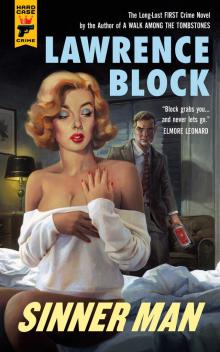 Sinner Man
 Such Men Are Dangerous
 A Strange Kind of Love
 Enough of Sorrow
 69 Barrow Street
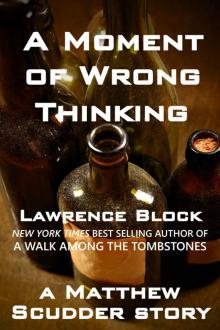 A Moment of Wrong Thinking (Matthew Scudder Mysteries Series Book 9)
 Eight Million Ways to Die ms-5
 Warm and Willing
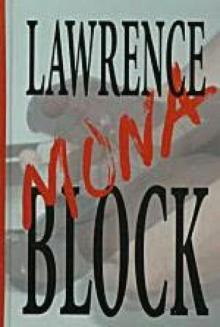 Mona
Mona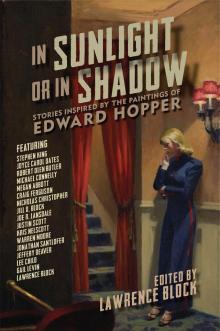 In Sunlight or In Shadow
 A Candle for the Bag Lady (Matthew Scudder Book 2)
 Conjugal Rites (Kit Tolliver #7) (The Kit Tolliver Stories)
 Speaking of Lust - the novella
 Gigolo Johnny Wells
 Dark City Lights
 Versatile Ladies: the bisexual option (John Warren Wells on Sexual Behavior)
 Passport to Peril
 The Taboo Breakers: Shock Troops of the Sexual Revolution (John Warren Wells on Sexual Behavior)
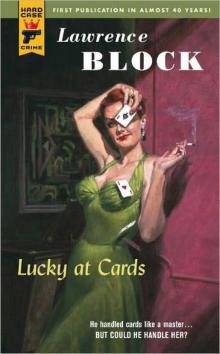 Lucky at Cards hcc-28
 Campus Tramp
 3 is Not a Crowd (John Warren Wells on Sexual Behavior)
 Manhattan Noir
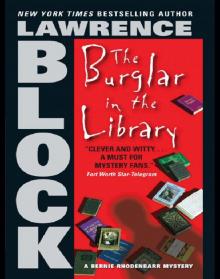 The Burglar in the Library
 Doing It! - Going Beyond the Sexual Revolution (John Warren Wells on Sexual Behavior Book 13)
 So Willing
 The Burglar Who Traded Ted Williams br-6
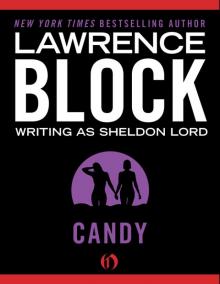 Candy
Candy Sex Without Strings: A Handbook for Consenting Adults (John Warren Wells on Sexual Behavior)
 The Devil Knows You're Dead: A MATTHEW SCUDDER CRIME NOVEL (Matthew Scudder Mysteries)
 Manhattan Noir 2
 The Scoreless Thai (aka Two For Tanner)