
- Home
- Lawrence Block
Enough Rope Page 27
Enough Rope Read online
Page 27
If This Be Madness
St. Anthony’s wasn’t a bad place at all. There were bars on the windows, of course, and one couldn’t come and go as one pleased, but it might have been a lot worse. I had always thought of insane asylums as something rather grim. The fictional treatment of such institutions leaves a good deal to be desired. Sadistic orderlies, medieval outlook, all of that. It wasn’t like that, though.
I had a room to myself, with a window facing out on the main grounds. There were a great many elms on the property, plus some lovely shrubs which I would be hard-pressed to name. When I was alone I would watch the groundskeeper go back and forth across the wide lawn behind a big power mower. But of course I didn’t spend all of my time in the room—or cell, if you prefer it. There was a certain amount of social intercourse—gab sessions with the other patients, interminable Ping-Pong matches, all of that. And the occupational therapy which was a major concern at St. Anthony’s. I made these foolish little ceramic tile plates, and I wove baskets, and I made potholders. I suppose this was of some value. The simple idea of concentrating very intently on something which is essentially trivial must have some therapeutic value in cases of this nature—perhaps the same value that hobbies have for sane men.
Perhaps you’re wondering why I was in St. Anthony’s. A simple explanation. One cloudless day in September I left my office a few minutes after noon and went to my bank, where I cashed a check for two thousand dollars. I asked for—and received—two hundred crisp new ten-dollar bills. Then I walked aimlessly for two blocks until I came to a moderately busy street corner. Euclid and Paine, as I remember, but it’s really immaterial.
There I sold the bills. I stopped passers-by and offered the bills at fifty cents apiece, or traded them for cigarettes, or gave them away in return for a kind word. I recall paying one man fifteen dollars for his necktie, and it was spotted at that. Not surprisingly, a great many persons refused to have anything to do with me. I suspect they thought the bills were counterfeit.
In less than a half hour I was arrested. The police, too, thought the bills were counterfeit. They were not. When the police led me off to the patrol car I laughed uproariously and hurled the ten-dollar bills into the air. The sight of the officers of the law chasing after these fresh new bills was quite comic, and I laughed long and loud.
In jail, I stared around blindly and refused to speak to people. Mary appeared in short order with a doctor and a lawyer in tow. She cried a great deal into a lovely linen handkerchief, but I could tell easily how much she was enjoying her new role. It was a marvelous experiment in martyrdom for her—loving wife of a man who has just managed to flip his lid. She played it to the hilt.
When I saw her, I emerged at once from my lethargy. I banged hysterically on the bars of the cell and called her the foulest names imaginable. She burst into tears and they led her away. Someone gave me a shot of something—a tranquilizer, I suspect. Then I slept.
I did not go to St. Anthony’s then. I remained in jail for three days—under observation, as it were—and then I began to return to my senses. Reality returned. I was quite baffled about the entire experience. I asked guards where I was, and why. My memory was very hazy. I could recall bits and pieces of what had happened but it made no sense to me.
There were several conferences with the prison psychiatrist. I told him how I had been working very hard, how I had been under quite a strain. This made considerable sense to him. My “sale” of the ten-dollar bills was an obvious reaction of the strain of work, a symbolic rejection of the fruits of my labors. I was fighting against overwork by ridding myself of the profits of that work. We talked it all out, and he took elaborate notes, and that was that. Since I had done nothing specifically illegal, there were no charges to worry about. I was released.
Two months thereafter, I picked up my typewriter and hurled it through my office window. It plummeted to the street below, narrowly missing the bald head of a Salvation Army trumpet player. I heaved an ashtray after the typewriter, tossed my pen out the window, pulled off my necktie and hurled it out. I went to the window and was about to leap out after my typewriter and necktie and ashtray and pen when three of my employees took hold of me and restrained me, at which point I went joyously berserk.
I struck my secretary—a fine woman, loyal and efficient to the core—in the teeth, chipping one incisor rather badly. I kicked the office boy in the shin and belted my partner in the belly. I was wild, and quite difficult to subdue.
Shortly thereafter, I was in a room at St. Anthony’s.
As I have said, it was not an unpleasant place at all. At times I quite enjoyed it. There was the utter freedom from responsibility, and a person who has not spent time in a sanitarium of one sort or another could not possibly appreciate the enormity of this freedom. It was not merely that there was nothing that I had to do. It goes considerably deeper than that.
Perhaps I can explain. I could be whomever I wished to be. There was no need to put up any sort of front whatsoever. There was no necessity for common courtesy or civility. If one wished to tell a nurse to go to the devil, one went ahead and did so. If one wished for any reason at all to urinate upon the floor, one went ahead and did so. One needed to make no discernible effort to appear sane. If I had been sane, after all, I would not have been there in the first place.
Every Wednesday, Mary visited me. This in itself was enough reason to fall in love with St. Anthony’s. Not because she visited me once a week, but because for six days out of every seven I was spared her company. I have spent forty-four years on this planet, and for twenty-one of them I have been married to Mary, and her companionship has grown increasingly less tolerable over the years. Once, several years ago, I looked into the possibility of divorcing her. The cost would have been exorbitant. According to the lawyer I consulted, she would have wound up with house and car and the bulk of my worldly goods, plus monthly alimony sufficient to keep me permanently destitute. So we were never divorced.
As I said, she visited me every Wednesday. I was quite peaceable at those times; indeed, I was peaceable throughout my stay at St. Anthony’s, aside from some minor displays of temper. But my hostility toward her showed through, I’m afraid. Periodically I displayed some paranoid tendencies, accusing her of having me committed for one nefarious motive or other, calling her to task for imagined affairs with my friends (as if any of them would want to bed down with the sloppy old bitch) and otherwise being happily nasty to her. But she kept returning, every Wednesday, like the worst of all possible pennies.
The sessions with my psychiatrist (not mine specifically, but the resident psychiatrist who had charge of my case) were not at all bad. He was a very bright man and quite interested in his work, and I enjoyed spending time with him. For the most part I was quite rational in our discussions. He avoided deep analysis—there was no time for it, really, as he had a tremendous workload as it was—and concentrated instead in trying to determine just what was causing my nervous breakdowns and just how they could be best controlled. We worked things out rather well. I made discernible progress, with just a few minor lapses from time to time. We investigated the causes of my hostility toward Mary. We talked at length.
I remember very clearly the day they released me from St. Anthony’s. I was not pronounced cured—that’s a rather difficult word to apply in cases of this particular nature. They said that I was readjusted, or something of the nature, and that I was in condition to rejoin society. Their terminology was a bit more involved than all that. I don’t recall the precise words and phrases, but that’s the gist of it.
That day, the air was cool and the sky was filled with clouds. There was a pleasant breeze blowing. Mary came to pick me up. She was noticeably nervous, perhaps afraid of me, but I was quite docile and perfectly friendly toward her. I took her arm. We walked out of the door to the car. I got behind the wheel—that gave her pause, as I think she would have preferred to do the driving just then. I drove, however. I drove the car out through the main gate and
headed toward our home.
“Oh, darling,” she said. “You’re all better now, aren’t you?”
“I’m fine,” I said.
I was released five months ago. At first it was far more difficult on the outside than it had been within St. Anthony’s heavy stone walls. People did not know how to speak with me. They seemed afraid that I might go berserk at any moment. They wanted to talk normally with me, yet they did not know how to refer to my “trouble.” It was all quite humorous.
People warmed to me, yet at the same time they never entirely relaxed with me. While I was normal in most respects, certain mannerisms of mine were unnerving, to say the least. At times, for instance, I was observed mumbling incoherently to myself. At other times I answered questions before they were asked of me, or ignored questions entirely. Once, at a party, I walked over to the hi-fi, removed a record from the turntable, sailed it out of an open window, and put another record on. These periodic practices of mine were bizarre, and they set people on edge, yet they caused no one any real harm.
The general attitude seemed to be this—I was a little touched, but I was not dangerous, and I seemed to be getting better with the passage of time. Most important, I was able to function in the world at large. I was able to earn a living. I was able to live in peace and harmony with my wife and my friends. I might be quite mad, but it hurt no one.
Saturday night Mary and I are invited to a party. We will go to the home of some dear friends whom we have known for at least fifteen years. There will be eight or ten other couples there, all of them friends of a similar vintage.
It’s time, now. This will be it.
You must realize that it was very difficult at first. The affair with the ten-dollar bills, for example—I’m essentially frugal, and such behavior went very much against the grain. The time when I hurled the typewriter out of the window was even harder. I did not want to hurt my secretary, of whom I have always been very fond, nor did I want to strike all those other people. But I did very well, I think. Very well indeed.
Saturday night, at the party, I will be quite uncommunicative. I will sit in a chair by the fireside and nurse a single drink for an hour or two, and when people talk to me I will stare myopically at them and will not answer them. I will make little involuntary facial movements, nervous twitches of one sort or another.
Then I will rise abruptly and hurl my glass into the mirror over the fireplace, hard enough to shatter either the glass or the mirror or both. Someone will come over in an attempt to subdue me. Whoever it is, I will strike him or her with all my might. Then, cursing violently, I will hurry to the side of the hearth and will pick up the heavy cast-iron poker.
I will smash Mary’s head with it.
The happy thing is that there will be no nonsense about a trial. Temporary insanity may be difficult to plead in some cases, but it should hardly be a problem when the murderer has a past record of psychic instability. I have been in the hospital for a nervous breakdown. I have spent considerable time in a mental institution. The course is quite obvious—I shall be arrested and shall be sent forthwith to St. Anthony’s.
I suspect they’ll keep me there for a year or so. This time, of course, I can let them cure me completely. Why not? I don’t intend to kill anyone else, so there’s nothing to set up. All I have to do is make gradual progress until such time as they pronounce me fit to return to the world at large. But when that happens, Mary will not be there to meet me at the gate. Mary will be quite dead.
Already I can feel the excitement building within me. The tension, the thrill of it all. I can feel myself shifting over into the role of the madman, preparing for the supreme moment. Then the glass crashing into the mirror, and my body moving in perfect synchronization, and the poker in my hand, and Mary’s skull crushed like an eggshell.
You may think I’m quite mad. That’s the beauty of it—that’s what everyone thinks, you see.
Leo Youngdahl, R.I.P.
Dear Larry,
I’m not sure if there’s a story in this or not.
It happened about a year ago, at a time when I was living in New Hope, Pennsylvania, with a man named Evans Wheeler. New Hope is a small town with a reputation as an artists’ colony. There is a theater there. At the time Evans was its assistant manager. I was doing some promotional work for the theater, which is how we originally met, and I was also briefly managing a spectacularly unsuccessful art gallery.
One afternoon in the late summer I returned to the apartment we shared. Evans was reading a magazine and drinking a beer. “There’s a letter for you on the table,” he said. “From your mother.”
He must have assumed this from the postmark. The envelope was addressed in my mother’s hand, but he wouldn’t have recognized it as we never wrote each other. The city where she lives, and where I was born, is only an inexpensive telephone call away from New Hope. (In other respects, of course, it is much further removed.) My mother and I would speak once or twice a week over the phone.
I remember taking my time opening the envelope. There was a single sheet of blank typing paper inside, folded to enclose a small newspaper clipping. This was an obituary notice, and I read it through twice without having the vaguest idea why it had been sent to me. I even turned it over but the reverse held nothing but a portion of a department store ad. I turned the clipping for a third look and the name, “Youngdahl, Leo,” suddenly registered, and I gave a shrill yelp of laughter that ended as abruptly as it had begun.
Evans said, “What’s so funny?”
“Leo Youngdahl died.”
“I didn’t even know he was sick.”
I started to laugh again. I really couldn’t help it.
“All right, give. Who the hell is Leo Youngdahl? And why is his death so hysterical?”
“It’s not really funny. And I don’t know exactly who he is. Was. He was a man, he lived in Bethel. As far as I know, I only met him once. That was six years ago at my father’s funeral.”
“Oh, that explains it.”
“Pardon?”
“I never felt more like a straight man in my life. ‘You say you met him at your father’s funeral, Gracie?’ “
“There’s really nothing to it,” I said. “It’s a sort of a family joke. It would take forever to explain and it wouldn’t be funny to anyone else.”
“Try me.”
“It really wouldn’t be funny.”
“Oh, for Christ’s sake,” he said. “You’re really too much, you know that?”
“I just meant—”
“I think I’ll get out of the house for a while.”
“Hey, you’re really steamed.”
“Not exactly that.”
“Come on, sit down. I’ll get you another beer. Or would you rather have some scotch, because I think I will.”
“All right.”
I made him a drink and got him back in his chair. Then I said, “I honestly don’t think this is something you want to hear, but God knows it’s nothing to start a fight over. It was just an incident, or rather a couple of incidents. It must have been ten years ago. I was home from school for I think it was Christmas—”
“You said six years ago, and at your father’s funeral.”
“I was starting at the beginning.”
“That’s supposed to be the best place.”
“Yes, so I’ve been told. Are you sure you really want to hear this?”
“I’m positive I want to hear it. I won’t interrupt.”
“Well, it was nine or ten years ago, and it was definitely Christmas vacation. We were all over at Uncle Ed and Aunt Min’s house. The whole family, on my mother’s side, that is. A couple sets of aunts and uncles and the various children, and my grandmother. It wasn’t Christmas dinner but a family dinner during that particular week.”
“I get the picture.”
“Well, as usual there were three or four separate conversations going on, and occasionally one of them would get prominent and the others would merg
e with it, the way conversations seem to go at family dinners.”
“I’ve been to family dinners.”
“And I don’t know who brought it up, or in what connection, but at some point or the other the name Leo Youngdahl was mentioned.”
“And everybody broke up.”
“No, everybody did not break up, damn it. Suddenly I’m the straight man and I’m beginning to see why you objected to the role. If you don’t want to hear this—”
“I’m sorry. The name Leo Youngdahl came up.”
“And my father said, ‘Wait a minute, I think he’s dead.’ “
“But he wasn’t?”
“My father said he was dead, and somebody else said they were sure he was alive, and in no time at all this was the main subject of conversation at the table. As you can see, nobody knew Mr. Youngdahl terribly well, not enough to say with real certainty whether he was alive or dead. It seems ridiculous now, but there was quite a debate on the subject, and then my cousin Jeremy stood up and said there was obviously only one way to settle it. I believe you met Jeremy.”
“The family faggot? No, I never met him, although you keep thinking I did. I’ve heard enough about him, but no, I never met him.”
“Well, he’s gay, but that hardly enters into it. When this happened he was in high school, and if he was gay then nobody knew it at the time. I don’t think Jeremy knew it at the time.”
“I’m sure he had fun finding out.”
“He didn’t have any gay mannerisms then. Not that he does now, in the sense of being effeminate, but he can come on a little nellie now and then. I suppose that’s a learned attitude, wouldn’t you think?”
“I’m sure I wouldn’t know, sweetie.”
“What he did have, even as a kid, was a very arch sense of humor. There’s a Dutch expression, kochloffel, which means cooking spoon, in the sense of someone who’s always stirring things up. Jeremy was a kochloffel. I forget who it was who used to call him that.”
“I’m not sure it matters.”
 Tanner on Ice
 Hit Me
 Hit and Run
 Hope to Die
 Two For Tanner
 Tanners Virgin
 Dead Girl Blues
 One Night Stands and Lost Weekends
 A Drop of the Hard Stuff
 The Canceled Czech
 Even the Wicked
 Me Tanner, You Jane
 Quotidian Keller
 Small Town
 Tanners Tiger
 A Walk Among the Tombstones
 Tanners Twelve Swingers
 Gym Rat & the Murder Club
 Everybody Dies
 The Thief Who Couldnt Sleep
 Hit Parade
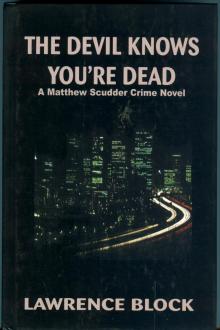 The Devil Knows Youre Dead
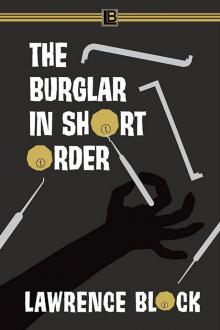 The Burglar in Short Order
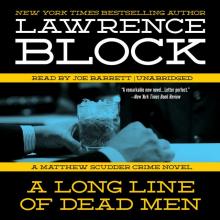 A Long Line of Dead Men
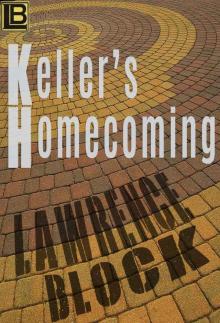 Keller's Homecoming
 Resume Speed
 Keller's Adjustment
 Eight Million Ways to Die
 Time to Murder and Create
 Out on the Cutting Edge
 A Dance at the Slaughter House
 In the Midst of Death
 When the Sacred Ginmill Closes
 You Could Call It Murder
 Keller on the Spot
 A Ticket to the Boneyard
 A Time to Scatter Stones
 Keller's Designated Hitter
 A Stab in the Dark
 Sins of the Fathers
 The Burglar in the Closet
 Burglar Who Dropped In On Elvis
 The Burglar Who Painted Like Mondrian
 The Girl With the Long Green Heart
 The Burglar Who Counted the Spoons (Bernie Rhodenbarr)
 Burglar Who Smelled Smoke
 Rude Awakening (Kit Tolliver #2) (The Kit Tolliver Stories)
 Don't Get in the Car (Kit Tolliver #9) (The Kit Tolliver Stories)
 CH04 - The Topless Tulip Caper
 You Can Call Me Lucky (Kit Tolliver #3) (The Kit Tolliver Stories)
 CH02 - Chip Harrison Scores Again
 Strangers on a Handball Court
 Cleveland in My Dreams
 Clean Slate (Kit Tolliver #4) (The Kit Tolliver Stories)
 The Burglar Who Traded Ted Williams
 Burglar on the Prowl
 In For a Penny (A Story From the Dark Side)
 Catch and Release Paperback
 Ride A White Horse
 No Score
 Looking for David (A Matthew Scudder Story Book 7)
 Jilling (Kit Tolliver #6) (The Kit Tolliver Stories)
 Ariel
Ariel Enough Rope
 Grifter's Game
 Canceled Czech
 Unfinished Business (Kit Tolliver #12) (The Kit Tolliver Stories)
 Thirty
 The Burglar Who Thought He Was Bogart
 Make Out with Murder
 One Last Night at Grogan's (A Matthew Scudder Story Book 11)
 The Burglar on the Prowl
 Welcome to the Real World (A Story From the Dark Side)
 Keller 05 - Hit Me
 Walk Among the Tombstones: A Matthew Scudder Crime Novel
 Ronald Rabbit Is a Dirty Old Man
 The Burglar Who Studied Spinoza
 The Burglar Who Liked to Quote Kipling
 Keller in Des Moines
 Hit List
 The Dettweiler Solution
 HCC 115 - Borderline
 A Drop of the Hard Stuff: A Matthew Scudder Novel
 Step by Step
 The Girl With the Deep Blue Eyes
 If You Can't Stand the Heat (Kit Tolliver #1) (The Kit Tolliver Stories)
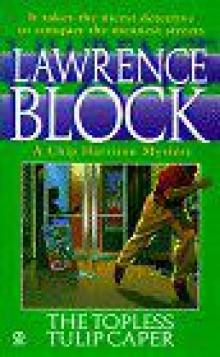 The Topless Tulip Caper
 Dolly's Trash & Treasures (A Story From the Dark Side)
 The Triumph of Evil
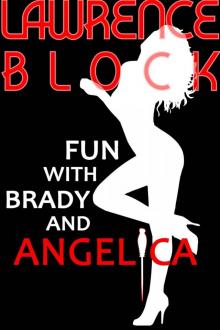 Fun with Brady and Angelica (Kit Tolliver #10 (The Kit Tolliver Stories)
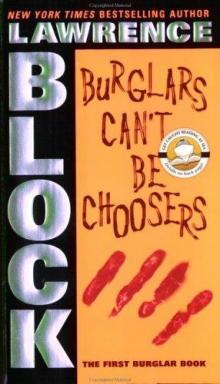 Burglars Can't Be Choosers
 Who Knows Where It Goes (A Story From the Dark Side)
 Deadly Honeymoon
 Like a Bone in the Throat (A Story From the Dark Side)
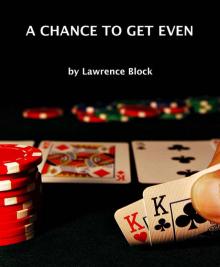 A Chance to Get Even (A Story From the Dark Side)
 The Boy Who Disappeared Clouds
 Collecting Ackermans
 Waitress Wanted (Kit Tolliver #5) (The Kit Tolliver Stories)
 One Thousand Dollars a Word
 Even the Wicked: A Matthew Scudder Novel (Matthew Scudder Mysteries)
 Hit Man
 The Night and The Music
 Ehrengraf for the Defense
 The Merciful Angel of Death (A Matthew Scudder Story Book 5)
 The Burglar in the Rye
 I Know How to Pick 'Em
 Getting Off hcc-69
 Three in the Side Pocket (A Story From the Dark Side)
 Let's Get Lost (A Matthew Scudder Story Book 8)
 Strange Are the Ways of Love
 MOSTLY MURDER: Till Death: a mystery anthology
 Masters of Noir: Volume Four
 A Week as Andrea Benstock
 Scenarios (A Stoiry From the Dark Side)
 The Sex Therapists: What They Can Do and How They Do It (John Warren Wells on Sexual Behavior Book 15)
 Like a Thief in the Night: a Bernie Rhodenbarr story
 A Diet of Treacle
 Community of Women
 Different Strokes: How I (Gulp!) Wrote, Directed, and Starred in an X-rated Movie (John Warren Wells on Sexual Behavior)
 You Don't Even Feel It (A Story From the Dark Side)
 Zeroing In (Kit Tolliver #11) (The Kit Tolliver Stories)
 The Wife-Swap Report (John Warren Wells on Sexual Behavior)
 Keller's Fedora (Kindle Single)
 Speaking of Lust
 Everybody Dies (Matthew Scudder)
 Defender of the Innocent: The Casebook of Martin Ehrengraf
 After the First Death
 Writing the Novel
 How Far - a one-act stage play
 Chip Harrison Scores Again
 The Topless Tulip Caper ch-4
 The Crime of Our Lives
 Killing Castro
 The Trouble with Eden
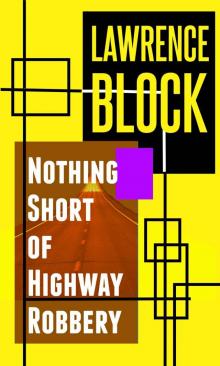 Nothing Short of Highway Robbery
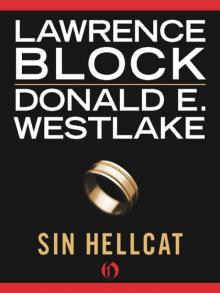 Sin Hellcat
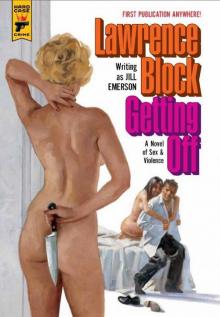 Getting Off: A Novel of Sex & Violence (Hard Case Crime)
 Coward's Kiss
 Alive in Shape and Color
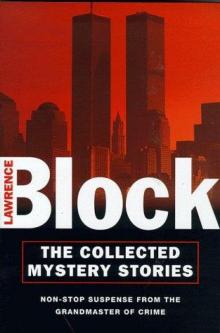 Blow for Freedom
 The New Sexual Underground: Crossing the Last Boundaries (John Warren Wells on Sexual Behavior Book 10)
 April North
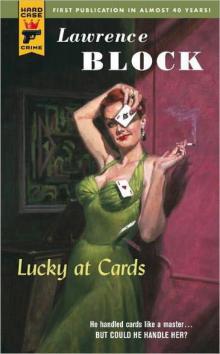 Lucky at Cards
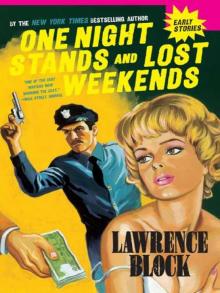 One Night Stands; Lost weekends
 Sweet Little Hands (A Story From the Dark Side)
 Blood on Their Hands
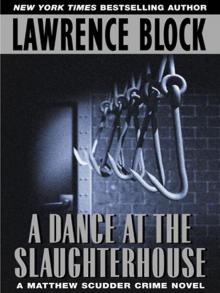 A Dance at the Slaughterhouse
 Headaches and Bad Dreams (A Story From the Dark Side)
 Keller's Therapy
 The Specialists
 Hit and Run jk-4
 Threesome
 Love at a Tender Age (John Warren Wells on Sexual Behavior)
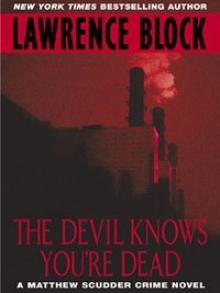 The Devil Knows You're Dead: A MATTHEW SCUDDER CRIME NOVEL
 Funny You Should Ask
 CH01 - No Score
 Sex and the Stewardess (John Warren Wells on Sexual Behavior)
 A Madwoman's Diary
 When This Man Dies
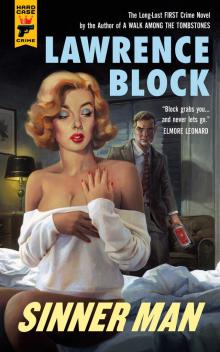 Sinner Man
 Such Men Are Dangerous
 A Strange Kind of Love
 Enough of Sorrow
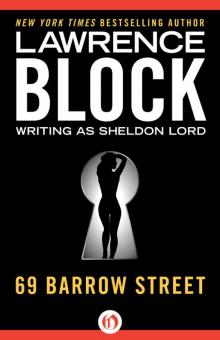 69 Barrow Street
 A Moment of Wrong Thinking (Matthew Scudder Mysteries Series Book 9)
 Eight Million Ways to Die ms-5
 Warm and Willing
 Mona
Mona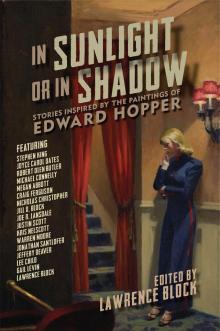 In Sunlight or In Shadow
 A Candle for the Bag Lady (Matthew Scudder Book 2)
 Conjugal Rites (Kit Tolliver #7) (The Kit Tolliver Stories)
 Speaking of Lust - the novella
 Gigolo Johnny Wells
 Dark City Lights
 Versatile Ladies: the bisexual option (John Warren Wells on Sexual Behavior)
 Passport to Peril
 The Taboo Breakers: Shock Troops of the Sexual Revolution (John Warren Wells on Sexual Behavior)
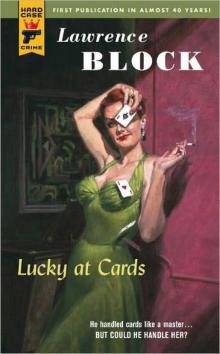 Lucky at Cards hcc-28
 Campus Tramp
 3 is Not a Crowd (John Warren Wells on Sexual Behavior)
 Manhattan Noir
 The Burglar in the Library
 Doing It! - Going Beyond the Sexual Revolution (John Warren Wells on Sexual Behavior Book 13)
 So Willing
 The Burglar Who Traded Ted Williams br-6
 Candy
Candy Sex Without Strings: A Handbook for Consenting Adults (John Warren Wells on Sexual Behavior)
 The Devil Knows You're Dead: A MATTHEW SCUDDER CRIME NOVEL (Matthew Scudder Mysteries)
 Manhattan Noir 2
 The Scoreless Thai (aka Two For Tanner)