
- Home
- Lawrence Block
Small Town Page 26
Small Town Read online
Page 26
Page 26
And fires, so many fires. You thought of the city as nonflamma-ble, a city of glass and steel and asphalt and concrete, but hadn’t the world watched as buildings of glass and steel burned like torches until they melted and collapsed of their own weight? Oh, yes, forests could burn, and wooden houses could burn, but so could cities of concrete and steel.
E N E R G I Z E D B Y W H A T H A D emerged from his reading, he found it impossible to read. He would pick up a book only to put it down and pace the floor, consumed by the thoughts that came at him in battalions. He began to leave the apartment, walking for hours through the city’s streets. His feet took him to Little Germany, where no Germans had lived for years, and past the one-time site of the Triangle Shirtwaist factory, and, more than once, to the barriers that still ringed Ground Zero.
And, walking, he had a further insight.
He was thinking of the fire in the unlicensed social club that had taken the lives of seventy or eighty Hondurans a few years earlier. It had been a great tragedy, certainly, but it had not come upon the poor people as an act of God. An embittered Honduran immigrant, furious over some real or fancied insult, had returned to the club with a container of gasoline and set the place on fire.
He’d been caught and tried and convicted, and was serving a life sentence somewhere.
The people he’d killed had been sacrificed to the city of New York, he could see that clearly enough. They’d come to New York and died here so that others of their countrymen could follow them here and live and thrive and prosper. And the man who hurled the gasoline, the man who tossed the match, had surely been the architect of their sacrifice, and hadn’t he sacrificed himself in the bargain? He was alive (unless he’d been killed in prison, for he did seem the type to get killed in prison) but what kind of a life did he have?
Perhaps . . .
Well, take the Triangle Shirtwaist fire. A horrible fire, certainly, bad enough to consume the entire building, but the great loss of life occurred because the doors were locked from the outside. Otherwise there would have been fatalities, certainly, but some, even most of the young women would have been able to get out alive.
Was it pure happenstance that the doors were locked? Was it, as some claimed, that the bosses locked the doors to keep the women at their sewing machines?
Or . . .
Or could the same hand have locked the doors and set the fire?
That’s what had happened. He was sure of it. Someone had made the great tragedy happen, someone intent upon causing as much loss of life as possible. Maybe it was sheer villainy, as inexplicable as all evil is inexplicable, or maybe, maybe . . .
Maybe it was someone with a vision. Maybe it was someone willing to sacrifice those lives, and to give up his own morality in the process, his morality and his hope of eternal reward (for what fate but Hell could await a man who’d do such a thing?), to give up everything, to sacrifice everything, for the sake of the greater good?
Dulce et decorum est pro patria mori.
The Latin phrase came to him from somewhere in the past.
Sweet and decorous it is to die for one’s country. Or for one’s city, and how would you say that in Latin? He’d forgotten everything he ever knew of the language, except for a few odd words and phrases.
Still, the things you’d forgotten tended to come back to you.
Dulce et decorum est . . .
And the General Slocum disaster? There were all sorts of explanations advanced for the tragedy, several of them plausible enough, but were any as apt as that someone had sabotaged the ship, someone had set the fire, someone had deliberately made the whole thing happen?
And the Draft Riots. Spontaneous combustion, erupting naturally and inevitably out of social and political and economic realities? Or did circumstances merely provide a framework of logs and sticks and kindling, waiting for a knowing hand to strike the spark and fan the blaze? The history books spoke of neighborhood agitators who’d urged on the mob, only to lose control of it. But what if they’d never intended to control it? What if their sole purpose had been to unleash the whirlwind?
He saw them now, a long chain of men (and women, too, for who was to say it was an exclusively male calling?), not selling their souls but giving them up, sentencing them to perdition, committing unpardonable sins for the good of generations yet unborn.
Did many of them see the greater purpose? Probably not, but surely some did. Surely he was not the first to be consciously aware of what he had to do, no matter how great the cost to himself.
Walking home, he picked up a discarded newspaper. A man in a stolen car had gone berserk at the wheel, driving down Seventh Avenue at top speed, running red lights, caroming off other cars, and taking deliberate aim at pedestrians, trying to run down as many of them as he possibly could. He eluded police pursuit, then repeated the stunt on Eighth Avenue, hitting a few more pedestrians before he was finally taken into custody. He was perfectly calm, and told police he was angry, though he seemed unable to say what it was he’d been angry about.
He remembered how he’d taken the sleeping pills and lain down beside his wife. He had been ready to join her sacrifice, and his disappointment at surviving had been softened slightly by the thought that there must be something for him to do.
And now he knew what it was.
Dulce et decorum est . . . pro urbe mori.
See? It had come back to him.
I N L A T E M A R C H , A little more than six months after he’d scattered his wife’s ashes to the winds of Lower Manhattan, he took the number 3 subway to the Bronx. He got off at the East 160th Street stop and walked north and west to an abandoned building on Cauldwell Avenue. He’d discovered it a week ago, and had visited it daily for the past several days. The windows were boarded up, but the piece of sheet metal nailed over the doorway had been pried up at the lower left corner to give access to the squatters—
drug addicts, homeless people—who found the place an acceptable alternative to sleeping in the street.
He’d purchased half a dozen quart cans of charcoal lighter fluid, buying them one at a time in different shops in Manhattan to avoid arousing suspicion, and he carried them with him in a canvas tote bag that had belonged to his wife. It had been a gift from one of the children, a cloth sack with GOOCHEE stenciled on the sides, and the giver—it was his son, he remembered now, and he couldn’t have been more than twelve at the time—had told her that he knew what she really wanted was a Gucci bag.
How they’d laughed, and how she’d loved that bag. She’d used it for years.
He fully expected someone, a cop or a local resident, to challenge him, to demand to know what he was doing where he so clearly did not belong. He was oddly calm, quite unconcerned about what might happen to him, but in fact nothing happened, and no one seemed to notice him.
Maybe he was dead, he thought. Maybe he was a ghost, and that was why people paid no attention to him. They couldn’t see him.
But no, he’d bought the charcoal lighter fluid. He’d handed over his money, been given his purchases and his change.
He raised the sheet metal, crawled under it, and went into every ground-floor room he came to, squirting the lighter fluid where he thought it would be most effective. He emptied all six cans, lit a match, set a fire, and walked away from the building.
Steps away from it, he remembered the GOOCHEE bag. He’d put it down and neglected to pick it up. Well, the fire would consume it, and it would be untraceable anyway. He kept walking.
In movies there would be a great whoosh, an explosion, flames shooting into the night sky, shock waves knocking him to the ground as he ran off down the street. But there was nothing of the sort. He walked a block, looked back, and saw a building that looked no different from the way it had looked when he approached it. His attempt at sacrifice-by-arson would seem to have been a failure.
He turned at the corner, walked a block, turned again. He kept walkin
g until he came to a small storefront restaurant with signs in Spanish. There were no tables, just a worn Formica counter with eight backless stools.
He took a stool. The menu hung on the wall, chalk on slate, with several of the dishes rubbed out. Even if he read Spanish, it would have been hard to make out. The woman behind the counter, assuming he didn’t speak Spanish, addressed him in strongly accented English, asking him what he wanted. He pointed to the plate of the man two stools away on his right.
“Arroz con pollo,” the woman said. “Tha’s cheecken an’ rice.
Tha’s what you wan’?”
He nodded. The food, when she brought it, was a little spicy for his taste, but it wasn’t bad. He wasn’t hungry, he was rarely hungry, but realized he hadn’t eaten since breakfast. And thirsty.
Water was aqua in Latin, and was it agua in Spanish? Or if he just made the gesture, raising an invisible glass to his lips . . .
While he was considering the matter, she brought him a glass of water.
He had eaten half his meal when he heard sirens. And this wasn’t a single ambulance, this was more than one siren. He tucked ten dollars under his plate and didn’t wait for change. He’d lost his bearings, wasn’t sure which way he’d come from, but all he had to do was walk toward the sirens.
The building was burning after all. He didn’t see flames shooting, but there was a lot of smoke, and a lot of activity on the part of the firefighters. A crowd had gathered to watch, and he joined them, but felt dangerously conspicuous. He managed to find his way to the subway and went home.
It made the papers, because there were two fatalities—a young man who’d evidently been sleeping, or comatose from drugs, and a firefighter, thirty-two years old, the father of three, a resident of Sunnyside, Queens. Both had died of smoke inhalation.
He mourned them, and honored their sacrifice.
A D A Y A F T E R T H E Bronx fire, he set about reorganizing his life. He liquidated his stocks and mutual funds and put everything into a money-market account at his bank. The apartment was his most substantial asset, but it seemed an impossible chore to list it for sale and wait for the co-op board to approve a prospective purchaser. And how much money did he need, anyway? A few dollars for rent, a few dollars for food.
In the end, he’d walked away from the apartment. Rented a storage locker, ferried some possessions there a carton at a time, then packed a small suitcase and left. Sooner or later, he supposed, his failure to pay maintenance charges would lead someone to take some sort of legal action, and he’d eventually lose the apartment, but he’d never even know when it happened, and wouldn’t care if he did.
Since then, he had set a fire in a two-family house in Middle Village, Queens (minimal damage, no loss of life) and sacrificed three people in their homes, most recently Marilyn Fairchild, of Charles Street. Sometimes his actions seemed pointless to him. How could individual sacrifices revitalize the wounded city? As well, he thought, to try easing the water shortage by spilling a bucket of water into the reservoir.
Then he’d spotted Gerald Pankow, and recognized him, and saw a way to establish a pattern.
And now he rose from the body of the girl. He opened the door a few inches and stuck his head out. He said, “Could one of you come here for a moment? Something seems to be wrong with”—
 Tanner on Ice
 Hit Me
 Hit and Run
 Hope to Die
 Two For Tanner
 Tanners Virgin
 Dead Girl Blues
 One Night Stands and Lost Weekends
 A Drop of the Hard Stuff
 The Canceled Czech
 Even the Wicked
 Me Tanner, You Jane
 Quotidian Keller
 Small Town
 Tanners Tiger
 A Walk Among the Tombstones
 Tanners Twelve Swingers
 Gym Rat & the Murder Club
 Everybody Dies
 The Thief Who Couldnt Sleep
 Hit Parade
 The Devil Knows Youre Dead
 The Burglar in Short Order
 A Long Line of Dead Men
 Keller's Homecoming
 Resume Speed
 Keller's Adjustment
 Eight Million Ways to Die
 Time to Murder and Create
 Out on the Cutting Edge
 A Dance at the Slaughter House
 In the Midst of Death
 When the Sacred Ginmill Closes
 You Could Call It Murder
 Keller on the Spot
 A Ticket to the Boneyard
 A Time to Scatter Stones
 Keller's Designated Hitter
 A Stab in the Dark
 Sins of the Fathers
 The Burglar in the Closet
 Burglar Who Dropped In On Elvis
 The Burglar Who Painted Like Mondrian
 The Girl With the Long Green Heart
 The Burglar Who Counted the Spoons (Bernie Rhodenbarr)
 Burglar Who Smelled Smoke
 Rude Awakening (Kit Tolliver #2) (The Kit Tolliver Stories)
 Don't Get in the Car (Kit Tolliver #9) (The Kit Tolliver Stories)
 CH04 - The Topless Tulip Caper
 You Can Call Me Lucky (Kit Tolliver #3) (The Kit Tolliver Stories)
 CH02 - Chip Harrison Scores Again
 Strangers on a Handball Court
 Cleveland in My Dreams
 Clean Slate (Kit Tolliver #4) (The Kit Tolliver Stories)
 The Burglar Who Traded Ted Williams
 Burglar on the Prowl
 In For a Penny (A Story From the Dark Side)
 Catch and Release Paperback
 Ride A White Horse
 No Score
 Looking for David (A Matthew Scudder Story Book 7)
 Jilling (Kit Tolliver #6) (The Kit Tolliver Stories)
 Ariel
Ariel Enough Rope
 Grifter's Game
 Canceled Czech
 Unfinished Business (Kit Tolliver #12) (The Kit Tolliver Stories)
 Thirty
 The Burglar Who Thought He Was Bogart
 Make Out with Murder
 One Last Night at Grogan's (A Matthew Scudder Story Book 11)
 The Burglar on the Prowl
 Welcome to the Real World (A Story From the Dark Side)
 Keller 05 - Hit Me
 Walk Among the Tombstones: A Matthew Scudder Crime Novel
 Ronald Rabbit Is a Dirty Old Man
 The Burglar Who Studied Spinoza
 The Burglar Who Liked to Quote Kipling
 Keller in Des Moines
 Hit List
 The Dettweiler Solution
 HCC 115 - Borderline
 A Drop of the Hard Stuff: A Matthew Scudder Novel
 Step by Step
 The Girl With the Deep Blue Eyes
 If You Can't Stand the Heat (Kit Tolliver #1) (The Kit Tolliver Stories)
 The Topless Tulip Caper
 Dolly's Trash & Treasures (A Story From the Dark Side)
 The Triumph of Evil
 Fun with Brady and Angelica (Kit Tolliver #10 (The Kit Tolliver Stories)
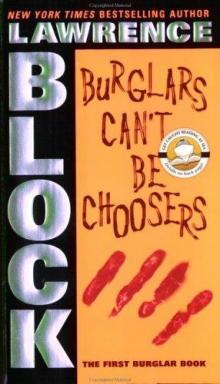 Burglars Can't Be Choosers
 Who Knows Where It Goes (A Story From the Dark Side)
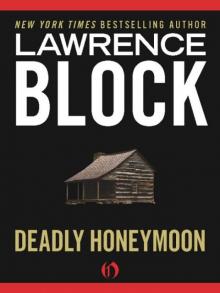 Deadly Honeymoon
 Like a Bone in the Throat (A Story From the Dark Side)
 A Chance to Get Even (A Story From the Dark Side)
 The Boy Who Disappeared Clouds
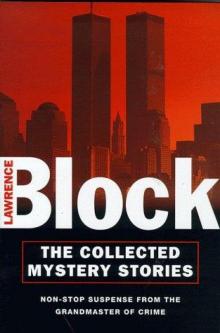 Collecting Ackermans
 Waitress Wanted (Kit Tolliver #5) (The Kit Tolliver Stories)
 One Thousand Dollars a Word
 Even the Wicked: A Matthew Scudder Novel (Matthew Scudder Mysteries)
 Hit Man
 The Night and The Music
 Ehrengraf for the Defense
 The Merciful Angel of Death (A Matthew Scudder Story Book 5)
 The Burglar in the Rye
 I Know How to Pick 'Em
 Getting Off hcc-69
 Three in the Side Pocket (A Story From the Dark Side)
 Let's Get Lost (A Matthew Scudder Story Book 8)
 Strange Are the Ways of Love
 MOSTLY MURDER: Till Death: a mystery anthology
 Masters of Noir: Volume Four
 A Week as Andrea Benstock
 Scenarios (A Stoiry From the Dark Side)
 The Sex Therapists: What They Can Do and How They Do It (John Warren Wells on Sexual Behavior Book 15)
 Like a Thief in the Night: a Bernie Rhodenbarr story
 A Diet of Treacle
 Community of Women
 Different Strokes: How I (Gulp!) Wrote, Directed, and Starred in an X-rated Movie (John Warren Wells on Sexual Behavior)
 You Don't Even Feel It (A Story From the Dark Side)
 Zeroing In (Kit Tolliver #11) (The Kit Tolliver Stories)
 The Wife-Swap Report (John Warren Wells on Sexual Behavior)
 Keller's Fedora (Kindle Single)
 Speaking of Lust
 Everybody Dies (Matthew Scudder)
 Defender of the Innocent: The Casebook of Martin Ehrengraf
 After the First Death
 Writing the Novel
 How Far - a one-act stage play
 Chip Harrison Scores Again
 The Topless Tulip Caper ch-4
 The Crime of Our Lives
 Killing Castro
 The Trouble with Eden
 Nothing Short of Highway Robbery
 Sin Hellcat
 Getting Off: A Novel of Sex & Violence (Hard Case Crime)
 Coward's Kiss
 Alive in Shape and Color
 Blow for Freedom
 The New Sexual Underground: Crossing the Last Boundaries (John Warren Wells on Sexual Behavior Book 10)
 April North
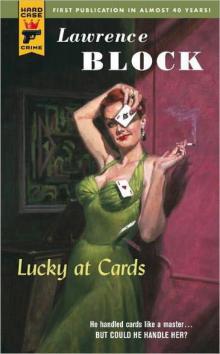 Lucky at Cards
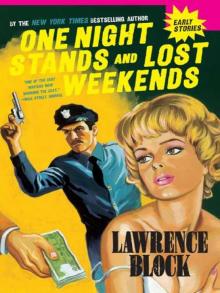 One Night Stands; Lost weekends
 Sweet Little Hands (A Story From the Dark Side)
 Blood on Their Hands
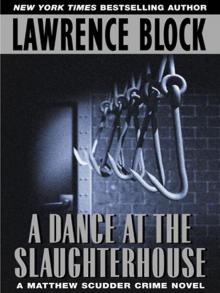 A Dance at the Slaughterhouse
 Headaches and Bad Dreams (A Story From the Dark Side)
 Keller's Therapy
 The Specialists
 Hit and Run jk-4
 Threesome
 Love at a Tender Age (John Warren Wells on Sexual Behavior)
 The Devil Knows You're Dead: A MATTHEW SCUDDER CRIME NOVEL
 Funny You Should Ask
 CH01 - No Score
 Sex and the Stewardess (John Warren Wells on Sexual Behavior)
 A Madwoman's Diary
 When This Man Dies
 Sinner Man
 Such Men Are Dangerous
 A Strange Kind of Love
 Enough of Sorrow
 69 Barrow Street
 A Moment of Wrong Thinking (Matthew Scudder Mysteries Series Book 9)
 Eight Million Ways to Die ms-5
 Warm and Willing
 Mona
Mona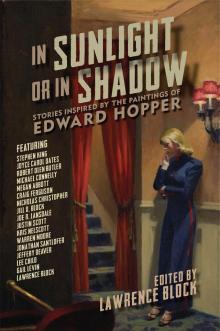 In Sunlight or In Shadow
 A Candle for the Bag Lady (Matthew Scudder Book 2)
 Conjugal Rites (Kit Tolliver #7) (The Kit Tolliver Stories)
 Speaking of Lust - the novella
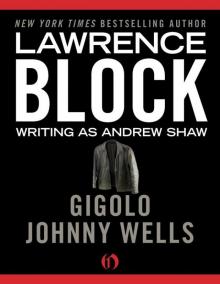 Gigolo Johnny Wells
 Dark City Lights
 Versatile Ladies: the bisexual option (John Warren Wells on Sexual Behavior)
 Passport to Peril
 The Taboo Breakers: Shock Troops of the Sexual Revolution (John Warren Wells on Sexual Behavior)
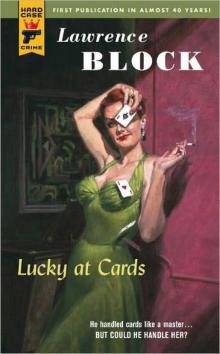 Lucky at Cards hcc-28
 Campus Tramp
 3 is Not a Crowd (John Warren Wells on Sexual Behavior)
 Manhattan Noir
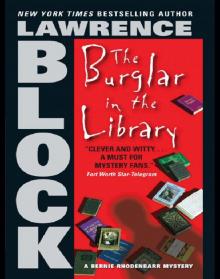 The Burglar in the Library
 Doing It! - Going Beyond the Sexual Revolution (John Warren Wells on Sexual Behavior Book 13)
 So Willing
 The Burglar Who Traded Ted Williams br-6
 Candy
Candy Sex Without Strings: A Handbook for Consenting Adults (John Warren Wells on Sexual Behavior)
 The Devil Knows You're Dead: A MATTHEW SCUDDER CRIME NOVEL (Matthew Scudder Mysteries)
 Manhattan Noir 2
 The Scoreless Thai (aka Two For Tanner)