
- Home
- Lawrence Block
Hit Man Page 24
Hit Man Read online
Page 24
“You really think so?”
“Absolutely.”
“I sort of see what you mean,” he admitted. “The work is an interruption, and I’m usually irritated when the phone rings. But if it stopped ringing altogether. . . ”
“Right.”
“Well, hell,” he said. “People retire all the time, some of them men who loved their work and put in sixty-hour weeks. What have they got that I don’t?”
She answered without hesitation. “A hobby,” she said.
“A hobby?”
“Something to be completely wrapped up in,” she said, “and it doesn’t much matter what it is. Whether you’re scuba diving or fly-fishing or playing golf or making things out of macramé.” She frowned. “Do you make stuff out of macramé?”
“I don’t.”
“I mean, what exactly is macramé, do you happen to know? It’s not like papier-máche, is it?”
“You’re asking the wrong person, Dot.”
“Or is it that crap you make by tying knots? You’re right about me asking the wrong person, because whatever the hell macramé is, it’s not your hobby. If it was you could make a cabin out of it, along with the clay and the wattles.”
“We’re back to wattles,” he said, “and I still don’t know what they are. The hell with them. If I had some sort of a hobby—”
“Any hobby, as long as you can really get caught up in it. Building model airplanes, racing slot cars, keeping bees. . . ”
“The landlord would love that.”
“Well, anything. Collecting stuff—coins, buttons, first editions. There are people who collect different kinds of barbed wire, can you believe it? Who even knew there were different kinds of barbed wire?”
“I had a stamp collection when I was a kid,” Keller remembered. “I wonder whatever happened to it.”
“I collected stamps when I was a boy,” Keller told the stamp dealer. “I wonder whatever became of my collection.”
“Might as well wonder where the years went,” the man said. “You’d be about as likely to see them again.”
“You’re right about that. Still, I have to wonder what it would be worth, after all these years.”
“Well, I can tell you that,” the man said.
“You can?”
He nodded. “Be essentially worthless,” he said. “Say five or ten dollars, album included.”
Keller took a good look at the man. He was around seventy, with a full head of hair and unclouded blue eyes. He wore a white shirt with the sleeves rolled up, and a couple of pens shared his shirt pocket with some philatelic implements Keller recognized from decades ago—a pair of stamp tongs, a magnifier, a perforation gauge.
He said, “How do I know? Well, let’s say I’ve seen a lot of boyhood stamp collections, and they don’t vary much. You weren’t a rich kid by any chance, were you?”
“Hardly.”
“Didn’t get a thousand dollars a month allowance and spend half of that on stamps? I’ve known a few like that. Spoiled little bastards, but they put together some nice collections. How did you get your stamps?”
“A friend of my mother’s brought me stamps from the overseas mail that came to his office,” Keller said, remembering the man, picturing him suddenly for what must have been the first time in twenty-five years. “And I bought some stamps, and I got some by trading my duplicates with other kids.”
“What’s the most you ever paid for a stamp?”
“I don’t know.”
“A dollar?”
“For one stamp? Probably less than that.”
“Probably a lot less,” the man agreed. “Most of the stamps you bought probably didn’t run you more than a few cents apiece. That’s all they were worth then, and that’s all they’d be worth now.”
“Even after all these years? I guess stamps aren’t such a good investment, are they?”
“Not the ones you can buy for pennies apiece. See, it doesn’t matter how old a stamp is. A common stamp is always common and a cheap stamp is always cheap. Rare stamps, on the other hand, stay rare, and valuable stamps become more valuable. A stamp that cost a dollar twenty or thirty years ago might be worth two or three times as much today. A five-dollar stamp might go for twenty or thirty or even fifty dollars. And a thousand-dollar stamp back then could change hands for ten or twenty thousand today, or even more.”
“That’s very interesting,” Keller said.
“Is it? Because I’m an old fart who loves to talk, and I might be telling you more than you want to know.”
“Not at all,” Keller said, planting his elbows on the counter. “I’m definitely interested.”
“Now if you want to collect,” Wallens said, “there are a lot of ways to go about it. There are about as many ways to collect stamps as there are stamp collectors.”
Douglas Wallens was the dealer’s name, and his store was one of the last street-level stamp shops in New York, occupying the ground floor of a narrow three-story brick building on Twenty-eighth Street just east of Fifth Avenue. He could remember, Wallens said, when there were stamp stores on just about every block of midtown Manhattan, and when Nassau Street, way downtown, was all stamp dealers.
“The only reason I’m still here is I own the building,” he said. “Otherwise I couldn’t afford the rent. I do okay, don’t get me wrong, but nowadays it’s all mail-order. As for the walk-in trade, well, you can see for yourself. There’s none to speak of.”
But philately remained a wonderful pastime, the king of hobbies and the hobby of kings. Kids still mounted stamps in their beginner albums—though fewer of them, in this age of computers. And grown men, young and old, well-off and not so well-off, still devoted a substantial portion of their free time and discretionary income to the pursuit.
And there were innumerable ways to collect.
“Topical’s very popular,” Wallens said. “Animals on stamps, birds on stamps, flowers on stamps. Insects—there’s series after series of butterflies, for example. Instead of running around with a net, you collect your butterflies on stamps.” He thumbed a box of Pliofilm-fronted packets, pulling out examples. “Very attractive stamps, some of these. Railroads on stamps, cars on stamps, paintings on stamps—you can start your own little gallery, keep it in an album. Coins on stamps, even stamps on stamps. See? Modern stamps with pictures of classic nineteenth-century stamps on them. Nice-looking, aren’t they?”
“And you just pick a category?”
“Or a topic, which is what they generally call it. And there’s checklists available for the popular topics, and clubs you can join. You can design your own album, too, and you can even invent your own topic, like stamps relating to your own line of work.”
Assassins on stamps, Keller thought. Murderers on stamps.
“Dogs,” he said.
Wallens nodded. “Very popular topic,” he said. “Dogs on stamps. All the different breeds, as you can imagine. . . . Here we go, twenty-four different dogs on stamps for eight dollars plus tax. You don’t want to buy this.”
“I don’t?”
“This is for a kid’s Christmas stocking. A serious collector wouldn’t want it. Some of the stamps are the low values from complete sets, and sooner or later you’d have to buy the whole set anyway. And a lot of these packet stamps are garbage, from a philatelic point of view. Every country’s issuing ridiculous stamps nowadays, printing up tons of colorful wallpaper to sell to collectors. But you’ve got certain countries, they probably don’t mail a hundred letters a month from the damn place, and they’re issuing hundreds of different stamps every year. The stamps are printed and sold here in the U.S., and they’ve never even seen the light of day in Dubai or Saint Vincent or Equatorial Guinea or whatever half-assed country authorized the issue in return for a cut of the profits. . . .”
By the time Keller got out of there his head was buzzing. Wallens had talked more or less nonstop for two full hours, and Keller had found himself hanging on every word. It was impos
sible to remember it all, but the funny thing was that he’d wanted to remember it all. It was interesting.
No, it was more than that. It was fascinating.
He hadn’t parted with a penny, either, but he’d gone home with an armful of reading matter—three recent issues of a weekly stamp newspaper, two back numbers of a monthly magazine, along with a couple of catalogs for stamp auctions held in recent months.
In his apartment, Keller made a pot of coffee, poured himself a cup, and sat down with one of the weeklies. A front-page article discussed the proper method for mounting the new self-adhesive stamps. On the “Letters to the Editor” page, several collectors vented their anger at postal clerks who ruined collectible stamps by canceling them with pen and ink instead of a proper postmark.
When he took a sip of his coffee, it was cold. He looked at his watch and found out why. He’d been reading without pause for three straight hours.
“It’s funny,” he told Dot. “I don’t remember spending that much time with my stamps when I was a kid. It seems to me I was outside a lot, and anyway, I had the kind of attention span a kid has.”
“About the same as a fruit fly’s.”
“But I must have spent more time than I thought, and paid more attention. I keep seeing stamps I recognize. I’ll look at a black-and-white photo of a stamp and right away I know what the real color is. Because I remember it.”
“Good for you, Keller.”
“I learned a lot from stamps, you know. I can name the presidents of the United States in order.”
“In order to what?”
“There was this series,” he said. “George Washington was our first president, and he was on the one-cent stamp. It was green. John Adams was on the pink two-cent stamp, and Thomas Jefferson was on the three-cent violet, and so on.”
“Who was nineteenth, Keller?”
“Rutherford B. Hayes,” he said without hesitation. “And I think the stamp was reddish-brown, but I can’t swear to it.”
“Well, you probably won’t have to,” Dot told him. “I’ll be damned, Keller. It sounds for all the world as though you’ve got yourself a hobby. You’re a whatchamacallit, a philatelist.”
“It looks that way.”
“I think that’s great,” she said. “How many stamps have you got in your collection so far?”
“None,” he said.
“How’s that?”
“You have to buy them,” he said, “and before you do that you have to decide exactly what it is you want to buy. And I haven’t done that yet.”
“Oh,” she said. “Well, all the same, it certainly sounds like you’re off to a good start.”
“I was thinking about collecting a topic,” he told Wallens.
“You mentioned dogs, if I remember correctly.”
“I thought about dogs,” he said, “because I’ve always liked dogs. I had a dog named Soldier around the same time I had my stamp collection. And I thought about some other topics as well. But somehow topical collecting strikes me as a little, oh, what’s the word I want?”
Wallens let him think about it.
“Frivolous,” he said at length, pleased with the word and wondering if he’d ever had occasion to use it before. Not only did you learn the presidents in order, you wound up expanding your working vocabulary.
“I’ve known some topical collectors who were dedicated, serious philatelists,” Wallens said. “Quite sophisticated, too. But all the same I have to say I agree with you. When you collect topically, you’re not collecting stamps. You’re collecting what they portray.”
“That’s it,” Keller said.
“And there’s nothing wrong with that, but it’s not what you’re interested in.”
“No, it’s not.”
“So you probably want to collect a country, or a group of countries. Is there one in particular you’re drawn to?”
“I’m open to suggestions,” Keller said.
“Suggestions. Well, Western Europe’s always good. France and colonies, Germany and German states. Benelux—that’s Belgium, Netherlands, and Luxembourg.”
“I know.”
“British Empire’s good—or at least it was when there was such a thing. Now all the former colonies are independent, and some of them are among the worst offenders when it comes to issuing meaningless stamps by the carload. Our own country’s getting bad itself, printing stamps to honor dead rock stars, for God’s sake.”
“Reading the magazines,” Keller said, “it made me want to collect everything, but most of the newer stamps. . . ”
“Wallpaper.”
“I mean, stamps with Walt Disney characters?”
“Say no more,” said Wallens, rolling his eyes. He drummed the counter. “You know,” he said, “I think I know where you’re coming from, and I could tell you what I would do in your position.”
“Please do.”
“I’d collect worldwide,” Wallens said, warming to the topic. “But with a cutoff.”
“A cutoff?”
“They issued more stamps worldwide in the past three years than they did in the first hundred. Well, collect the first hundred years. Stamps of the world, 1840 to 1940. Those are your classic issues. They’re real stamps, every one of them. They aren’t pretty in a flashy way, they’re engraved instead of photo-printed, and they’re most of them a single color. But they’re real stamps and not wallpaper.”
“The first hundred years,” Keller said.
“You know,” Wallens said, “I’d be inclined to stretch that a dozen years. 1840 to 1952, and that way you’re including the George the Sixth issues and stopping short of Elizabeth, which was about the time the British Empire quit amounting to anything. And that way you’re also including all the wartime and postwar issues, all very interesting philatelically and a lot of fun to collect. A hundred years sounds like a nice round number, but 1952’s really a better spot to draw the line.”
Something clicked for Keller. “That’s very appealing,” he said.
Wallens suggested he start by buying a collection. He’d save money that way and get off to a flying start. Two whole shelves in the dealer’s back room held collections, general and specialized. Wallens showed him a three-volume collection, stamps of the world, 1840 to 1949. No great rarities, Wallens said as they paged through the albums, but plenty of good stamps, and the condition was decent throughout. The catalog value of the entire lot was just under $50,000, and Wallens had it priced at $5450.
“But I could trim that,” he said. “Five thousand even. It’s a pretty good deal, but on the other hand it’s a major commitment for a man who never paid more than ten or twenty cents for a stamp, or thirty-two cents if he was getting ready to mail a letter. You’ll want to take some time and think about it.”
“It’s just what I want,” Keller said.
“It’s nice, and priced very fair, but I’m not going to pretend it’s unique. There are a lot of collections like this on the market, and it wouldn’t be a bad idea for you to shop around.”
Why? “I’ll take it,” Keller said.
Keller, at his desk, lifted a stamp with his tongs, affixed a folded glassine hinge to its back, then mounted the stamp in his new album. At Wallens’s urging he had purchased a fine set of new albums and was systematically remounting all the stamps from the collection he had bought. The new albums were of much better quality, but that wasn’t the only reason for the remounting operation.
“That way you’ll come to know the stamps,” Wallens had told him, “and they’ll become yours. Otherwise you’d just be adding new stamps to another man’s collection. This way you’re creating a collection of your own.”
And Wallens was right, of course. It took time and it absorbed you utterly, and you got to know the stamps. Sometimes the previous owner had mounted a stamp in the wrong space, and Keller took great satisfaction in correcting the error. And, as he finished transferring each country to the new album, he made himself a checklist, so he could tell
at a glance what stamps he owned and what ones he needed.
He was up to Belgium now, and had gotten as far as Leopold II. The stamps he was working on had little tabs attached, stating in French and Flemish, the nation’s two languages, that the letter was not to be delivered on a Sunday. (If you wanted Sunday delivery, you removed the tab before you licked the stamp and stuck it on the envelope.) A couple of Keller’s stamps lacked the Sunday tab, which made them much less desirable, and Keller decided to replace them when he got the chance. He’d prepare his checklist accordingly, he thought, and the phone rang.
“Keller,” Dot said, “I’ll just bet you’re playing with your stamps.”
“Working with them,” he said.
“I stand corrected. Speaking of work, why don’t you come out and see me?”
“Now?”
“You’re just a part-time philatelist,” she pointed out. “You haven’t retired yet. Duty calls.”
Keller flew to New Orleans and took a cab to a hotel on the edge of the French Quarter. He unpacked and sat down with a city map and a photograph. The photo showed a middle-aged man with a full head of wavy hair, a deep tan, and a thirty-two-tooth smile. He was wearing a broad-brimmed Panama hat and holding a cigar. His name was Richard Wickwire, and he had killed at least one wife, and possibly two.
Six years previously, Wickwire had married Pam Shileen, daughter of a local businessman who’d done very nicely, thank you, in sulphur and natural gas. Several years into a stormy marriage, Pam Wickwire drowned in her swimming pool. After a brief mourning period, Richard Wickwire demonstrated his continuing enthusiasm for the Shileen family by marrying Pam’s younger sister, Rachel.
The second marriage was, it seemed, also problematic. Rachel, a friend later testified, had feared for her life, and had reported that Wickwire had threatened to kill her. Straighten up and fly right, he’d told her, or he’d drown her the same as he’d drowned her sad-ass sister.
 Tanner on Ice
 Hit Me
 Hit and Run
 Hope to Die
 Two For Tanner
 Tanners Virgin
 Dead Girl Blues
 One Night Stands and Lost Weekends
 A Drop of the Hard Stuff
 The Canceled Czech
 Even the Wicked
 Me Tanner, You Jane
 Quotidian Keller
 Small Town
 Tanners Tiger
 A Walk Among the Tombstones
 Tanners Twelve Swingers
 Gym Rat & the Murder Club
 Everybody Dies
 The Thief Who Couldnt Sleep
 Hit Parade
 The Devil Knows Youre Dead
 The Burglar in Short Order
 A Long Line of Dead Men
 Keller's Homecoming
 Resume Speed
 Keller's Adjustment
 Eight Million Ways to Die
 Time to Murder and Create
 Out on the Cutting Edge
 A Dance at the Slaughter House
 In the Midst of Death
 When the Sacred Ginmill Closes
 You Could Call It Murder
 Keller on the Spot
 A Ticket to the Boneyard
 A Time to Scatter Stones
 Keller's Designated Hitter
 A Stab in the Dark
 Sins of the Fathers
 The Burglar in the Closet
 Burglar Who Dropped In On Elvis
 The Burglar Who Painted Like Mondrian
 The Girl With the Long Green Heart
 The Burglar Who Counted the Spoons (Bernie Rhodenbarr)
 Burglar Who Smelled Smoke
 Rude Awakening (Kit Tolliver #2) (The Kit Tolliver Stories)
 Don't Get in the Car (Kit Tolliver #9) (The Kit Tolliver Stories)
 CH04 - The Topless Tulip Caper
 You Can Call Me Lucky (Kit Tolliver #3) (The Kit Tolliver Stories)
 CH02 - Chip Harrison Scores Again
 Strangers on a Handball Court
 Cleveland in My Dreams
 Clean Slate (Kit Tolliver #4) (The Kit Tolliver Stories)
 The Burglar Who Traded Ted Williams
 Burglar on the Prowl
 In For a Penny (A Story From the Dark Side)
 Catch and Release Paperback
 Ride A White Horse
 No Score
 Looking for David (A Matthew Scudder Story Book 7)
 Jilling (Kit Tolliver #6) (The Kit Tolliver Stories)
 Ariel
Ariel Enough Rope
 Grifter's Game
 Canceled Czech
 Unfinished Business (Kit Tolliver #12) (The Kit Tolliver Stories)
 Thirty
 The Burglar Who Thought He Was Bogart
 Make Out with Murder
 One Last Night at Grogan's (A Matthew Scudder Story Book 11)
 The Burglar on the Prowl
 Welcome to the Real World (A Story From the Dark Side)
 Keller 05 - Hit Me
 Walk Among the Tombstones: A Matthew Scudder Crime Novel
 Ronald Rabbit Is a Dirty Old Man
 The Burglar Who Studied Spinoza
 The Burglar Who Liked to Quote Kipling
 Keller in Des Moines
 Hit List
 The Dettweiler Solution
 HCC 115 - Borderline
 A Drop of the Hard Stuff: A Matthew Scudder Novel
 Step by Step
 The Girl With the Deep Blue Eyes
 If You Can't Stand the Heat (Kit Tolliver #1) (The Kit Tolliver Stories)
 The Topless Tulip Caper
 Dolly's Trash & Treasures (A Story From the Dark Side)
 The Triumph of Evil
 Fun with Brady and Angelica (Kit Tolliver #10 (The Kit Tolliver Stories)
 Burglars Can't Be Choosers
 Who Knows Where It Goes (A Story From the Dark Side)
 Deadly Honeymoon
 Like a Bone in the Throat (A Story From the Dark Side)
 A Chance to Get Even (A Story From the Dark Side)
 The Boy Who Disappeared Clouds
 Collecting Ackermans
 Waitress Wanted (Kit Tolliver #5) (The Kit Tolliver Stories)
 One Thousand Dollars a Word
 Even the Wicked: A Matthew Scudder Novel (Matthew Scudder Mysteries)
 Hit Man
 The Night and The Music
 Ehrengraf for the Defense
 The Merciful Angel of Death (A Matthew Scudder Story Book 5)
 The Burglar in the Rye
 I Know How to Pick 'Em
 Getting Off hcc-69
 Three in the Side Pocket (A Story From the Dark Side)
 Let's Get Lost (A Matthew Scudder Story Book 8)
 Strange Are the Ways of Love
 MOSTLY MURDER: Till Death: a mystery anthology
 Masters of Noir: Volume Four
 A Week as Andrea Benstock
 Scenarios (A Stoiry From the Dark Side)
 The Sex Therapists: What They Can Do and How They Do It (John Warren Wells on Sexual Behavior Book 15)
 Like a Thief in the Night: a Bernie Rhodenbarr story
 A Diet of Treacle
 Community of Women
 Different Strokes: How I (Gulp!) Wrote, Directed, and Starred in an X-rated Movie (John Warren Wells on Sexual Behavior)
 You Don't Even Feel It (A Story From the Dark Side)
 Zeroing In (Kit Tolliver #11) (The Kit Tolliver Stories)
 The Wife-Swap Report (John Warren Wells on Sexual Behavior)
 Keller's Fedora (Kindle Single)
 Speaking of Lust
 Everybody Dies (Matthew Scudder)
 Defender of the Innocent: The Casebook of Martin Ehrengraf
 After the First Death
 Writing the Novel
 How Far - a one-act stage play
 Chip Harrison Scores Again
 The Topless Tulip Caper ch-4
 The Crime of Our Lives
 Killing Castro
 The Trouble with Eden
 Nothing Short of Highway Robbery
 Sin Hellcat
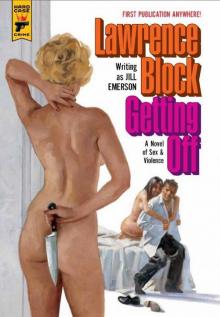 Getting Off: A Novel of Sex & Violence (Hard Case Crime)
 Coward's Kiss
 Alive in Shape and Color
 Blow for Freedom
 The New Sexual Underground: Crossing the Last Boundaries (John Warren Wells on Sexual Behavior Book 10)
 April North
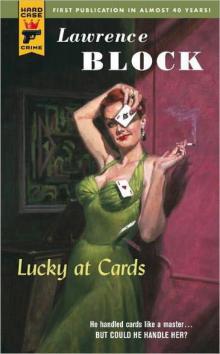 Lucky at Cards
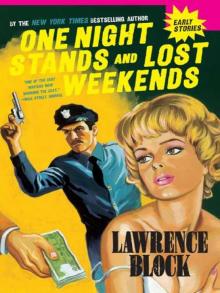 One Night Stands; Lost weekends
 Sweet Little Hands (A Story From the Dark Side)
 Blood on Their Hands
 A Dance at the Slaughterhouse
 Headaches and Bad Dreams (A Story From the Dark Side)
 Keller's Therapy
 The Specialists
 Hit and Run jk-4
 Threesome
 Love at a Tender Age (John Warren Wells on Sexual Behavior)
 The Devil Knows You're Dead: A MATTHEW SCUDDER CRIME NOVEL
 Funny You Should Ask
 CH01 - No Score
 Sex and the Stewardess (John Warren Wells on Sexual Behavior)
 A Madwoman's Diary
 When This Man Dies
 Sinner Man
 Such Men Are Dangerous
 A Strange Kind of Love
 Enough of Sorrow
 69 Barrow Street
 A Moment of Wrong Thinking (Matthew Scudder Mysteries Series Book 9)
 Eight Million Ways to Die ms-5
 Warm and Willing
 Mona
Mona In Sunlight or In Shadow
 A Candle for the Bag Lady (Matthew Scudder Book 2)
 Conjugal Rites (Kit Tolliver #7) (The Kit Tolliver Stories)
 Speaking of Lust - the novella
 Gigolo Johnny Wells
 Dark City Lights
 Versatile Ladies: the bisexual option (John Warren Wells on Sexual Behavior)
 Passport to Peril
 The Taboo Breakers: Shock Troops of the Sexual Revolution (John Warren Wells on Sexual Behavior)
 Lucky at Cards hcc-28
 Campus Tramp
 3 is Not a Crowd (John Warren Wells on Sexual Behavior)
 Manhattan Noir
 The Burglar in the Library
 Doing It! - Going Beyond the Sexual Revolution (John Warren Wells on Sexual Behavior Book 13)
 So Willing
 The Burglar Who Traded Ted Williams br-6
 Candy
Candy Sex Without Strings: A Handbook for Consenting Adults (John Warren Wells on Sexual Behavior)
 The Devil Knows You're Dead: A MATTHEW SCUDDER CRIME NOVEL (Matthew Scudder Mysteries)
 Manhattan Noir 2
 The Scoreless Thai (aka Two For Tanner)