
- Home
- Lawrence Block
Hit and Run Page 15
Hit and Run Read online
Page 15
Page 15
But, however much people both in and out of the city might prefer to think otherwise, New York was part of America. New Yorkers watched the same newscasts and read the same newspaper stories. They might be better than most people at minding their own business, and it was not uncommon for an apartment dweller to be unable to identify people in his own building by name, but that hardly meant they turned a deaf ear and a blind eye to everything around them.
His picture had been all over TV and in every newspaper with the possible exception of Linn’s Stamp News. (And it might even turn up there, if James McCue had managed to figure out just who it was who’d bought those Swedish reprints from him. ) How many people lived within a block or two of Keller? How many knew him from the building, or had run into him at the deli, or at the gym, or anywhere in that unassuming life he’d been idealizing just minutes ago?
That life to which he could never return.
He went through the paper again, more carefully this time, and in a story he’d skimmed earlier he found evidence that at least one of Keller’s neighbors had noticed his resemblance to the furtive chap in the photograph. Commenting on the multiple sightings of the fugitive, the journalist alluded to an unnamed Turtle Bay resident who’d become a person of interest to the police “only because of some apparent uncertainty as to the nature of his occupation, and his frequent trips out of town. ”
That would be enough to warrant a visit. Would they turn up anything incriminating in his apartment?
He couldn’t think of anything. They’d find his laptop computer, and they’d turn his hard drive inside and out, but back when he bought the thing he’d known that email had a half-life longer than uranium’s, and that a couple of sentences wafting through the ether would leave a trail that could outlive the sender. He and Dot had never sent each other an email, and vowed they never would.
Well, that would be an easy promise to keep, wouldn’t it?
He’d used his computer mostly in connection with his hobby — corresponding with dealers, surfing for information, buying stamps on eBay, bidding in auctions. He’d checked airline websites before his flight to Des Moines, but he hadn’t bought his ticket online because he was going to be flying as Holden Blankenship. So he’d made the reservation over the phone, and there wouldn’t be any record of it on his computer.
Could they tell what sites he’d visited, and when? He wasn’t sure, but figured the guiding principle — that when it came to technology, anybody could do anything — probably applied. One thing he was pretty sure they could do was pull up his phone records and establish that he’d called an airline a day or two before Blankenship flew to Des Moines, but at this point it didn’t matter, at this point none of it mattered, because he’d finally managed to attract their attention, and that was all it took. He’d come as far as he had in life by staying out of the spotlight, and now he was in it, and that was the end of it.
The end of John Paul Keller. If he stayed alive, which seemed very iffy indeed, it would have to be somewhere else, and under some other name. He wouldn’t miss the first two names; hardly anyone had ever used them, and he’d been called Keller by just about everybody since boyhood. That was who he was, and when he filled something out with his initials he sometimes thought they stood for Just Plain Keller.
He couldn’t be Keller anymore. Keller was over and done with — and, when he thought about it, he realized that everything in Keller’s life was already gone, so what difference could it make if the name vanished along with it?
The money, for one thing. He’d had, at last report, something in excess of two and a half million dollars in stocks and bonds, all of it in an Ameritrade online account set up and managed by Dot. The money would still be there, it wouldn’t vanish with her death, but it might as well be gone for all the good it would do him. He had no idea what name she’d used on the account or how a person might go about accessing it.
Of course he had bank accounts, savings and checking. Maybe as much as fifteen thousand in his savings account, plus a thousand or so in checking. By now they’d have frozen his accounts, and they’d be just waiting for him to get his picture taken trying to use his ATM card. He couldn’t use it now, anyway, because he hadn’t brought it with him, so they’d probably confiscated it by now.
No money, then. And no apartment, either. He’d lived for years in an apartment on First Avenue that he’d bought at the very reasonable insider’s price back when the Art Deco building went co-op, and the monthly maintenance charges didn’t come to much, and he’d known he’d spend the rest of his days there until they carried him out feet first. It had always been his refuge, and now he didn’t even dare go back there. It was out of his reach forever, along with his big-screen TV with TiVo and his comfortable chair and his bathroom with the pulsing showerhead and the desk he worked at and—
Oh, God. His stamps.
17
Keller crossed the Hudson on the lower level of the George Washington Bridge, took the Harlem River Drive to the FDR, and got off it a few blocks from his apartment. He’d spent the afternoon in a movie theater at a shopping mall outside of East Stroudsburg, Pennsylvania. It called itself a quadruplex, which sounded to Keller like someone who’d stepped on a landmine and lived to tell the tale, but only meant it could show four movies at once. Keller saw two of them, but only paid for one; rather than call attention to himself by going out and buying another ticket, he went from one theater to the men’s room, then slipped into another theater to watch the second movie.
And if the usher had spotted him? What was he going to do, shoot his way out of it? Not likely, he’d stashed the SIG automatic in the glove compartment, and he was surprised to discover how vulnerable he felt without it. He’d only been carrying a gun for a few days, and it would be hard to imagine a less perilous venue than a darkened movie house on a weekday afternoon, with fewer than two dozen people in attendance and their median age somewhere around seventy-seven. He should have felt reasonably secure in such a setting, but it was beginning to dawn on him that he was never going to feel secure again, no matter where he went.
When the second feature ended, it was time to go. Head down, Homer Simpson leading the way, he returned to his car, and the first thing he did, before he fastened his seat belt or put the key in the ignition, was restore the gun to its place beneath his waistband. The pressure in the small of his back, he’d discovered, had become comforting.
It was dark when he left the movie theater, which had been pretty much the point of the visit. It was close to midnight by the time he was circling the blocks in his own neighborhood, trying to figure out what to do with the car. While his fantasy was still functioning, before the Times had come along to kick holes in it, he’d known just how to dispose of the Sentra. He’d drive it to some still-disreputable part of Brooklyn or the Bronx, and there he’d park it with the doors unlocked and the key in the ignition. He’d take the license plates off first, but he didn’t think their absence would dissuade some neighborhood youth from taking the car out for a spin. Where it wound up after that, in the NYPD impound lot or some chop shop in Bensonhurst, was of no concern to Keller. He’d be back home, living the good life, and taking a cab for any distance too far to walk.
Right.
Now that New York had become about as safe for him as Des Moines, he was going to need a car to get out of it. So he’d have to stow this car, and he’d have to put it where it wouldn’t get towed. That probably meant a parking lot, which in turn meant giving one more person a look at his face, and would probably entail passing a security camera or two. But it was hell finding a legal spot in his neighborhood, and even the illegal parking spaces were hard to come by. The U. N. Building was just a couple of blocks away, and cars immunized by their DPL plates against towing and ticketing slouched arrogantly alongside each bus stop and fire hydrant.
He passed one, a gleaming Lincoln Town Car, three times. It was blocking a hydrant, and it wa
s doing all it could to block traffic at the same time, because the diplomat who’d parked it had been undiplomatic enough to leave it a full three feet from the curb. The third time around, Keller double-parked next to it, opened his trunk, rummaged around in his tool kit, and found what he needed.
Minutes later he was rounding the corner, and on the next block he found a space that left the Sentra sticking far enough into a bus stop to warrant a ticket, or possibly a tow. But it wouldn’t get either, not with the DPL tags covering his own plates.
Bring the suitcase along? No, what for?
He left it and started walking toward his building. And, with a little luck, his stamp collection.
Keller and his stamps had a complicated history.
He’d collected as a boy, which was hardly remarkable. Many boys of his generation had childhood stamp collections, especially quiet introspective types like Keller. A neighbor whose business involved a lot of correspondence with firms in Latin America had brought him a batch to get him started, and Keller had learned to soak them from their paper backing, dry them between sheets of paper towel, and mount them with hinges in the album his mother had bought him at Lamston’s. He’d eventually found other sources of stamps, buying mixtures and packets at Gimbel’s stamp department, and getting inexpensive stamps on approval from a dealer halfway across the country, picking out what he wanted, returning the rest along with his payment, and waiting for the dealer to send the next selection. He’d kept this up for a few years, never spending more than a dollar or two a week, and sometimes forgetting to return the approvals for weeks on end because other pursuits intruded. Eventually he lost interest in the collection, and eventually his mother sold it, or gave it away, as there wasn’t enough there to interest a dealer.
He was dismayed when he eventually found out it was gone, but not devastated, and he forgot about it and went on to other things, some of them more suspenseful than stamp collecting, though less socially acceptable. And time passed and the world changed. Keller’s mother was long gone, and so were Gimbel’s and Lamston’s.
For decades, he rarely thought of his stamp collection unless his memory was triggered by some bit of knowledge he owed to those childhood hours with tongs and hinges. There were times when it seemed to him that the greater portion of the information stored in his head had got there as a direct result of his hobby. He could, without any great difficulty, name all of the presidents of the United States in order, and he owed this ability to the series of presidential stamps issued in 1938, with each president’s head on the stamp with a value corresponding to his place in the procession. Washington was on the one-cent stamp, and Lincoln on the sixteen-cent stamp. He remembered this, even as he remembered that the one-cent stamp was green and the sixteen-cent stamp black, while the twenty-one-cent stamp, picturing New York’s own Chester Alan Arthur, was a dull blue.
He knew that Idaho had been admitted to the union in 1890, because the fiftieth anniversary had been commemorated by a stamp in 1940. He knew that a group of Swedes and Finns had settled at Wilmington, Delaware, in 1638, and that General Tadeusz Kosciuszko, the Polish general who served in the American Revolution, had been granted American citizenship in 1783. He might not know how to pronounce the man’s name, let alone spell it, but he knew what he did about him because of a blue five-cent stamp issued in 1933.
 Tanner on Ice
 Hit Me
 Hit and Run
 Hope to Die
 Two For Tanner
 Tanners Virgin
 Dead Girl Blues
 One Night Stands and Lost Weekends
 A Drop of the Hard Stuff
 The Canceled Czech
 Even the Wicked
 Me Tanner, You Jane
 Quotidian Keller
 Small Town
 Tanners Tiger
 A Walk Among the Tombstones
 Tanners Twelve Swingers
 Gym Rat & the Murder Club
 Everybody Dies
 The Thief Who Couldnt Sleep
 Hit Parade
 The Devil Knows Youre Dead
 The Burglar in Short Order
 A Long Line of Dead Men
 Keller's Homecoming
 Resume Speed
 Keller's Adjustment
 Eight Million Ways to Die
 Time to Murder and Create
 Out on the Cutting Edge
 A Dance at the Slaughter House
 In the Midst of Death
 When the Sacred Ginmill Closes
 You Could Call It Murder
 Keller on the Spot
 A Ticket to the Boneyard
 A Time to Scatter Stones
 Keller's Designated Hitter
 A Stab in the Dark
 Sins of the Fathers
 The Burglar in the Closet
 Burglar Who Dropped In On Elvis
 The Burglar Who Painted Like Mondrian
 The Girl With the Long Green Heart
 The Burglar Who Counted the Spoons (Bernie Rhodenbarr)
 Burglar Who Smelled Smoke
 Rude Awakening (Kit Tolliver #2) (The Kit Tolliver Stories)
 Don't Get in the Car (Kit Tolliver #9) (The Kit Tolliver Stories)
 CH04 - The Topless Tulip Caper
 You Can Call Me Lucky (Kit Tolliver #3) (The Kit Tolliver Stories)
 CH02 - Chip Harrison Scores Again
 Strangers on a Handball Court
 Cleveland in My Dreams
 Clean Slate (Kit Tolliver #4) (The Kit Tolliver Stories)
 The Burglar Who Traded Ted Williams
 Burglar on the Prowl
 In For a Penny (A Story From the Dark Side)
 Catch and Release Paperback
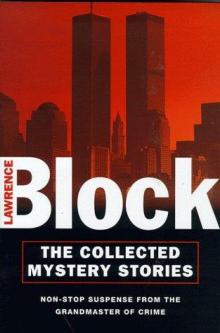 Ride A White Horse
 No Score
 Looking for David (A Matthew Scudder Story Book 7)
 Jilling (Kit Tolliver #6) (The Kit Tolliver Stories)
 Ariel
Ariel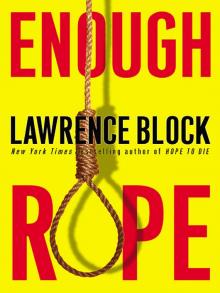 Enough Rope
 Grifter's Game
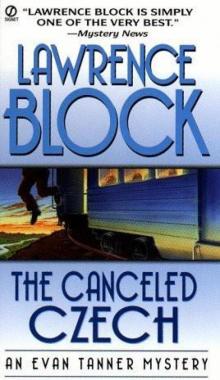 Canceled Czech
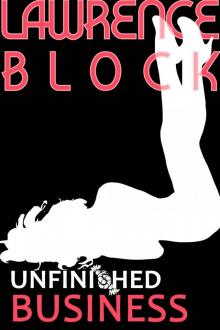 Unfinished Business (Kit Tolliver #12) (The Kit Tolliver Stories)
 Thirty
 The Burglar Who Thought He Was Bogart
 Make Out with Murder
 One Last Night at Grogan's (A Matthew Scudder Story Book 11)
 The Burglar on the Prowl
 Welcome to the Real World (A Story From the Dark Side)
 Keller 05 - Hit Me
 Walk Among the Tombstones: A Matthew Scudder Crime Novel
 Ronald Rabbit Is a Dirty Old Man
 The Burglar Who Studied Spinoza
 The Burglar Who Liked to Quote Kipling
 Keller in Des Moines
 Hit List
 The Dettweiler Solution
 HCC 115 - Borderline
 A Drop of the Hard Stuff: A Matthew Scudder Novel
 Step by Step
 The Girl With the Deep Blue Eyes
 If You Can't Stand the Heat (Kit Tolliver #1) (The Kit Tolliver Stories)
 The Topless Tulip Caper
 Dolly's Trash & Treasures (A Story From the Dark Side)
 The Triumph of Evil
 Fun with Brady and Angelica (Kit Tolliver #10 (The Kit Tolliver Stories)
 Burglars Can't Be Choosers
 Who Knows Where It Goes (A Story From the Dark Side)
 Deadly Honeymoon
 Like a Bone in the Throat (A Story From the Dark Side)
 A Chance to Get Even (A Story From the Dark Side)
 The Boy Who Disappeared Clouds
 Collecting Ackermans
 Waitress Wanted (Kit Tolliver #5) (The Kit Tolliver Stories)
 One Thousand Dollars a Word
 Even the Wicked: A Matthew Scudder Novel (Matthew Scudder Mysteries)
 Hit Man
 The Night and The Music
 Ehrengraf for the Defense
 The Merciful Angel of Death (A Matthew Scudder Story Book 5)
 The Burglar in the Rye
 I Know How to Pick 'Em
 Getting Off hcc-69
 Three in the Side Pocket (A Story From the Dark Side)
 Let's Get Lost (A Matthew Scudder Story Book 8)
 Strange Are the Ways of Love
 MOSTLY MURDER: Till Death: a mystery anthology
 Masters of Noir: Volume Four
 A Week as Andrea Benstock
 Scenarios (A Stoiry From the Dark Side)
 The Sex Therapists: What They Can Do and How They Do It (John Warren Wells on Sexual Behavior Book 15)
 Like a Thief in the Night: a Bernie Rhodenbarr story
 A Diet of Treacle
 Community of Women
 Different Strokes: How I (Gulp!) Wrote, Directed, and Starred in an X-rated Movie (John Warren Wells on Sexual Behavior)
 You Don't Even Feel It (A Story From the Dark Side)
 Zeroing In (Kit Tolliver #11) (The Kit Tolliver Stories)
 The Wife-Swap Report (John Warren Wells on Sexual Behavior)
 Keller's Fedora (Kindle Single)
 Speaking of Lust
 Everybody Dies (Matthew Scudder)
 Defender of the Innocent: The Casebook of Martin Ehrengraf
 After the First Death
 Writing the Novel
 How Far - a one-act stage play
 Chip Harrison Scores Again
 The Topless Tulip Caper ch-4
 The Crime of Our Lives
 Killing Castro
 The Trouble with Eden
 Nothing Short of Highway Robbery
 Sin Hellcat
 Getting Off: A Novel of Sex & Violence (Hard Case Crime)
 Coward's Kiss
 Alive in Shape and Color
 Blow for Freedom
 The New Sexual Underground: Crossing the Last Boundaries (John Warren Wells on Sexual Behavior Book 10)
 April North
 Lucky at Cards
 One Night Stands; Lost weekends
 Sweet Little Hands (A Story From the Dark Side)
 Blood on Their Hands
 A Dance at the Slaughterhouse
 Headaches and Bad Dreams (A Story From the Dark Side)
 Keller's Therapy
 The Specialists
 Hit and Run jk-4
 Threesome
 Love at a Tender Age (John Warren Wells on Sexual Behavior)
 The Devil Knows You're Dead: A MATTHEW SCUDDER CRIME NOVEL
 Funny You Should Ask
 CH01 - No Score
 Sex and the Stewardess (John Warren Wells on Sexual Behavior)
 A Madwoman's Diary
 When This Man Dies
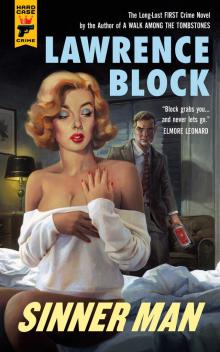 Sinner Man
 Such Men Are Dangerous
 A Strange Kind of Love
 Enough of Sorrow
 69 Barrow Street
 A Moment of Wrong Thinking (Matthew Scudder Mysteries Series Book 9)
 Eight Million Ways to Die ms-5
 Warm and Willing
 Mona
Mona In Sunlight or In Shadow
 A Candle for the Bag Lady (Matthew Scudder Book 2)
 Conjugal Rites (Kit Tolliver #7) (The Kit Tolliver Stories)
 Speaking of Lust - the novella
 Gigolo Johnny Wells
 Dark City Lights
 Versatile Ladies: the bisexual option (John Warren Wells on Sexual Behavior)
 Passport to Peril
 The Taboo Breakers: Shock Troops of the Sexual Revolution (John Warren Wells on Sexual Behavior)
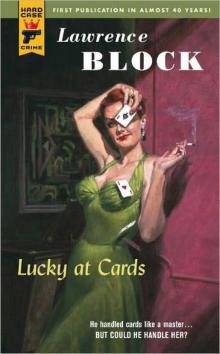 Lucky at Cards hcc-28
 Campus Tramp
 3 is Not a Crowd (John Warren Wells on Sexual Behavior)
 Manhattan Noir
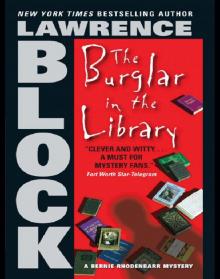 The Burglar in the Library
 Doing It! - Going Beyond the Sexual Revolution (John Warren Wells on Sexual Behavior Book 13)
 So Willing
 The Burglar Who Traded Ted Williams br-6
 Candy
Candy Sex Without Strings: A Handbook for Consenting Adults (John Warren Wells on Sexual Behavior)
 The Devil Knows You're Dead: A MATTHEW SCUDDER CRIME NOVEL (Matthew Scudder Mysteries)
 Manhattan Noir 2
 The Scoreless Thai (aka Two For Tanner)